
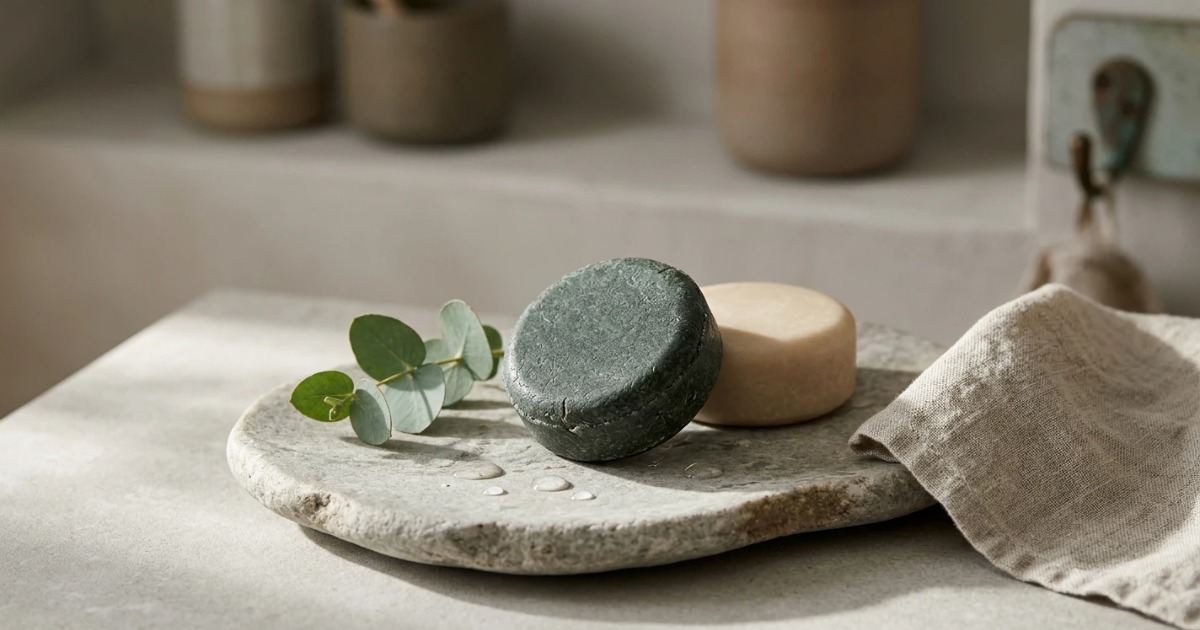
Vor einem Regal mit festen Shampoos greifen die meisten Menschen zu dem Produkt, das am besten riecht, und hoffen auf das Beste. Genau deshalb enttäuscht das erste Shampoo-Stück häufig. Ein festes Shampoo ist keine neuartige Version Ihres Shampoos aus der Flasche. Es handelt sich um eine andere Darreichungsform mit einer anderen Chemie, und die Abstimmung auf Ihr tatsächliches Haar und Ihre Kopfhaut entscheidet darüber, ob der Umstieg ein voller Erfolg oder eine frustrierende Erfahrung wird.
Dieser Leitfaden zeigt Ihnen zunächst, wie Sie Ihr eigenes Haar richtig einschätzen und anschließend ein Etikett lesen, damit die Auswahl nicht länger einem Glücksspiel gleicht.
Warum sich feste Shampoos von Shampoo aus der Flasche unterscheiden
Bevor wir uns der Anwendung widmen, ist es hilfreich zu verstehen, was Sie tatsächlich in der Hand halten. Ein festes Shampoo verhält sich in der Hand, im Wasser und auf der Kopfhaut unterschiedlich. Wenn Sie wissen, warum das so ist, vermeiden Sie viele anfängliche Fehler.
Konzentrierte Formulierungen ohne Wasser als Füllstoff
Shampoo aus der Flasche besteht größtenteils aus Wasser, häufig zu 70 bis 80 Prozent. Ein festes Shampoo entzieht dem Produkt dieses Wasser und konzentriert Tenside, Öle und pflegende Wirkstoffe in einem kompakten Stück.
Genau darin liegt der entscheidende Vorteil der Konzentration. Ein Stück ersetzt in der Regel zwei bis drei herkömmliche Flaschen, weshalb bereits wenige sanfte Striche mehr Reinigungskraft erzeugen, als viele erwarten. Das bedeutet auch, dass ein Stück leicht überdosiert werden kann. Die meisten Einsteiger reiben viel zu kräftig und haben am Ende Produktrückstände, die sie dem festen Shampoo selbst zuschreiben.
Die Sulfatfrage einfach erklärt
Sulfate wie Sodium Lauryl Sulfate (SLS) und Sodium Laureth Sulfate (SLES) sind die Tenside, die für den großen, befriedigenden Schaum verantwortlich sind. Sie reinigen gut und sind kostengünstig, weshalb sie den Massenmarkt für Shampoos dominieren.
Der Nachteil besteht darin, dass starke Sulfate die natürlichen Öle der Kopfhaut entfernen und die Haarfarbe schneller auswaschen können. Ein sulfatfreies festes Shampoo ersetzt sie durch mildere Reinigungssubstanzen wie Sodium Cocoyl Isethionate (SCI) oder Coco-Glucoside. Diese schäumen weniger stark, reinigen jedoch ohne den aggressiven Entfettungseffekt.
Keine der beiden Varianten ist grundsätzlich „besser“. Personen mit fettiger Kopfhaut und ohne Coloration kommen möglicherweise gut mit einem milden sulfatbasierten Shampoo-Bar zurecht, während Personen mit trockenem, gefärbtem oder empfindlicher Kopfhaut in der Regel von einer sulfatfreien Variante profitieren.
Was die „Übergangsphase“ wirklich bedeutet
Hier ist der Teil, vor dem neue Anwender niemand warnt. Wenn Sie aufhören, sulfatreiches Shampoo zu verwenden, können Kopfhaut und Haar eine ein- bis vierwöchige Anpassungsphase durchlaufen, in der sich das Haar wachsig, schlaff oder ungewöhnlich beschichtet anfühlt.
Dafür sind zwei Faktoren ausschlaggebend. Erstens hat Ihre Kopfhaut möglicherweise übermäßig viel Öl produziert, um aggressive Reinigungsmittel auszugleichen, und es dauert einige Zeit, bis sie sich neu reguliert. Zweitens können sich bei hartem Wasser Mineralionen mit den Fettsäuren in einem echten seifenbasierten Shampoo-Bar verbinden und einen Film hinterlassen.
Die Übergangsphase ist real, aber weder unvermeidlich noch dauerhaft. Die Wahl der richtigen Formel für Ihre Wasserqualität und Ihren Haartyp verkürzt sie erheblich, und ein Syndet-Bar (weiter unten erklärt) überspringt sie häufig vollständig.
Kennen Sie Ihren Haartyp, bevor Sie einkaufen
Dies ist der Schritt, den die meisten Kaufratgeber übergehen, und er ist der wichtigste Indikator dafür, ob Ihnen ein Shampoo-Bar gefallen wird. Sie können nicht das richtige Produkt für einen Haartyp auswählen, den Sie nicht korrekt bestimmt haben.
Die drei Faktoren, die wirklich entscheidend sind
„Haartyp“ ist ein weit gefasster Begriff. In der Praxis lässt er sich in drei separate Variablen unterteilen, und jede davon weist auf unterschiedliche Inhaltsstoffe hin.
Die Fettigkeit der Kopfhaut bezieht sich auf Ihren Haaransatz und darauf, wie schnell er fettig wird. Die Haarstruktur beschreibt die Dicke jedes einzelnen Haares – von fein bis kräftig. Die Porosität gibt an, wie leicht Ihr Haar Feuchtigkeit aufnimmt und speichert; sie wird durch den Zustand der Schuppenschicht bestimmt.
Sie können feines Haar und eine fettige Kopfhaut oder kräftiges Haar mit hoher Porosität aufgrund von Farbschäden haben. Diese Faktoren als eine Einheit zu betrachten, ist der Grund, warum so viele Menschen den falschen Shampoo-Bar auswählen.
Ein schneller Haar- und Kopfhauttest zu Hause
Sie benötigen kein Labor. Ein paar einfache Prüfungen im normalen Tagesverlauf liefern Ihnen fast alle Informationen, die Sie brauchen.
Bei fettiger Kopfhaut waschen Sie Ihre Haare abends mit einem neutralen Shampoo und prüfen Sie am nächsten Morgen Ihre Ansätze, bevor Sie sie berühren. Fettige Ansätze am Morgen deuten auf eine fettige Kopfhaut hin; fühlt sich die Kopfhaut bis zum zweiten Tag angenehm an, ist sie normal bis trocken.
Der Strang- und Schwimmtest
Halten Sie für die Bestimmung der Haarstruktur einen einzelnen sauberen, trockenen Haarstrang zwischen den Fingern. Wenn Sie ihn kaum spüren, ist Ihr Haar fein. Wenn er sich wie ein deutlich wahrnehmbarer Faden anfühlt, ist es mittelstark bis kräftig.
Für die Bestimmung der Porosität geben Sie einen sauberen, produktfreien Haarstrang in ein Glas mit Wasser auf Raumtemperatur und warten Sie zwei bis drei Minuten. Wenn er schnell sinkt, weist dies auf eine hohe Porosität hin. Das bedeutet, dass die Schuppenschicht geöffnet ist und schnell Feuchtigkeit verliert. Wenn er schwimmt, ist die Porosität niedrig und die Schuppenschicht dicht, sodass Produkte an der Oberfläche verbleiben, anstatt einzuziehen. Ein Strang, der in der Mitte schwebt, weist auf eine ausgewogene Porosität hin.
Der Schwimmtest ist ein grober Anhaltspunkt und keine Diagnose. Die Ergebnisse können sich durch Produktablagerungen verändern. Führen Sie ihn daher bei frisch mit einem Reinigungsshampoo gewaschenem Haar durch, um die zuverlässigsten Ergebnisse zu erhalten.

Shampoo-Bars auf jeden Haartyp abstimmen
Jetzt kommt der entscheidende Teil. Finden Sie Ihre Kategorie und achten Sie anschließend auf die dahinterstehende Logik der Inhaltsstoffe, statt sich nur an den Marketingversprechen auf der Vorderseite zu orientieren.
Die beste Wahl für fettiges Haar und fettige Kopfhaut
Fettige Kopfhaut benötigt eine Reinigung, die überschüssigen Talg entfernt, ohne eine verstärkte Rückfettung auszulösen. Leichte, klärende Formulierungen eignen sich dafür am besten. Schwere Butter und reichhaltige Öle verschlimmern das Problem häufig.
Achten Sie bei Shampoo-Bars für fettiges Haar auf eine Rezeptur mit sanften, aber wirksamen Tensiden und nicht auf ein Produkt, das mit unnötigen feuchtigkeitsspendenden Zusätzen überladen ist.
Auf diese Inhaltsstoffe sollten Sie achten
Kaolin- oder Bentonit-Tonerde absorbiert Öl und verbessert die Gleitfähigkeit, ohne das Haar zu beschweren. Teebaumöl weist milde antimikrobielle und klärende Eigenschaften auf, die viele Menschen mit fettiger Kopfhaut als beruhigend empfinden. Zitrusextrakte und Apfelessig helfen, den pH-Wert der Kopfhaut auszugleichen und Rückstände zu entfernen.
Entscheidend ist eine kurze Liste an Pflegewirkstoffen. Ein festes Shampoo, das intensive Feuchtigkeit verspricht, ist hier nicht die richtige Wahl.
Ideal für trockenes oder geschädigtes Haar
Trockenes und geschädigtes Haar benötigt eine entgegengesetzte Priorität: milde Reinigung und gleichzeitige Versorgung. Ziel ist es, Schmutz zu entfernen, ohne die geringe Menge an Feuchtigkeit und Lipiden zu entziehen, die das Haar noch enthält.
Ein gutes festes Shampoo für trockenes Haar setzt auf Emollienzien und Feuchthaltemittel und verzichtet fast immer auf starke Sulfate.
Auf diese Inhaltsstoffe sollten Sie achten
Sheabutter und Kakaobutter umhüllen und glätten die Haarsträhne. Kokosöl gehört zu den wenigen Ölen, die nachweislich in den Haarschaft eindringen, anstatt nur auf der Oberfläche zu liegen, wodurch der Proteinverlust reduziert werden kann. Arganöl verleiht der Oberfläche Geschmeidigkeit und Glanz.
Glycerin, ein Feuchthaltemittel, zieht Feuchtigkeit aus der Luft in das Haar. In sehr trockenen oder ariden Klimazonen kann zu viel Glycerin jedoch gelegentlich das Gegenteil bewirken. Daher ist Ausgewogenheit wichtiger als ein Maximum.
Ideal für feines oder dünnes Haar
Der größte Feind von feinem Haar ist zu viel Gewicht. Dieselben Buttersorten, die trockenes Haar retten, lassen feines Haar schlaff und fettig aussehend herunterhängen.
Wählen Sie eine leichtere Formel, die gründlich reinigt und rückstandsfrei ausgespült wird. Volumenfestiger enthalten häufig leichtere Pflegewirkstoffe wie hydrolysierte Proteine, die für mehr Fülle sorgen, ohne Ablagerungen zu hinterlassen.
Spülen Sie besonders gründlich. Wenn der Ansatz nach ein oder zwei Wochen platt wirkt, verwenden Sie wahrscheinlich zu viel festes Shampoo oder benötigen gelegentlich eine klärende Haarwäsche, um das Haar gründlich zu reinigen.
Ideal für lockiges, krauses und strukturiertes Haar
Lockiges und krauses Haar ist von Natur aus trockener, da die Windungen es dem Kopfhautöl erschweren, entlang der Haarsträhne nach unten zu gelangen. Die Feuchtigkeitsspeicherung ist hier entscheidend.
Greifen Sie zu reichhaltigen, sulfatfreien Haarseifen mit Butter und glättenden Pflegewirkstoffen, die das Entwirren und die Definition der Locken unterstützen. Ihre Erwartungen an die Schaumbildung sollten Sie anpassen: Sanfte, feuchtigkeitsspendende Haarseifen schäumen deutlich weniger, und das ist normal – kein Zeichen dafür, dass die Haarseife nicht funktioniert.
Viele Menschen mit strukturiertem Haar verwenden zwischen den Haarwäschen eine Co-Wash und nutzen die Haarseife für eine gründlichere Reinigung. So bleibt die Feuchtigkeit langfristig erhalten.
Ideal für coloriertes Haar
Coloriertes Haar hat eine entscheidende Anforderung: Der Farbverlust darf nicht beschleunigt werden. Aggressive Tenside und stark alkalische seifenbasierte Haarseifen öffnen die Schuppenschicht und lassen Farbstoffmoleküle schneller entweichen.
Setzen Sie auf milde Tenside und vor allem auf eine pH-ausgeglichene Formel. Bei diesem Haartyp ist der pH-Wert kein optionaler Vorteil, sondern der entscheidende Faktor – und damit kommen wir zum Etikett.
Das Zutatenetikett entschlüsselt
Hier kann ein wenig Chemiekenntnis viel Geld sparen. Sobald Sie ein Etikett lesen können, verlassen Sie sich nicht mehr auf Versprechen auf der Vorderseite der Verpackung, sondern beurteilen die tatsächliche Formel.
Warum das pH-Gleichgewicht alles verändert
Gesundes Haar und eine gesunde Kopfhaut weisen einen leicht sauren pH-Wert von etwa 4.5 bis 5.5 auf. Auf diesem Niveau liegen die Schuppen der Schuppenschicht flach an, das Haar wirkt glatt, Frizz nimmt ab und der schützende Säureschutzmantel der Kopfhaut bleibt intakt.
Hier liegt der entscheidende Unterschied zwischen guten und problematischen Haarseifen. Eine herkömmliche seifenbasierte Haarseife wird durch die Verseifung von Ölen mit Lauge hergestellt, wodurch ein von Natur aus alkalisches Produkt mit einem pH-Wert von häufig 8 bis 10 entsteht. Dieser hohe pH-Wert hebt die Schuppenschicht an und verursacht das raue, schwer entwirrbare, "quietschende und anschließend strohähnliche" Gefühl, von dem manche Menschen berichten.
Ein Syndet-Riegel (kurz für synthetisches Detergens) wird aus milden Tensiden hergestellt und kann auf den hautfreundlichen sauren pH-Bereich abgestimmt werden. Ein pH-ausgeglichener Shampoo-Riegel ist fast immer ein Syndet-Riegel und für coloriertes, trockenes oder zu Frizz neigendes Haar die zuverlässigere Wahl. Wenn ein Etikett "Kaltverfahren" oder "verseifte Öle" angibt, handelt es sich um echte Seife; wenn es Tenside wie sodium cocoyl isethionate aufführt, handelt es sich um ein Syndet.
Natürliche Inhaltsstoffe fester Shampoos richtig lesen
Die Inhaltsstoffe sind nach ihrer Konzentration geordnet, beginnend mit der höchsten. Sehen Sie sich die ersten Einträge an, um zu erkennen, woraus der Riegel tatsächlich besteht.
Ordnen Sie die aufgeführten Stoffe drei Kategorien zu. Tenside übernehmen die Reinigung (SCI, coco-glucoside, sodium cocoyl isethionate). Pflegestoffe verleihen Geschmeidigkeit und bessere Kämmbarkeit (behentrimonium methosulfate, Buttersorten, Öle, panthenol). Füll- und Strukturstoffe halten den Riegel zusammen (cetearyl alcohol, der trotz seines Namens ein rückfettender Fettalkohol und kein austrocknender Alkohol ist).
Unter den Inhaltsstoffen natürlicher fester Shampoos finden sich häufig pflanzliche Öle und Tonerde. Die Bezeichnung "natürlich" auf der Vorderseite sagt jedoch nichts über den pH-Wert oder das Verhalten des Riegels in Ihrem Wasser aus. Beurteilen Sie die Rezeptur, nicht das Schlagwort.

Inhaltsstoffe, die Sie besser vermeiden sollten
Dies ist eine kurze, begründete Liste und keine Angstmacherei. Auf empfindlicher Kopfhaut können starke Sulfate (SLS) reizen, auch wenn sie nicht gefährlich sind. Austrocknende Alkohole, die weit oben in der Zutatenliste stehen, wie denaturierter Alkohol oder Isopropylalkohol, können die Haarsträhnen dehydrieren. Beachten Sie, dass sie sich von den zuvor genannten vorteilhaften Fettalkoholen unterscheiden.
Hohe Konzentrationen synthetischer Duftstoffe sind eine häufige Ursache für Kopfhautreizungen und sollten möglichst reduziert werden, wenn Sie leicht darauf reagieren. Bei coloriertem Haar sollten Sie auf basische Seifenbasen aus verseiften Ölen achten, da sie aus den bereits genannten Gründen die Farbe schneller verblassen lassen können. Alles andere hängt vom Kontext ab: Ein Inhaltsstoff, der für feines Haar ungeeignet ist, kann für lockiges oder krauses Haar ideal sein.
So verwenden und lagern Sie Ihren Riegel für optimale Ergebnisse
Selbst der richtige Riegel erzielt bei falscher Anwendung keine optimalen Ergebnisse. Diese Reibungspunkte sind die Ursache für die meisten Beschwerden, und jeder einzelne davon lässt sich beheben.
Anwendungstechniken zur Vermeidung von Ablagerungen
Es gibt zwei Hauptmethoden. Sie können den Riegel direkt auf das nasse Haar und die Kopfhaut auftragen und anschließend einmassieren. Alternativ können Sie ihn in den Händen aufschäumen und den Schaum auftragen. Die direkte Anwendung ist schneller und eignet sich besser für dickes oder lockiges Haar. Die Anwendung mit den Händen ermöglicht eine bessere Kontrolle und eignet sich für feines Haar, bei dem es leicht zu Ablagerungen kommt.
Die Wasserhärte ist wichtiger, als die meisten Ratgeber zugeben. In hartem Wasser beeinträchtigen Mineralionen die Schaumbildung und können Rückstände hinterlassen, insbesondere bei Seifenstücken auf Seifenbasis. Eine monatliche saure Spülung (verdünnter Apfelessig, etwa ein Esslöffel pro Tasse Wasser) löst diesen Film auf und stellt den Glanz wieder her. Wenn sich Ablagerungen weiterhin bilden, kommt ein Syndet-Stück mit hartem Wasser deutlich besser zurecht als eine echte Seife.
So hält ein Stück länger
Der größte Feind eines Stücks ist stehendes Wasser. Bleibt es in einer Wasserlache liegen, wird es weich und löst sich innerhalb eines Bruchteils seiner üblichen Lebensdauer auf.
Bewahren Sie es auf einer Abtropfschale oder einem Lattenrost auf, damit die Luft zirkulieren kann und es zwischen den Anwendungen vollständig trocknet. Lassen Sie es auf Reisen zunächst trocknen und bewahren Sie es anschließend in einer Dose oder einem atmungsaktiven Beutel auf, anstatt ein feuchtes Stück in Kunststoff luftdicht zu verschließen. Wenn Sie ein großes Stück halbieren und jeweils nur eine Hälfte verwenden, bleibt der unbenutzte Teil ebenfalls trocken und fest.
Bei guter Pflege hält ein einzelnes Stück gewöhnlich 50 bis 80 Haarwäschen. Das ist der Grund für den sowohl finanziellen Vorteil als auch die Einsparung an Verpackungsabfällen, auf die viele beim Umstieg verweisen.
Ein abschließendes Wort zur Formulierungsqualität
Der Unterschied zwischen einem Stück, das Sie lieben, und einem, das Sie wegwerfen, liegt meist in der Formulierung und nicht in übertriebener Zutatenwerbung. Ein konstanter pH-Wert, die richtige Auswahl der Tenside und kontrollierte Herstellungsprozesse bestimmen, wie ein Stück bei jeder Haarwäsche funktioniert. Deshalb betrachten etablierte Hersteller von Körperpflegeprodukten, darunter spezialisierte Produzenten wie Boymay, die nach GMP-, ISO- und FDA-orientierten Standards arbeiten, pH-Stabilität und Chargenkonsistenz als zentrale Qualitätskennzahlen und nicht als nachträgliche Nebensachen.
Für Sie als Käufer ist die Schlussfolgerung einfacher: Ermitteln Sie zunächst, wie fettig Ihre Kopfhaut ist, sowie Ihre Haarstruktur und Porosität. Lesen Sie anschließend auf dem Etikett nach, welche Art von Tensiden verwendet wird und welchen pH-Wert das Produkt hat. Wenn diese Faktoren stimmen, erledigt das Stück den Rest.
FAQ
F: Sind Shampoo-Stücke tatsächlich besser für das Haar?
A: Nicht automatisch. Ein gut formuliertes, pH-ausgeglichenes Stück, das auf Ihren Haartyp abgestimmt ist, kann ein aggressives Shampoo aus der Flasche tatsächlich übertreffen, während ein schlecht passendes oder stark alkalisches Seifenstück Ihr Haar in einen schlechteren Zustand versetzen kann. Das Format ist kein Zaubertrick; entscheidend ist die passende Auswahl. Die verlässlichen Vorteile sind weniger Verpackungsabfall und ein stärker konzentriertes Produkt.
F: Wie lange hält ein Shampoo-Stück im Vergleich zu einer Flasche?
A: Ein Standardstück hält in der Regel 50 bis 80 Haarwäschen – ungefähr so lange wie zwei bis drei 250ml-Flaschen. Dies variiert jedoch je nach Haarlänge, Waschhäufigkeit und danach, wie gut Sie das Stück zwischen den Anwendungen trocknen. Es vor stehendem Wasser geschützt aufzubewahren, ist der wichtigste Faktor, um seine Lebensdauer zu verlängern.
F: Reinigen sulfatfreie Shampoo-Stücke genauso gut wie herkömmliches Shampoo?
A: Ja, allerdings reinigen sie auf andere Weise. Sulfatfreie Tenside entfernen Schmutz und Öl effektiv, erzeugen jedoch deutlich weniger Schaum. Daher wird eine geringe Schaumbildung fälschlicherweise mit schwacher Reinigungsleistung gleichgesetzt. Schaumbildung und Reinigungskraft sind nicht dasselbe. Bei sehr fettiger Kopfhaut benötigen Sie möglicherweise einfach eine zweite, kürzere Wäsche.
F: Kann ich ein Shampoo-Stück bei coloriertem oder chemisch behandeltem Haar verwenden?
A: Ja, und es ist eine gute Option, wenn Sie sorgfältig auswählen. Entscheiden Sie sich für ein sulfatfreies, pH-ausgeglichenes Syndet-Stück statt für ein stark alkalisches, seifenbasiertes Produkt, da ein niedriger pH-Wert die Schuppenschicht geschlossen hält und das Verblassen der Farbe verlangsamt. Vermeiden Sie klärende oder stark reinigende Stücke, da diese die Farbe schneller entfernen.
F: Warum fühlt sich mein Haar nach dem Umstieg wachsig an, und wie kann ich das beheben?
A: Das wachsige Gefühl hat in der Regel eine von zwei Ursachen: Rückstände eines seifenbasierten Stücks, die mit hartem Wasser reagieren, oder die natürliche Übergangsphase, in der sich die Ölproduktion Ihrer Kopfhaut neu einreguliert. Versuchen Sie es mit einer sauren Klärspülung aus verdünntem Apfelessig, wechseln Sie bei hartem Wasser zu einem Syndet-Stück und geben Sie Ihrem Haar einige Wochen Zeit. Wenn das Problem länger als einen Monat anhält, ist die Rezeptur wahrscheinlich nicht für Ihr Wasser geeignet.
F: Sind Shampoo-Stücke für Regionen mit hartem Wasser geeignet?
A: Einige sind es, andere nicht. Rein seifenbasierte Stücke haben bei hartem Wasser Schwierigkeiten, da sich Mineralien an ihre Fettsäuren binden und einen Film hinterlassen. Syndet-Stücke, die synthetische Tenside verwenden, sind deutlich widerstandsfähiger gegen Ablagerungen durch hartes Wasser und daher die bessere Standardwahl, wenn Sie wissen, dass Ihr Wasser hart ist.