
Ich habe viele Jahre in der Herstellung von Badebomben gearbeitet. Jedes Mal, wenn ich zur Inspektion durch die Produktionshalle gehe, sehe ich Tausende bunte, sprudelnde Badebomben vom Fließband rollen — viele davon mit kleinen Überraschungen im Inneren. Eigene Badebomben zu Hause herzustellen ist nicht nur machbar. Es ist tatsächlich eines der schönsten DIY-Projekte, das Sie gemeinsam mit der Familie umsetzen können.
Ich zeige Ihnen Schritt für Schritt, wie wir es auf Fabrikebene machen — heruntergebrochen auf Ihre Küchenarbeitsplatte. Ich teile dieselben Formeln, Techniken und Insider-Tricks, für die ich auf dem Produktionsboden Jahre gebraucht habe, um sie zu perfektionieren.
Warum Badebomben mit Überraschungsspielzeug sich für die Herstellung zu Hause lohnen
Wenn Sie schon einmal gesehen haben, wie ein Kind eine sprudelnde Kugel in die Badewanne fallen lässt und vor Freude quietscht, wenn ein kleiner Dinosaurier aus dem sich auflösenden Schaum auftaucht, verstehen Sie den Reiz bereits. Sprudelnde Badebomben mit Überraschungsspielzeug machen aus einem gewöhnlichen Bad ein echtes Erlebnis. Für Kinder, die sich gegen die Badezeit sträuben, sind sie absolute Gamechanger.
Der Markt für Badeprodukte für Kinder ist in den letzten Jahren deutlich gewachsen. Laut Grand View Research wurde der globale Markt für Badebomben im Jahr 2023 auf über $200 million geschätzt und wächst weiter, wobei Kinderprodukte zu den am schnellsten wachsenden Segmenten zählen. Auch der Trend zu DIY-Badebomben-Rezepten auf Plattformen wie TikTok und Pinterest ist regelrecht explodiert, wobei Millionen von Creatorn ihre eigenen Versionen teilen.
Hier ist meine persönliche Sichtweise: Wenn ich Badebomben zu Hause herstelle, kontrolliere ich genau, was hineinkommt. Keine mysteriösen Inhaltsstoffe. Keine fragwürdige Spielzeugqualität. Nur reine kreative Freiheit und die Zufriedenheit, etwas zu schaffen, das meine Kinder wirklich lieben.
Kindersichere Inhaltsstoffe für Badebomben auswählen
Die Grundformel
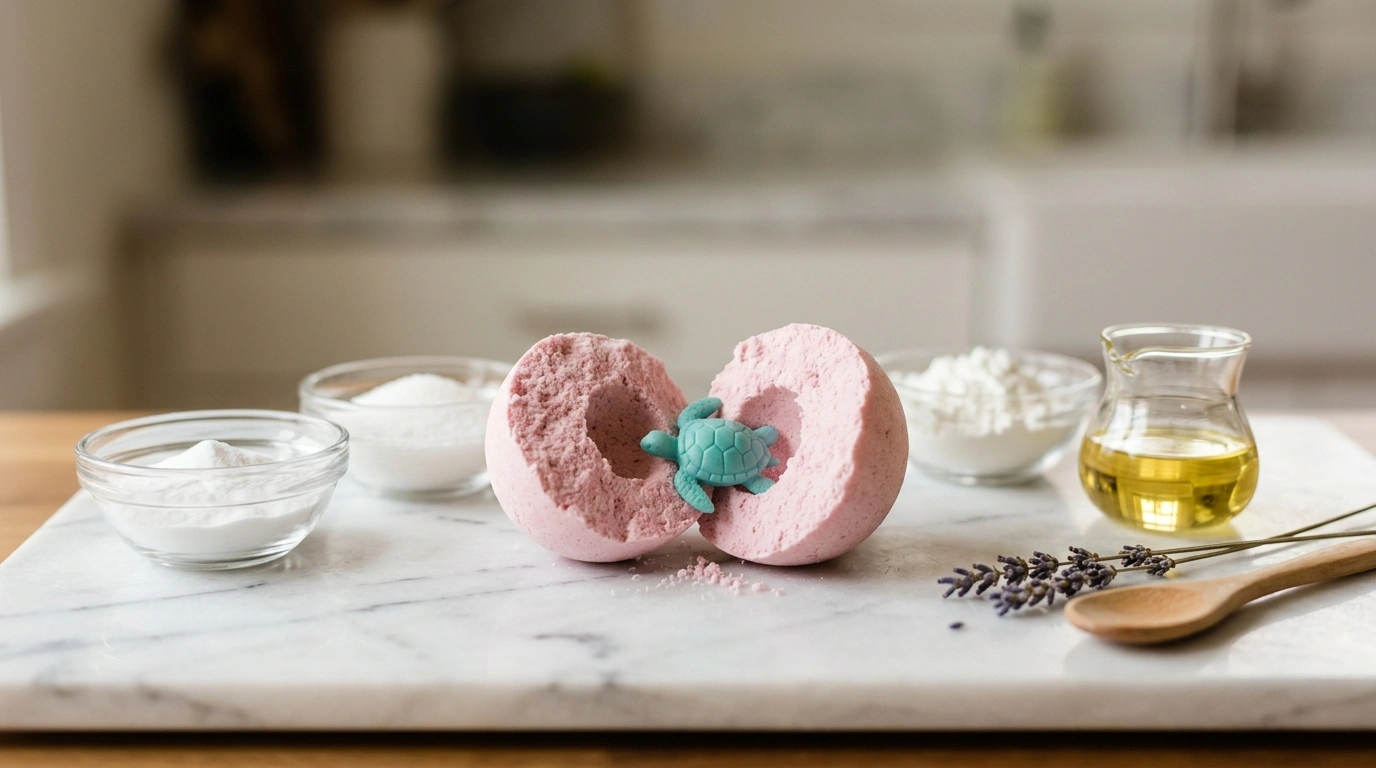
Unsere Fabrikformel ist kein streng gehütetes Geheimnis. Sie ist überraschend einfach, und genau diese Basis verwenden Sie auch zu Hause:
Natron (Natriumbicarbonat) — Das ist Ihre Sprudelbasis. Sanft, hautverträglich und verantwortlich für den Großteil der Reaktion.
Zitronensäure — Der Reaktionsstoff. Sie erzeugt dieses befriedigende Sprudeln, wenn sie im Wasser auf Natron trifft.
Maisstärke — Wirkt als Bindemittel, verlangsamt das Sprudeln für ein längeres Erlebnis und macht das Badewasser weicher.
Kokosöl oder süßes Mandelöl — Hautverträgliche Feuchtigkeitsspender, die außerdem helfen, die Mischung zusammenzuhalten.
Hamamelis oder Wasser — Ihr Bindespray, das die Mischung in eine formbare Konsistenz bringt.
Aus fertigungstechnischer Sicht sind diese Inhaltsstoffe wichtig, weil sie stabil, vorhersehbar und in kosmetischen Anwendungen seit langem als sicher dokumentiert sind. Wir haben Dutzende alternativer Formulierungen getestet. Diese Basis liefert durchgängig die beste Sprudelwirkung, Härte und Hautverträglichkeit.
Was Sie bei der Herstellung von Badebomben für Kinder vermeiden sollten
Hier wurde meine Fabrikerfahrung besonders wertvoll. Ich habe gesehen, wie Produkte von Wettbewerbern abgelehnt wurden, weil sie Inhaltsstoffe enthielten, die harmlos wirkten, für Kinder jedoch tatsächlich ungeeignet waren:
Synthetische Farbstoffe, die abfärben — Verwenden Sie stattdessen hautverträgliche Farbstoffe wie kosmetisches Micapulver oder lebensmitteltaugliche Farbe. FD&C-Farbstoffe in hohen Konzentrationen färben Ihr Kind (und Ihre Badewanne) tagelang blau.
Bestimmte ätherische Öle — Eukalyptus-, Pfefferminz- und Teebaumöl sind für Kinder unter 6 Jahren nicht geeignet. Sie können Haut und Atemwege reizen. Bleiben Sie bei Lavendel oder süßer Orange in niedrigen Konzentrationen.
Nicht-kosmetischer Glitzer — Bastelglitzer ist Plastikverschmutzung, die nur darauf wartet zu passieren. Verwenden Sie ausschließlich biologisch abbaubaren oder kosmetischen Glitzer.
Meine Expertenmeinung zu Duftstoffen: Bei Produkten für Kinder überschreiten wir niemals eine Duftölkonzentration von 1% des Gesamtgewichts. Die meisten kommerziellen Marken gehen auf 2–3%, weshalb bei manchen Kindern Hautreizungen auftreten. Weniger ist mehr.
Die richtigen Spielzeuge zum Einbetten auswählen
Dieser Teil trennt eine großartige Spielzeug-Badebombe von einem Sicherheitsrisiko. Hier sind die Richtlinien, denen wir in der Produktion folgen:
Größe: Die Spielzeuge sollten 1–2 Zoll messen, sicher in die Form passen und auf allen Seiten von ausreichend Mischung umgeben sein. Sind sie zu groß, zerbröselt die Badebombe. Sind sie zu klein, werden sie zu einem Erstickungsrisiko.
Sicherheitsstandards: Wenn Sie diese für Kinder unter 3 Jahren herstellen, dürfen sie auf keinen Fall Kleinteile enthalten. Beachten Sie die CPSC-Richtlinien und die Spielzeugsicherheitsstandards ASTM F963. Im Zweifelsfall gilt die Regel mit dem Kleinteile-Prüfzylinder: Passt es in eine Toilettenpapierrolle, ist es für Kleinkinder zu klein.
Materialanforderungen: Spielzeuge müssen wasserdicht, ungiftig und frei von abblätternder Farbe sein. Ich empfehle PVC-freie Figuren, Silikontiere oder versiegelte Harzanhänger. Vermeiden Sie alles mit Metallkomponenten, die rosten oder mit Zitronensäure reagieren könnten.
Beziehen Sie Ihre Spielzeuge aus Bastelgeschäften wie Michaels oder JOANN oder von Großhändlern auf Plattformen wie Alibaba (für größere Mengen) oder Amazon (für kleinere Mengen). Achten Sie in den Produktbeschreibungen gezielt auf die Eignung für kinderfreundliche Badebomben-Inhaltsstoffe.
Wesentliche Ausstattung — Badebombenformen für Kinder
Formtypen und Größen
In unserer Produktion verwenden wir kommerzielle pneumatische Pressen. Zu Hause verwenden Sie Handformen — und diese funktionieren hervorragend. Folgende Optionen sind verfügbar:
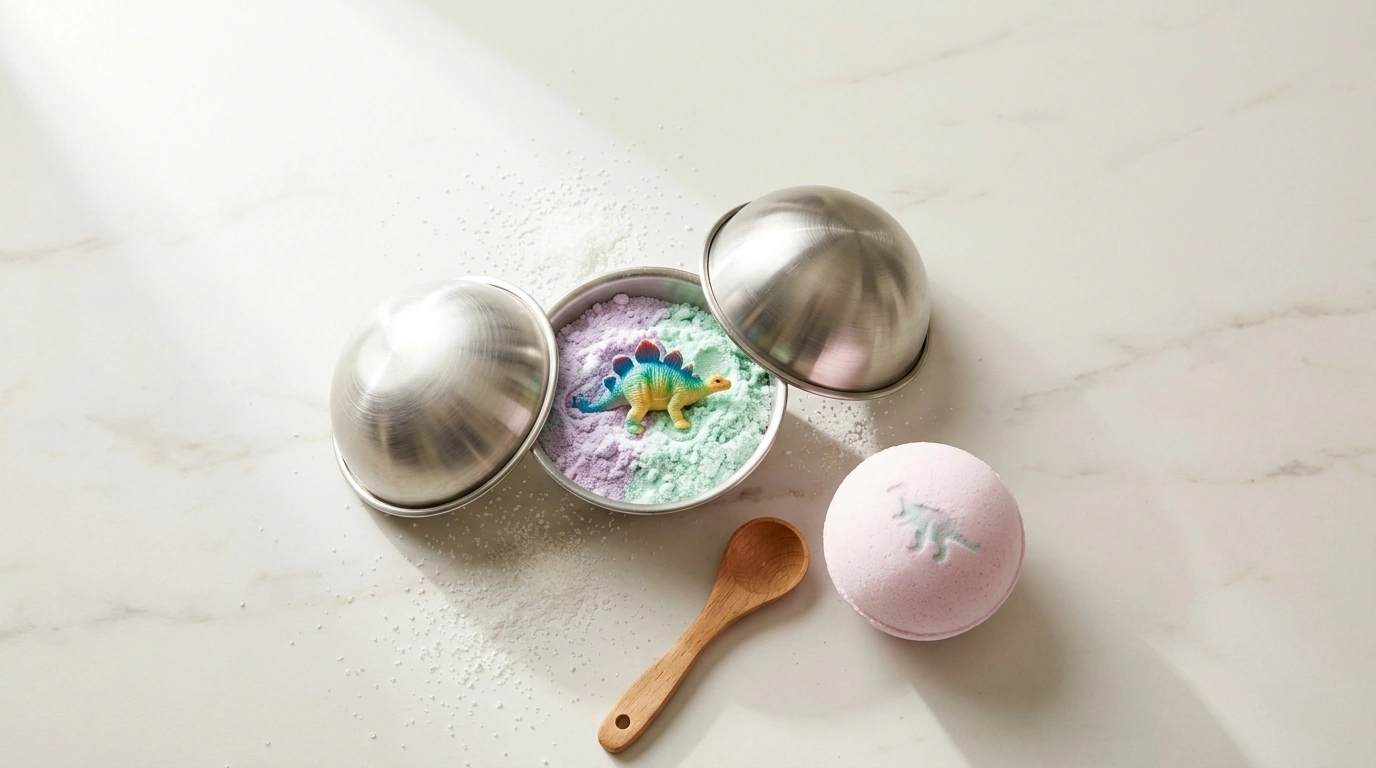
Standard-Metallkugelformen mit 2.5 Zoll — Der Industriestandard. Hervorragend für normale Badebomben, aber knapp bemessen zum Einbetten von Spielzeug.
3-Zoll-Formen — Meine klare Empfehlung für Badebomben mit Spielzeug. Dieser zusätzliche halbe Zoll bietet genug Platz, um das Spielzeug vollständig mit der Mischung zu umschließen, was Risse und ein vorzeitiges Freilegen verhindert.
Silikonformen in Charakterdesigns — Ideal für thematische Formen, aber weniger geeignet, um Spielzeug zu verstecken. Die unregelmäßigen Hohlräume machen die Platzierung des Spielzeugs unvorhersehbar.
Meine persönliche Empfehlung? Greifen Sie zu 3-Zoll-Kugelformen aus Edelstahl. Das sind die Formen, die wir verwenden würden, wenn wir die Linie von Hand bestücken würden. Sie lösen sich sauber, halten praktisch ewig und bieten Ihrem eingebetteten Spielzeug die beste Verdeckung. Badebombenformen für Kinder gibt es in vielen originellen Formen, aber Kugeln liefern die konstantesten Ergebnisse.
Weitere Werkzeuge, die Sie benötigen
Sprühflasche mit feinem Nebel (für Hamamelis)
Große Rührschüssel (Glas oder Edelstahl — kein Aluminium)
Messbecher und Messlöffel
Backpapier oder ein Drahttrockengestell
Schrumpfbeutel oder biologisch abbaubares Zellophan zum Verpacken der fertigen Bomben
Latex- oder Nitrilhandschuhe (Zitronensäure kann Ihre Hände austrocknen)
Schritt-für-Schritt-Anleitung für Badebomben mit eingebettetem Spielzeug
Schritt 1 — Trockene Zutaten mischen
Verwenden Sie dieses Verhältnis: 2 Teile Natron : 1 Teil Zitronensäure : 1 Teil Maisstärke. Für eine Charge von etwa 4–6 Badebomben mit 3-Zoll-Formen entspricht das 1 Tasse Natron, ½ Tasse Zitronensäure und ½ Tasse Maisstärke.
Sieben Sie alles zusammen durch ein feinmaschiges Sieb in Ihre Rührschüssel. Ich kann das nicht genug betonen — dieser Schritt ist unverzichtbar. In der Fabrik führen ungesiebte Chargen zu klumpigen, schwachen Bomben, die beim Entformen reißen. Fünf Minuten Sieben bewahren Sie vor einer misslungenen Charge.
Schritt 2 — Feuchte Zutaten vermengen
Schmelzen Sie in einer separaten kleinen Schüssel 2–3 Esslöffel Kokosöl (20 Sekunden in der Mikrowelle). Fügen Sie Ihr Färbemittel hinzu — ein paar Tropfen lebensmittelechter Farbe oder einen Viertel Teelöffel Mica-Pulver. Geben Sie Duftöl hinzu, falls verwendet (denken Sie daran: nicht mehr als 1% des Gesamtgewichts für Kinder).
Nun die feuchte Mischung langsam einträufeln und unter die trockenen Zutaten heben. Hier ist mein Profi-Tipp: Geben Sie sie in drei kleinen Portionen hinzu und rühren Sie zwischen jeder Zugabe mit dem Schneebesen um. Wenn Sie alles auf einmal hineingeben, lösen Sie vorzeitiges Sprudeln aus — dann ist die Reaktionskraft dahin. Ein leises Zischen ist in Ordnung. Kräftiges Sprudeln bedeutet, dass Sie zu schnell waren.
Schritt 3 — Konsistenz prüfen
Nehmen Sie eine Handvoll der Mischung und drücken Sie sie in Ihrer Faust zusammen. Ich nenne das den "Sandburg"-Test. Sie sollte ihre Form beim Drücken fest behalten, wie nasser Sand am Strand. Wenn sie auseinanderbröselt, ist sie zu trocken.
Geben Sie Witch Hazel aus Ihrer Sprühflasche in jeweils 2–3 Sprühstößen hinzu. Mischen Sie zwischen den Zugaben gründlich. Haben Sie Geduld. Sie können jederzeit mehr Feuchtigkeit hinzufügen, aber Sie können sie nicht wieder herausnehmen.
Schritt 4 — Die Form füllen und das Spielzeug einsetzen
Hier passiert die Magie. So würden wir die genaue Methode aus dem Tutorial für Badebomben mit eingebettetem Spielzeug anwenden:
Füllen Sie eine Hälfte Ihrer 3-inch-Form und drücken Sie die Mischung mit den Daumen fest an. Formen Sie in der Mitte eine kleine Vertiefung.
Legen Sie Ihr Spielzeug in diese Vertiefung.
Bedecken Sie das Spielzeug mit mehr Mischung und drücken Sie sie eng darum fest.
Überfüllen Sie die zweite Formenhälfte leicht — häufen Sie die Mischung über den Rand hinaus auf.
Drücken Sie beide Hälften fest zusammen. Nicht drehen. Einfach gerade zusammendrücken und 5 Sekunden lang halten.
Insider-Technik: Wickeln Sie Ihr Spielzeug vor dem Einbetten in ein kleines Stück weißes Seidenpapier. So verhindern Sie, dass das Öl und die Farbstoffe in Ihrer Mischung das Spielzeug verfärben oder Flecken hinterlassen. Das machen wir bei jedem einzelnen Produktionslauf.
Schritt 5 — Ausformen und aushärten lassen
Warten Sie 5–10 Minuten, während die Form auf Pergamentpapier ruht. Klopfen Sie die Außenseite vorsichtig mit der Rückseite eines Löffels ab und heben Sie dann eine Hälfte behutsam ab. Wenn sie kleben bleibt, warten Sie weitere 5 Minuten.
Legen Sie die entformten Bomben auf Pergamentpapier oder ein Trockengestell. Lassen Sie sie 24–48 Stunden in einem kühlen, trockenen Bereich aushärten.
Hier ist etwas, das die meisten Anleitungen nicht verraten: Luftfeuchtigkeit ist der Feind. In unserer Fabrik halten wir im Aushärtungsraum exakt 40–50% relative Luftfeuchtigkeit ein. Wenn Sie in einem feuchten Klima leben, verwenden Sie in der Nähe einen Luftentfeuchter oder lassen Sie sie in einem klimatisierten Raum aushärten. Luftfeuchtigkeit im Badezimmer ruiniert sie über Nacht.
Schritt 6 — Verpacken und lagern
Sobald sie ausgehärtet sind, wickeln Sie jede Bombe einzeln in Schrumpffolie (zum Versiegeln mit Heißluftpistole oder Haartrockner) oder Frischhaltefolie. So wird Feuchtigkeit ausgeschlossen und die Sprudelreaktion bewahrt.
Wenn Sie diese verschenken, kennzeichnen Sie sie mit dem Spielzeuginhalt und fügen Sie einen Warnhinweis zur Erstickungsgefahr für Kinder unter 3 Jahren hinzu. Das ist nicht nur gute Praxis — es ist verantwortungsvolle Herstellung.
Haltbarkeit bei ordnungsgemäßer Versiegelung: ungefähr 6 Monate. Unversiegelt unter trockenen Bedingungen: 2–3 Monate, bevor die Sprudelwirkung merklich nachlässt.
Fehlerbehebung bei häufigen Problemen (Aus der Produktion)
Badekugel reißt oder bröckelt
Dies ist das häufigste Problem bei Anfängern. Die Ursache ist fast immer unzureichende Feuchtigkeit oder zu starkes Verdichten. Wenn Ihre Mischung zu trocken ist, kann sie nicht richtig binden. Wenn Sie zu fest drücken, verursacht der Innendruck beim Trocknen Risse. Lösung: Geben Sie beim Mischen mehr Hamamelis hinzu und drücken Sie fest — aber nicht mit voller Kraft.
Spielzeug durch die Oberfläche sichtbar
Das passiert, wenn Sie nicht genug Mischung um das Spielzeug herum verdichten. Verwenden Sie deckende Farbstoffe (dafür eignet sich Glimmerpulver besser als flüssige Farbe) und stellen Sie sicher, dass sich auf allen Seiten mindestens ¼ Zoll verdichtete Mischung zwischen dem Spielzeug und der Außenfläche befindet.
Schwaches Sprudeln oder langsames Auflösen
Ihre Zitronensäure hat wahrscheinlich Feuchtigkeit aufgenommen. Zitronensäure ist hygroskopisch — sie zieht Wasser aus der Luft an. Bewahren Sie sie stets in einem luftdichten Behälter auf. Wenn Ihr Beutel seit Monaten geöffnet ist, ersetzen Sie ihn. Frische Zitronensäure macht einen deutlichen Unterschied.
Das Spielzeug verfärbt die Bombe oder verursacht Flecken
Einige bemalte Spielzeuge geben Farbe an die ölige Mischung ab. Lösungen: Versiegeln Sie das Spielzeug mit einer Schicht klarem Nagellack und lassen Sie es vollständig trocknen, bevor Sie es einbetten, oder verwenden Sie die zuvor erwähnte Methode mit Seidenpapier. Beide Ansätze funktionieren in unseren Produktionsläufen zuverlässig.
Kreative Variationen und Themenideen
Hier zeigt DIY seinen wahren Vorteil gegenüber gekauften Optionen. Hier sind einige thematische Kombinationen, die ich persönlich während unserer Produktentwicklungssitzungen getestet habe:
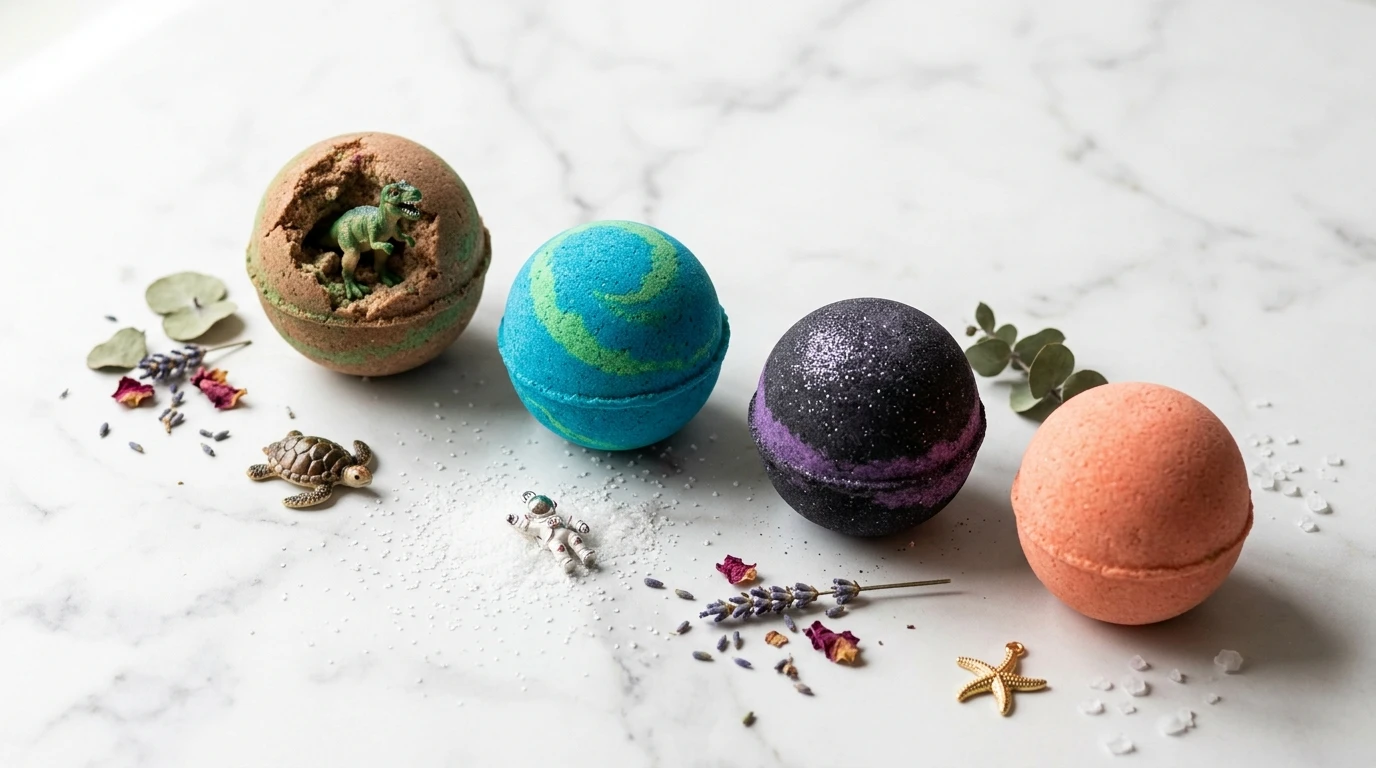
Dinosaurier-Ausgrabung — Erdtöne in Braun und Grün, ohne Duft oder mit leichtem Vanilleduft, mit kleinen Dinosaurierfiguren im Inneren. Kinder lieben es, ihren Dino aus der sprudelnden Bombe zu "bergen".
Ozean-Entdecker — Blau-grüner Wirbeleffekt (zwei Farben in die Form schichten), leichter Meeresbrise-Duft, mit Meerestier-Spielzeugen wie Schildkröten, Delfinen oder Seesternen.
Weltraum-Abenteuer — Schwarz und tiefes Lila mit kosmetischem Silberglitter, mit Astronauten- oder Raketenanhängern. Diese sehen umwerfend aus.
Festtagsthemen — Rot und Grün als Weihnachtsstrumpf-Füllung, Pastelltöne mit Hasenfiguren zu Ostern, Orange mit Spinnen als Mitgebsel für Halloween-Partys.
Mein persönlicher Favorit? Die Ozean-Entdecker-Kombination. Es ist unglaublich befriedigend zu beobachten, wie sich tiefblaues Sprudeln auflöst und eine kleine Meeresschildkröte zum Vorschein kommt. Diese Kombination empfehle ich Einsteigern — die Farben sind unkompliziert und das Thema ist allgemein beliebt.
Abschließende Gedanken
Nach Jahren der professionellen Herstellung von Badebomben kann ich ehrlich sagen, dass dieses Projekt — Überraschungsspielzeug-Badebomben zu Hause herzustellen — immer noch zu meinen liebsten Wochenendaktivitäten mit meinen eigenen Kindern gehört. Es hat etwas wirklich Befriedigendes, Fertigungs-Know-how mit familiärer Kreativität zu verbinden.
Sie benötigen weder teure Geräte noch eine professionelle Ausbildung. Was Sie brauchen, ist eine einfache Formel, ordentliche Formen, sichere Spielzeuge und die Bereitschaft zu experimentieren. Ihre erste Charge ist vielleicht nicht perfekt. Das ist vollkommen in Ordnung. Selbst in unserer Fabrik wird der erste Durchlauf einer neuen Formulierung verworfen. Iteration ist einfach Teil des Prozesses.
Das möchte ich, dass Sie als Nächstes tun: Wählen Sie eines der oben genannten Themen aus, besorgen Sie Ihre Zutaten (die meisten sind im Lebensmittelhandel oder online erhältlich) und stellen Sie an diesem Wochenende Ihre erste Charge her. Beginnen Sie mit nur 2–3 Bomben, um ein Gefühl für die Konsistenz der Mischung und den Druck beim Formen zu bekommen.
Wenn Sie diesen Leitfaden hilfreich fanden, teilen Sie Ihre Kreationen mit uns. Markieren Sie Ihre Fotos, sagen Sie mir, welche Themen Sie ausprobiert haben, was funktioniert hat und was misslungen ist. Ich helfe immer gern bei der Fehlersuche aus der Perspektive des Fabrikalltags.
Und wenn Sie weitere Badebomben-Formulierungen, saisonale Rezepte oder fortgeschrittene Techniken wie geschichtete Farben und versteckte Botschaften möchten — setzen Sie ein Lesezeichen für diese Seite. Ich werde regelmäßig weiteres Insiderwissen teilen. Genau die Art von Wissen, für die ich fünf Jahre an der Produktionslinie gebraucht habe.
Viel Freude beim Herstellen. Ihre Kinder werden die Badezeit lieben.
FAQ
F: Verstopfen Rückstände von Badebomben die Poren?
A: In den Konzentrationen, die in den meisten Badebomben verwendet werden, sind die Inhaltsstoffe für die meisten Menschen nicht komedogen genug, um Hautunreinheiten zu verursachen. Wenn Sie jedoch zu Akne neigen, insbesondere an Brust oder Rücken, ist ein kurzes Abspülen nach dem Bad eine sichere Wahl. Es dauert zehn Sekunden und gibt Ihnen ein gutes Gefühl.
F: Welches Alter ist für Spielzeug-Badebomben geeignet?
A: Die allgemeine Empfehlung lautet 3 Jahre und älter, vor allem weil kleine Spielzeugteile ein Erstickungsrisiko darstellen können. Unabhängig vom Alter empfehle ich während der Verwendung immer die Aufsicht durch Erwachsene. Das Spielzeug kommt zum Vorschein, wenn sich die Badebombe auflöst, und kleine Kinder sollten mit kleinen Gegenständen im Wasser nicht unbeaufsichtigt gelassen werden.
F: Kann ich jedes Plastikspielzeug in einer Badebombe verwenden?
A: Nein. Das Spielzeug muss wasserdicht, ungiftig, frei von losen Komponenten und mit einer Farbe beschichtet sein, die nicht abplatzt oder sich auflöst. Vermeiden Sie Spielzeuge mit Aufklebern, Metallic-Farbe oder beweglichen Teilen. Massive Silikonfiguren oder versiegelte PVC-freie Figuren eignen sich am besten.
F: Wie lange sind selbstgemachte Badebomben mit Spielzeug haltbar?
A: Wenn sie einzeln in Schrumpffolie oder luftdichten Behältern versiegelt sind, halten sie bei voller Sprudelkraft etwa 6 Monate. Unversiegelt und unter trockenen Bedingungen können Sie mit 2–3 Monaten guter Leistung rechnen. Danach lösen sie sich zwar weiterhin auf, aber mit deutlich weniger Sprudeleffekt.
F: Beschädigt die Zitronensäure das Spielzeug?
A: Bei der kurzen Einwirkzeit während eines Bades (die meisten Badebomben lösen sich in 3–5 Minuten auf) beschädigt Zitronensäure hochwertiges Kunststoff- oder Silikonspielzeug nicht. Vermeiden Sie jedoch das Einbetten von Spielzeugen mit Metallfarbe oder von Gegenständen mit freiliegenden Metallkomponenten — Zitronensäure kann während der Aushärtungszeit im Laufe der Zeit leichte Korrosion verursachen.
F: Kann ich DIY-Badebomben mit Spielzeug im Inneren verkaufen?
A: Ja, aber Sie müssen die FDA-Vorschriften zur Kennzeichnung von Kosmetika und die CPSC-Spielzeugsicherheitsstandards für an Kinder vermarktete Produkte einhalten. Das bedeutet eine ordnungsgemäße Zutatenkennzeichnung, Altershinweise, Warnhinweise zu Erstickungsgefahr und je nach Verkaufsvolumen und Rechtsraum möglicherweise Sicherheitsprüfungen durch Dritte. Beginnen Sie mit der Prüfung des Leitfadens der FDA zur Kosmetikkennzeichnung und der Ressourcen der CPSC für kleine Unternehmen.
F: Welche Badebombengröße eignet sich am besten, um Spielzeuge zu verstecken?
A: Eine Form mit 3 Zoll Durchmesser ist das Minimum, das ich zum Einbetten von Standardfiguren mit 1–2 Zoll Größe empfehlen würde. So haben Sie genug umgebende Mischung — mindestens ¼ Zoll auf allen Seiten — um die strukturelle Integrität zu erhalten und das Spielzeug vollständig verborgen zu halten, bis sich die Badebombe im Wasser auflöst.