
Erfahren Sie mehr über reale MOQ-Werte für Private-Label-Body-Mist (500–5,000 Einheiten) und Stückkosten von $0.90–$3.50. Erfahren Sie, was die Preisgestaltung beeinflusst und wie Sie versteckte Gebühren vermeiden.
Ein Gründer, mit dem ich im vergangenen Frühjahr gesprochen habe, erhielt an einem Nachmittag zwei Angebote für dasselbe Body-Mist-Projekt. Eine Fabrik schwor, die Mindestbestellmenge liege bei 1,000 Einheiten. Eine andere bestand darauf, 5,000 seien „der Branchenstandard, nicht verhandelbar“. Beide sagten die Wahrheit über ihren eigenen Betrieb — und lagen dennoch technisch gesehen falsch, was die Branche betrifft.
Genau diese Lücke ist das eigentliche Problem. MOQ und Stückkosten sind keine festen Gesetze, die von irgendeiner Sourcing-Behörde vorgegeben werden. Es sind verhandelbare Variablen, die direkt von Ihrer Formel, Ihren Verpackungsentscheidungen und der jeweiligen Lieferantenkategorie abhängen, mit der Sie sprechen. Sobald Sie verstehen, was diese Zahlen tatsächlich beeinflusst, werden die verwirrenden Angebote nachvollziehbar — und Sie zahlen nicht mehr zu viel.
Wichtige Erkenntnisse
- Die typische MOQ liegt bei 500–5,000 Einheiten, abhängig von der Lieferantenstufe; Boutique-Labore beginnen bei 500, große Hersteller akzeptieren selten weniger als 10,000.
- Die Gesamtkosten pro Einheit liegen in der Regel zwischen $0.90 und $3.50, wobei die Duftqualität und die Flaschenwahl die größten Schwankungen verursachen.
- Die drei wichtigsten Kostentreiber sind die Qualität des Duftöls, die Flaschen- und Sprühereinheit sowie Ihr Bestellvolumen — alles andere ist zweitrangig.
- Lieferanten mit niedriger MOQ sind sinnvoll, wenn Sie Düfte testen oder direkt an Verbraucher (DTC) launchen, doch der Aufpreis pro Einheit kann gegenüber mittleren Produktionsmengen 40–60% betragen.
- Versteckte Gebühren — Werkzeuge, Stabilitätsprüfungen, IFRA-Konformität, Fracht — erhöhen Ihre tatsächlichen Landed Costs routinemäßig um 15–25% und tauchen in der ersten Offerte selten auf.
Was bestimmt das MOQ für Body Mist? (Die kurze Antwort zuerst)
Ihr MOQ wird durch die am stärksten einschränkende Komponente im Prozess festgelegt — den Engpass. In den meisten Fällen ist das entweder die Chargengröße des Duftöls oder die Umrüstung der Abfülllinie, nicht eine willkürliche Präferenz des Vertriebsteams.
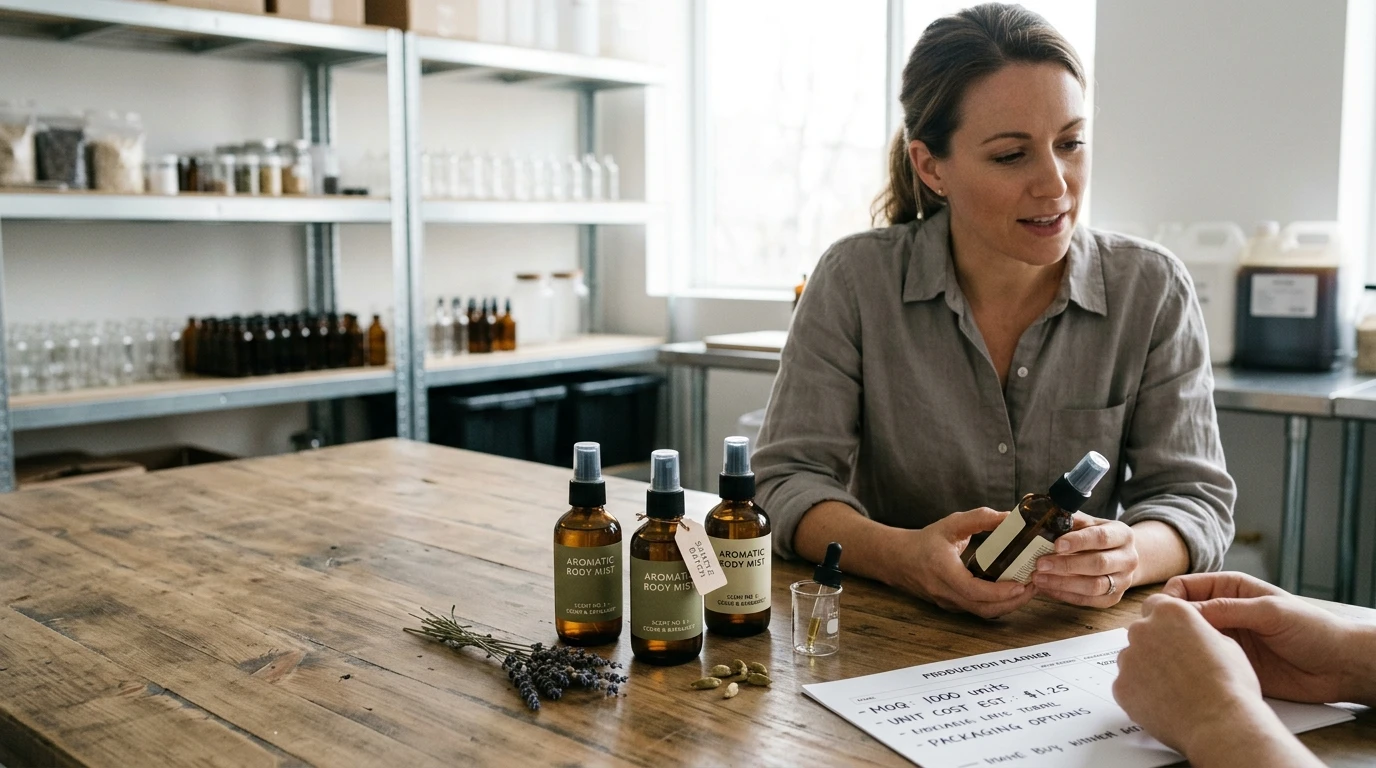
Die Logik ist folgende: Eine Fabrik kann nicht profitabel eine Fünf-Liter-Charge eines kundenspezifischen Duftöls anmischen, eine Abfülllinie für Ihre spezifische Flasche kalibrieren und dann nur 300 Stück produzieren. Der Einrichtungsaufwand frisst die Marge auf. Deshalb gibt es ein Minimum, um die Fixkosten auf genügend Einheiten zu verteilen, damit sich der Auftrag lohnt.
Der wahre Grund, warum Mindestmengen existieren
Drei Faktoren treiben das MOQ nach oben. Erstens, Parfümkomposition — Parfümeure und Aromahäuser stellen Öle in Standardvolumina her, und ein individueller Duft unterhalb einer bestimmten Kilo-Schwelle wird pro Einheit schnell teuer. Zweitens, Kalibrierung der Abfülllinie: Für jede Flaschenhalsgröße und Viskosität müssen die Düsen neu eingestellt werden, und diese Umrüstzeit ist ein Kostenfaktor ohne Gegenwert. Drittens, Bestellung von Komponenten — Glasflaschen, Sprühköpfe und Verschlüsse stammen von Vorlieferanten, die eigene Mindestmengen vorgeben, oft 5.000 oder mehr für ein Standardprodukt.
Wenn eine Fabrik Ihnen bei einem vollständig kundenspezifischen Projekt ein niedriges MOQ nennt, übernimmt jemand diese Einrichtungskosten — in der Regel Sie, verborgen im Stückpreis.
MOQ nach Lieferantenstufe
| Lieferantenstufe | Typisches MOQ (Einheiten) | Geeignet für |
|---|---|---|
| Boutique-/Body-Mist-Lieferant mit niedrigem MOQ | 500–1,000 | Startups, Duftproben, DTC-Launches |
| Contract-Hersteller im mittleren Segment | 2,500–5,000 | Skalierende Marken mit bewährten SKUs |
| Großvolumen-Hersteller | 10,000+ | Einzelhandelsvertrieb, Massenmarktkanal |
Beachten Sie, dass die Mindestbestellmenge für private label body mist, die Ihnen genannt wird, viel darüber aussagt, mit wem Sie es zu tun haben. Ein Betrieb, der 500 Einheiten anbietet, stapelt Ihre Aufträge oft auf Lagerkomponenten auf; ein Werk, das 10.000 verlangt, ist auf Durchsatz optimiert, nicht auf Experimente.
Preisgestaltung für Private Label Body Mist: Vollständige Kostenaufstellung
Jetzt der Teil, der Käufer tatsächlich interessiert. Wenn Ihnen jemand 1,80 $ pro Einheit nennt, wofür bezahlen Sie dann? Die Zahl aufzuschlüsseln ist der einzige Weg, um zu erkennen, ob ein Angebot fair ist oder künstlich aufgebläht wurde.
Kosten pro Einheit — Baustein für Baustein
| Kostenkomponente | Typischer Anteil | Hinweise |
|---|---|---|
| Duftöl / Grundrezeptur | 25–35% | Premium- im Vergleich zu kommerziellen Ölen beeinflusst diesen Anteil am stärksten |
| Flasche + Sprüher + Verschluss | 30–40% | Glas gegenüber PET sowie die Qualität des Sprühmechanismus |
| Abfüllung & Arbeitskosten | 10–15% | Sinkt bei höheren Volumina deutlich |
| Etikettierung / Dekoration | 8–12% | Siebdruck vs. Haftetikett vs. Heißprägung |
| Verpackung & Qualitätskontrolle | 5–8% | Verkaufsfertige Verpackung erhöht die Kosten |
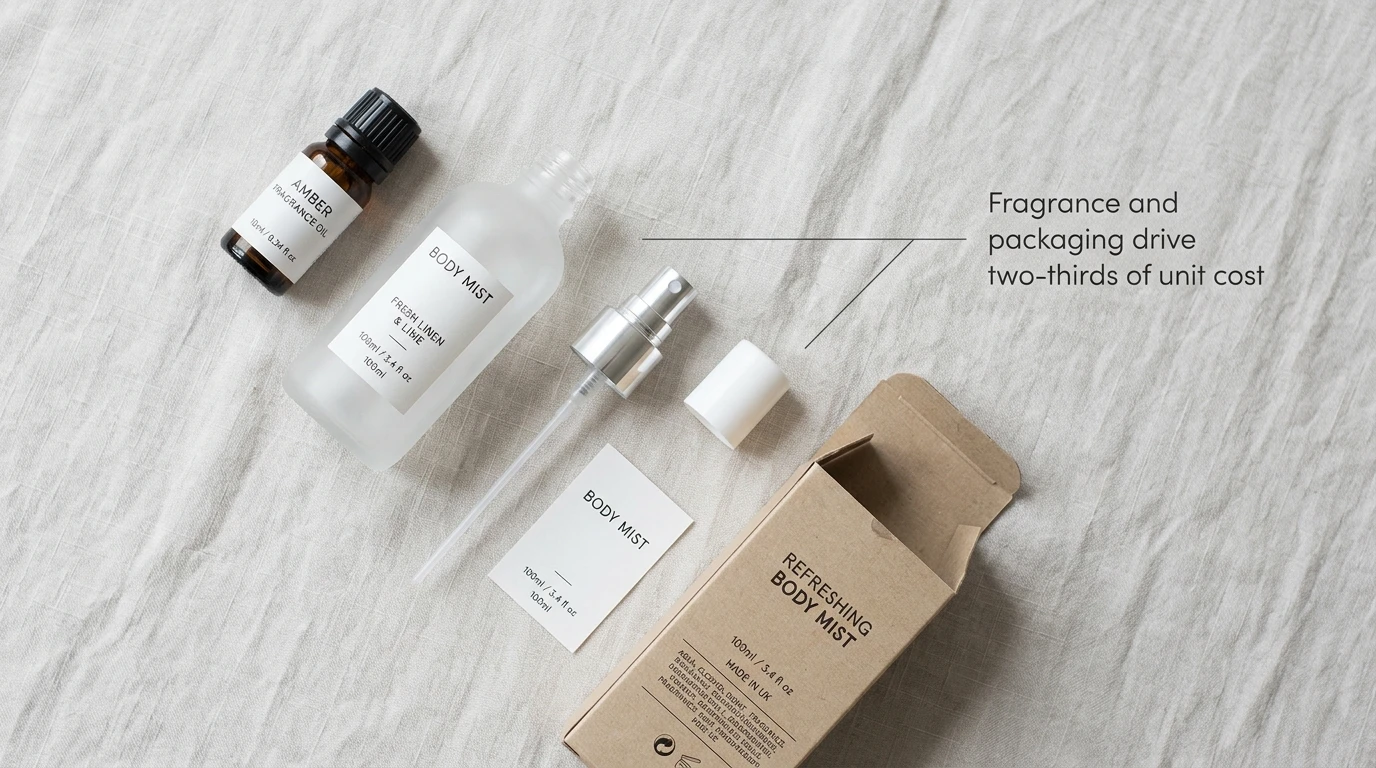
Die beiden Schwergewichte sind Duft und Verpackung — zusammen machen sie rund zwei Drittel Ihrer Kosten aus. Genau dort zahlen sich Verhandlungen und intelligente Substitution am meisten aus. Ein paar Cent am Etikett einzusparen, bewegt die Kennzahl kaum.
Beispielhafte Gesamtkostenszenarien
Skaleneffekte sind real und deutlich. Hier sehen Sie, wie ein Body Mist mittlerer Qualität mit 100 ml typischerweise über drei Volumina bepreist wird. Verstehen Sie diese Angaben als repräsentative Spannen, nicht als verbindliches Angebot.
| Bestellmenge | Gesamtkosten pro Einheit | Warum sich der Wert verändert |
|---|---|---|
| 1,000 Einheiten | $2.40–$3.50 | Einrichtungs- und Kleinserienläufe dominieren |
| 5,000 Einheiten | $1.60–$2.30 | Abfülleffizienz und bessere Komponentenpreise greifen |
| 25,000 Einheiten | $0.90–$1.50 | Großmengen-Batchen von Öl, vollständiger Palettenversand, minimale Einrichtungskosten pro Einheit |
Das ist die ehrliche Kalkulation hinter den Kosten für einen Hersteller von Custom Body Mist: Der Sprung von 1,000 auf 25,000 Einheiten kann Ihren Stückpreis nahezu halbieren. Die Frage ist nicht, ob Skaleneffekte günstiger sind — das sind sie offensichtlich — sondern ob Sie den zusätzlichen Bestand absetzen können, bevor er Ihr Kapital bindet.
Die versteckten Kosten, die die meisten Käufer übersehen
Hier liegen die ersten Angebote oft durch Auslassung falsch. Der angegebene Preis umfasst selten die einmaligen und nachgelagerten Kosten, die Ihr Budget unauffällig verändern.
Werkzeugkosten, Einrichtungs- & Formulierungsgebühren
Die Entwicklung eines individuellen Duftes kann je nach Komplexität und Anzahl der benötigten Überarbeitungsrunden 300$–1.500$ kosten. Eine maßgeschneiderte Flaschenform — wenn Sie eine Form wünschen, die sonst niemand hat — ist eine völlig andere Größenordnung und kostet oft 3.000$–8.000$ für das Werkzeug, bevor Sie überhaupt eine einzige Flasche kaufen. Die Siebvorbereitung für den Druck verursacht zusätzliche Kosten pro Farbe, typischerweise 40$–120$ pro Sieb.
Nichts davon erscheint in einem Preisangebot pro Einheit. Verteilen Sie diese Kosten auf Ihre gesamte Produktionsmenge, und eine „günstige“ Bestellung über 1.000 Einheiten kann still und leise um weitere 0,50$–1,00$ pro Flasche steigen.
Konformität, Tests & Dokumentation
Body Mist ist ein Kosmetikprodukt, und Kosmetika unterliegen ernstzunehmenden regulatorischen Anforderungen. In den USA fallen Produkte unter die FDA-Kosmetikvorschriften und den MoCRA-Rahmen, der Registrierungs- und Meldepflichten für Betriebsstätten sowie Produkte eingeführt hat. In der EU benötigen Sie eine CPNP-Meldung, eine benannte verantwortliche Person und eine vollständige Sicherheitsbewertung.
Hinzu kommt die IFRA-Konformität für den Duft selbst — die International Fragrance Association legt Grenzwerte für die Verwendung von Duftstoffen fest, und ein konformer Lieferant stellt für jeden Duft ein IFRA-Zertifikat bereit. Kalkulieren Sie Stabilitätstests (Haltbarkeit und Verpackungsverträglichkeit) sowie, falls erforderlich, PET- oder Challenge-Tests ein. Das sind keine optionalen Positionen; sie entscheiden darüber, ob ein Produkt verkaufbar ist oder ein Haftungsrisiko darstellt.
Fracht, Zölle & MOQ-bedingtes Bestandsrisiko
Die Landed Costs sind der Punkt, an dem Geschäfte aus dem Ruder laufen. Seefracht ist pro Einheit günstig, aber langsam; Luftfracht ist schnell und belastet die Marge stark. Body Mist wird als regulierte Ware versendet, da es typischerweise Alkohol enthält, was sowohl die Versandart als auch die Unterlagen beeinflusst. Die Zolltarifklassifizierung unter dem korrekten HS-Code bestimmt Ihren Zollsatz, und Fehler führen zu Verzögerungen beim Zoll.
Die subtileren Kosten betreffen den Cashflow. Ein hohes MOQ bedeutet gebundenes Kapital im Lager. Wenn Ihre Produktion über 10.000 Einheiten 14 Monate bis zum Abverkauf benötigt, sind diese Bestände Finanzierungskosten und nicht nur Einkaufskosten — ein Faktor, den die meisten Vergleiche der Großhandelspreise pro Einheit für Body Mist völlig außer Acht lassen.
Wie Sie Ihr MOQ senken, ohne zu viel zu bezahlen
Sie müssen nicht immer das erste Mindestvolumen akzeptieren, das Ihnen genannt wird. Einige Strategien verändern die Zahl tatsächlich spürbar.
Verwenden Sie Standardformulierungen & Standardflaschen
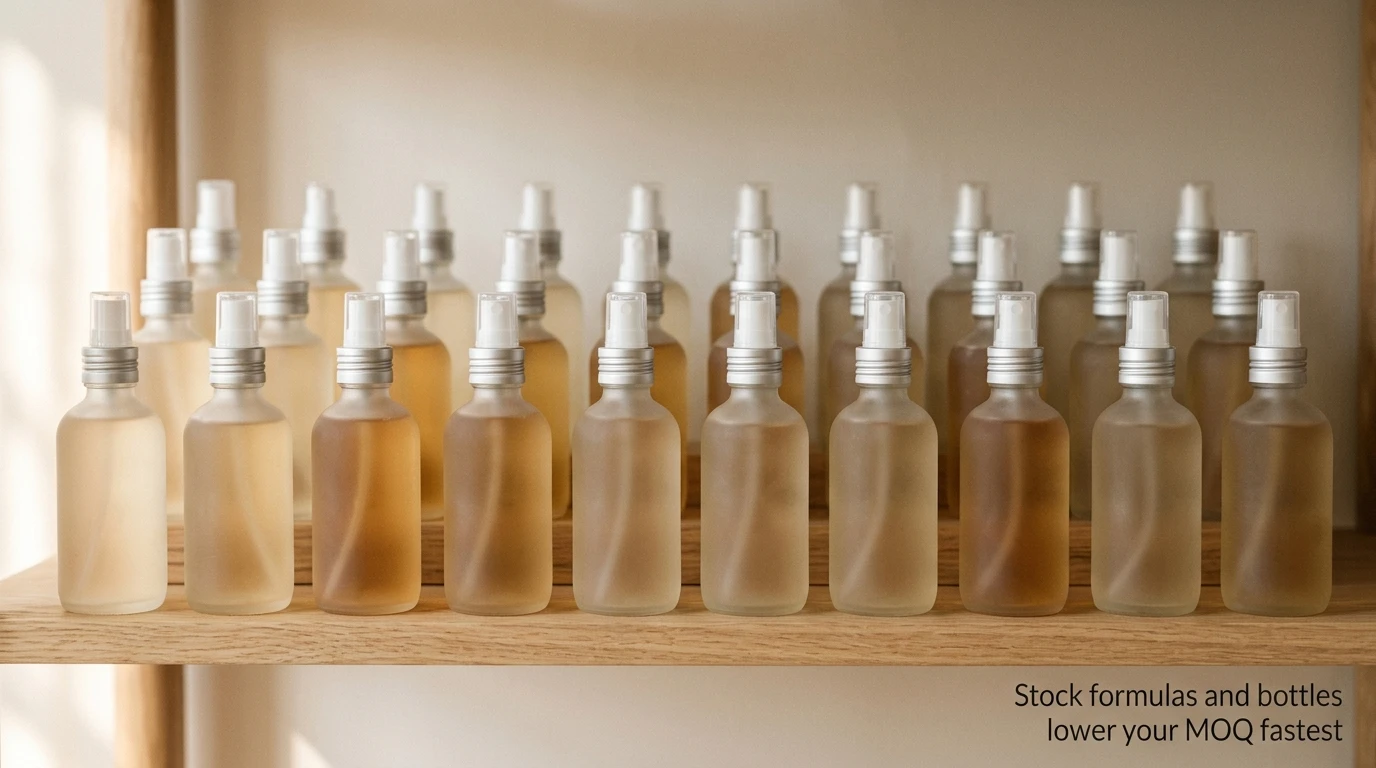
Der schnellste Hebel. Wenn Sie aus der bestehenden Duftbibliothek eines Herstellers und dessen Standard-Flaschenprogramm wählen, entfallen Duftentwicklung, Formenbau und ein großer Teil des Mindestbedarfs an Komponenten. Genau so kann ein Lieferant für Body Mist mit niedrigem MOQ 1.000 Einheiten zu einem tragfähigen Preis anbieten — die Einrichtung ist bereits bezahlt. Sie tauschen ein wenig Exklusivität gegen deutlich mehr Flexibilität, was zum Start in der Regel die richtige Entscheidung ist.
SKUs frühzeitig konsolidieren
Neue Marken starten gern mit acht Düften. Tun Sie das nicht. Dreitausend Einheiten eines Hero-Dufts erreichen Mengenschwellen, die acht Düfte mit jeweils 375 Einheiten nie erreichen werden. Belegen Sie die Nachfrage zunächst, und erweitern Sie das Sortiment erst, wenn Sie wissen, was sich verkauft. Weniger SKUs zum Launch vereinfachen außerdem Ihre Compliance-Dokumentation.
Verhandlungsspielräume, die tatsächlich wirken
Vager Druck führt zu nichts. Konkrete Zusagen bringen Bewegung. Bieten Sie einen dokumentierten Nachbestellplan an — Fabriken lassen sich bei einer Erstbestellmenge eher entgegenkommen, wenn eine zweite Bestellung vertraglich wahrscheinlich ist. Flexibilität bei der Vorlaufzeit ermöglicht es einem Werk, Ihren Auftrag in eine Lücke zwischen größeren Produktionsläufen einzuplanen. Und fragen Sie nach gemeinsamen Komponentenläufen, bei denen Ihre Flasche auf der Bestellung eines anderen Kunden mitläuft, um die Mindestmenge des Zulieferers zu erreichen.
Den richtigen Hersteller für individuelle Body Mist auswählen
Kostendisziplin ist wertlos, wenn der Lieferant nicht liefern kann. Prüfen Sie ihn wie einen Partner, nicht wie einen bloßen Anbieter.
Checkliste für Warnsignale vs. positive Signale
- Grün: Verfügt über GMP und ISO 22716 (den GMP-Standard speziell für Kosmetika) sowie FDA-Registrierung und Audits durch Dritte wie SMETA.
- Grün: Stellt detaillierte Angebote bereit, die Werkzeugkosten, Tests und Stückkosten getrennt ausweisen.
- Grün: Ist bereit, kostenpflichtige Muster zu produzieren, bevor Sie sich für eine vollständige Produktionscharge entscheiden.
- Rot: Ein einzelner Gesamtpreis ohne Aufschlüsselung und ausweichende Antworten zu Zertifikaten.
- Rot: Keine IFRA-Dokumentation, keine Stabilitätsdaten oder Zurückhaltung bei der Besprechung von Compliance.
- Rot: Langsame, unklare Kommunikation während der Angebotsphase — sie verbessert sich in der Regel nicht, nachdem Sie bezahlt haben.
Fragen, die Sie vor der Unterzeichnung stellen sollten
- Was ist im Stückpreis enthalten und was wird separat berechnet?
- Wer besitzt die Duftformel und die Form, wenn ich die Werkzeuge finanziere?
- Wie lang sind Ihre tatsächliche Vorlaufzeit für Muster und Ihre Vorlaufzeit für die Serienproduktion?
- Können Sie IFRA-Zertifikate und Stabilitätstestdaten für jeden Duft bereitstellen?
- Was passiert, wenn eine Charge die Qualitätskontrolle nicht besteht — Nachdruck, Nachfüllung oder Gutschrift?
Marktausblick & Was das für Ihre Beschaffungsstrategie bedeutet
Body- und Hair Mist gehören zu den stabileren Wachstumsbereichen in der Körperpflege, wobei Branchenprognosen das jährliche Wachstum der Kategorie bis in die zweite Hälfte dieses Jahrzehnts im mittleren bis hohen einstelligen Bereich sehen. Zwei Kräfte prägen diesen Markt. Verbraucher tendieren zu sauberen, hautfreundlichen Formulierungen — alkoholfreie Basen, vegan zertifizierte Inhaltsstoffe und Duftstoffe ohne die am strengsten regulierten Allergene.
Die zweite Verschiebung ist strukturell: Die Fertigung mit niedrigen Mindestbestellmengen (MOQs) öffnet Indie-Marken zunehmend den Zugang. Fabriken, die früher nichts unter 10.000 Einheiten in Betracht zogen, betreiben heute flexible Linien für Markteinführungen ab 1.000 Einheiten, weil DTC- und Marketplace-Anbieter bewiesen haben, dass kleine, schnelle und iterative Produktionsläufe skalierbar sind. Für die Beschaffungsstrategie bedeutet das: Sie können mehr Düfte mit geringerem Kapitaleinsatz testen — vorausgesetzt, Sie stimmen Ihre Lieferantenkategorie auf Ihre tatsächliche Entwicklungsphase ab.
Die praktische Lehre: Legen Sie sich nicht zu früh zu stark fest. Nutzen Sie zunächst einen Partner mit niedriger MOQ und lagerfähigen Komponenten, um zu validieren, und verlagern Sie das Volumen erst dann zu einem mittelgroßen oder großen Hersteller, wenn ein Erfolgsprodukt seinen Platz verdient hat. Es andersherum zu machen — also eine große Produktionsmenge festzulegen, bevor Sie Verkaufsdaten haben — ist der Weg, wie Marken am Ende eine Garage voller eines Duftes haben, den niemand wollte.
Häufig gestellte Fragen
Was ist die Mindestbestellmenge für Private-Label-Body-Mist?
Die meisten Lieferanten setzen Mindestmengen zwischen 500 und 5.000 Einheiten fest. Boutique-Labore mit Standardformulierungen und Standardflaschen können bei etwa 500–1.000 beginnen, während größere Hersteller in der Regel 10.000 oder mehr verlangen. Maßgeschneiderte Düfte und exklusive Flaschenformen erhöhen die Mindestmenge.
Wie hoch sind die Produktionskosten pro Einheit für Body Mist?
Die Gesamtkosten liegen in der Regel zwischen 0,90 $ und 3,50 $ pro Einheit. Bei 1.000 Einheiten sind 2,40 $–3,50 $ zu erwarten; bei 25.000 Einheiten kann der Preis auf 0,90 $–1,50 $ sinken. Duftqualität und Flaschenqualität bestimmen den Großteil der Preisunterschiede.
Kann ich Body Mist ohne Mindestbestellmenge herstellen lassen?
Eine echte Fertigung ohne Mindestbestellmenge ist selten und teuer, da die Einrichtungskosten dennoch gedeckt werden müssen. Die realistisch nächste Option ist ein Anbieter mit niedriger Mindestbestellmenge, der 500–1.000 Einheiten auf Basis von Standardkomponenten anbietet, was sowohl Kosten als auch Vorlaufzeit reduziert.
Wie lange dauert die Produktion von Private-Label-Body-Mist?
Individuelle Muster benötigen je nach Formulierung, Duft, Optik und Verpackung in der Regel 7–14 Tage. Nach der Freigabe dauert die Großproduktion vor dem Versand normalerweise 25–30 Tage. Sonderformen für Verpackungen oder maßgeschneiderte Düfte verlängern diesen Zeitrahmen.
Benötige ich meine eigene Duftformel, oder kann ich die des Lieferanten verwenden?
Beides ist möglich. Die Verwendung der bestehenden Duftbibliothek des Lieferanten senkt Ihre Mindestbestellmenge, Kosten und Vorlaufzeit, was ideal für Markteinführungen ist. Ein vollständig maßgeschneiderter Duft bietet Exklusivität, bringt jedoch Entwicklungskosten und eine höhere Mindestmenge mit sich.
Über welche Zertifizierungen sollte ein Hersteller von Body Mist verfügen?
Achten Sie auf ISO 22716 (Kosmetik-GMP), allgemeine GMP und eine FDA-Registrierung für den Vertrieb in den USA. Audits durch Dritte zu ethischen Standards wie SMETA sowie eine IFRA-Konformitätsdokumentation pro Duftstoff signalisieren einen Hersteller, der Sicherheit und Rückverfolgbarkeit ernst nimmt.
Bereit, intelligenter zu beschaffen?
Akzeptieren Sie nicht einfach einen einzigen Gesamtpreis und nennen Sie ihn ein Angebot. Nehmen Sie die oben stehende Kostenstruktur mit zu mindestens drei Lieferanten und bitten Sie jeden um eine detaillierte Aufschlüsselung — getrennt nach Stückkosten, Werkzeugkosten, Prüfkosten und Frachtkosten. Die Unterschiede sagen Ihnen mehr als jede Verkaufspräsentation.
Wenn Sie lieber auf das Rätselraten verzichten möchten, ist Boymay seit 1995 auf die OEM/ODM-Herstellung von Bade- und Körperpflegeprodukten spezialisiert und verfügt über eine 40,000㎡ große Produktionsstätte, 16 automatisierte Linien sowie Zertifizierungen nach GMP, ISO, FDA und SMETA. Mit einer praktikablen Mindestbestellmenge von 1.000 Stück, veganen und tierversuchsfreien Formulierungsoptionen sowie transparenter, detaillierter Angebotserstellung ist dies ein sinnvoller Ausgangspunkt für Marken, die den Markt testen. Fordern Sie noch heute ein Muster und ein Angebot mit detaillierter Aufschlüsselung an — und vergleichen Sie es dann mit den Zahlen in diesem Leitfaden, um fundiert zu entscheiden.