

Before you compare scents or prices, check how the product will be used, because a guest rinsing off in a hotel bathroom and a therapist running a timed treatment in a spa wet room need different things from a shower steamer. For shower steamers wholesale for hotels, the order centres on individually wrapped, consistent, low-risk units. Spa orders lean on flexible fragrance ranges and sets that can also sit on a retail shelf.
The first check is where the steamer will actually be used
A shower steamer is a pressed tablet of bicarbonate, an acid and fragrance that fizzes and releases scent when it meets water vapour, usually placed on the shower floor away from the direct stream. That description already rules out some properties. It needs a shower with a tray or floor that holds a tablet out of the main flow, and a water stream you can control. Bathtub-only showers, handheld-only setups and open wet rooms with strong drainage often don't suit it, and no wholesale spec fixes that.
Hotel rooms: guest-set, unsupervised, high turnover
In a hotel, nobody supervises the use. The guest finds the tablet, unwraps it and decides where to put it. Housekeeping has to restock it daily or per stay, which favours individually wrapped units that survive a trolley and a cleaning cart without crumbling. Loose or fragile tablets leave dust, and dust on a wet tray floor is a cleaning problem and, in the worst case, a slip complaint. Colour matters too: a strongly dyed tablet can leave a tint on grout or light acrylic trays, so ask for a colour-bleed check on a surface like your own.
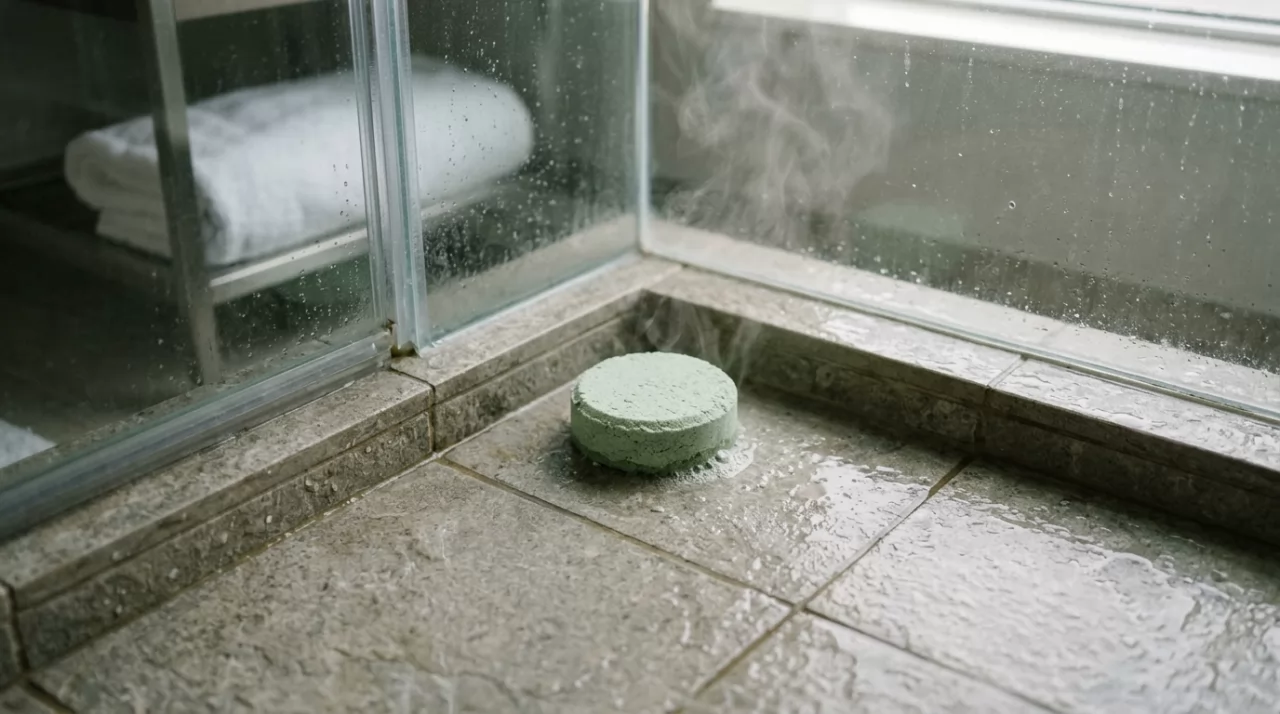
Scent should be moderate and widely acceptable. A bathroom is a small room, and a strong blend that suits one guest can bother the next.
Spa rooms: staff-led, ritual-based, shorter exposure
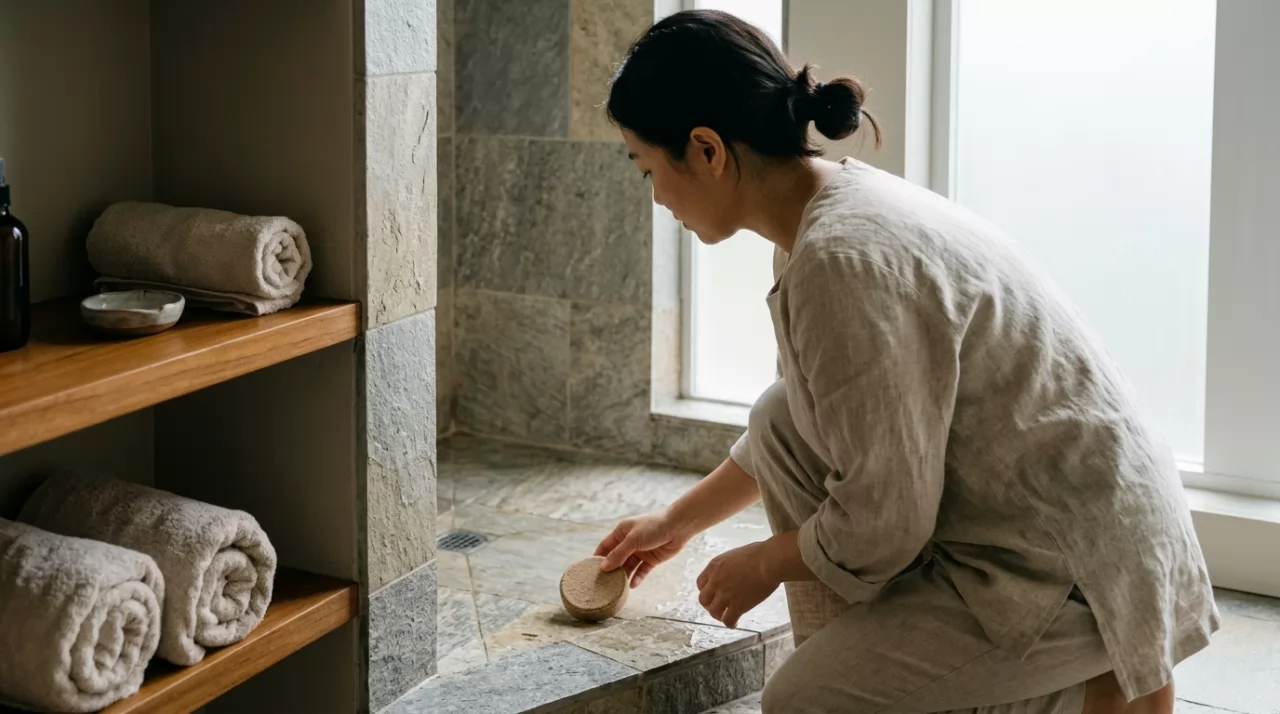
A spa controls the setting. The therapist places the tablet, times the session and treats the scent as one element of a treatment menu. That allows stronger and more distinct fragrance, and a range of several blends tied to named treatments. Because staff handle the product, wrapping can be simpler, although a spa that wants a clean presentation will still prefer sealed units.
Retail shelf: the spa's second use
Many spas also sell. Retail brings in what a hotel never needs: a consumer-facing label, ingredient list, barcode, batch marking and a realistic shelf life. The same tablet may need a box, a window or a shrink wrap for display. If retail is even a possibility, say so in the first request, since it changes the packaging and the paperwork.
Which requirements rule out a supplier before you compare prices?
Four items rule a supplier in or out before price matters: a cosmetic quality system such as ISO 22716, documentation that fits your market, a fragrance allergen declaration, and a verifiable audit status. A supplier who cannot supply these should not reach the quotation stage, however good the sample smells.
ISO 22716 is the international guideline for good manufacturing practice in cosmetics, covering premises, hygiene, batch records and traceability. Ask for the certificate, check the issuing body and the scope, and confirm the site named is the site that will make your order. Shower steamers are treated as cosmetics in many markets, though classification can vary, so confirm with your regulator or adviser.
For the EU, the Cosmetic Products Regulation (EC) No 1223/2009 expects a responsible person, a product safety report and a notification before products go on sale. The UK runs a parallel regime with its own responsible person. In the US, cosmetic labelling rules cover ingredient declaration and identity statements, and facility registration with the FDA is possible but is not the same as approval. Be careful with wording: "FDA registered" describes a facility listing, never a product endorsement. On audits, SMETA is a social audit methodology run through Sedex, so the accurate phrases are "SMETA audited" and "Sedex member", not "certified".
Fragrance allergens matter because EU rules require certain listed fragrance substances to appear by name on the label above set thresholds. Your supplier should hand over the allergen breakdown for each fragrance, not a vague "fragrance" line. A short pass/fail list you can send with your first enquiry:
- Request a copy of the ISO 22716 certificate and the site it covers.
- Ask which market's documents the supplier has produced before, and request examples with confidential data removed.
- Obtain the fragrance allergen declaration for every scent you shortlist.
- Check audit status wording: SMETA audited or Sedex member, with the report date.
- Confirm the full INCI list is supplied for each formula, including colourants.
- Verify whether vegan formulas and animal-testing statements come with supporting documents.
Anything a supplier answers with "no problem" and no document counts as a fail.
Hotels and spas want different things from the same product
The same tablet can be sold to both, but the specification around it shifts. The table sets out the typical differences, which are tendencies rather than rules.
| Criterion | Hotel | Spa |
|---|---|---|
| Unit size | Smaller, single use | Often larger, per session |
| Wrapping | Individually sealed | Sealed or boxed sets |
| Fragrance intensity | Moderate | Moderate to strong |
| Scent range | One to three | Several, tied to menu |
| Branding | Property logo, discreet | Spa logo, display-led |
| Retail need | Rarely | Often |
| Replenishment | Steady, per occupancy | Seasonal, promotion-driven |
The main contrast is demand pattern: hotels need a few lines in steady volume, spas need many lines in smaller, uneven volume.
That pattern drives the trade-offs. A hotel chain can consolidate scents to keep minimums manageable and unit cost down. A spa that wants six blends splits its volume six ways, and each blend may carry its own minimum. Individual wrapping protects the tablet and the brand but adds packaging cost and carton volume, and shipping a pressed tablet is mostly shipping air and film.
Fragrance and formula decide more than shape
Shape is the visible choice, yet fragrance and formula decide whether guests complain or return. Fragrance load is the share of scent in the formula: too low and the tablet disappears in a ventilated bathroom, too high and it overwhelms a small one, and heavy loads can also affect tablet hardness and colour stability.
Essential oils and fragrance oils behave differently. Essential oils are plant-derived and vary by harvest, so scent can drift between batches and costs move with the crop. Fragrance oils are compounded and generally more consistent, which suits a chain that needs the same scent in every property. Neither choice is a wellness claim, and you should not accept one from any supplier. "Aromatherapy" is simply a product-category label here.
Colourants deserve the same scrutiny, since some fade under light or bleed on contact with damp packaging. Ask for a shelf test on your actual wrapping. Neutral scents such as clean linen, light citrus or soft tea suit hotels because they offend few people. Spas can afford distinct blends because the therapist frames the experience, and a guest has chosen it. Declare allergens by name wherever your market requires, and ask for the INCI list before you approve any scent.
How to choose: matching packaging, volume and MOQ to your property type
The MOQ for custom shower steamers depends on the factory and on how many colours, styles and packaging types you split the order into. In the manufacturer's stated terms, the OEM minimum is 1,000 sets per colour or style when no special container or accessories are involved. A multi-scent spa range therefore multiplies the minimum by the number of variants, which is why it pays to start with fewer.
- If you run a single hotel, then choose one or two scents, sealed single units and one carton size, and keep the first order near the minimum.
- If you run a chain, then standardise one fragrance and one packaging format across properties and order for several months of use.
- If you run a day spa, then start with three or four blends and add more after you see which ones sell.
- If you run a destination resort spa, then plan separate lines for in-room use and for the boutique, with retail labelling on the second.
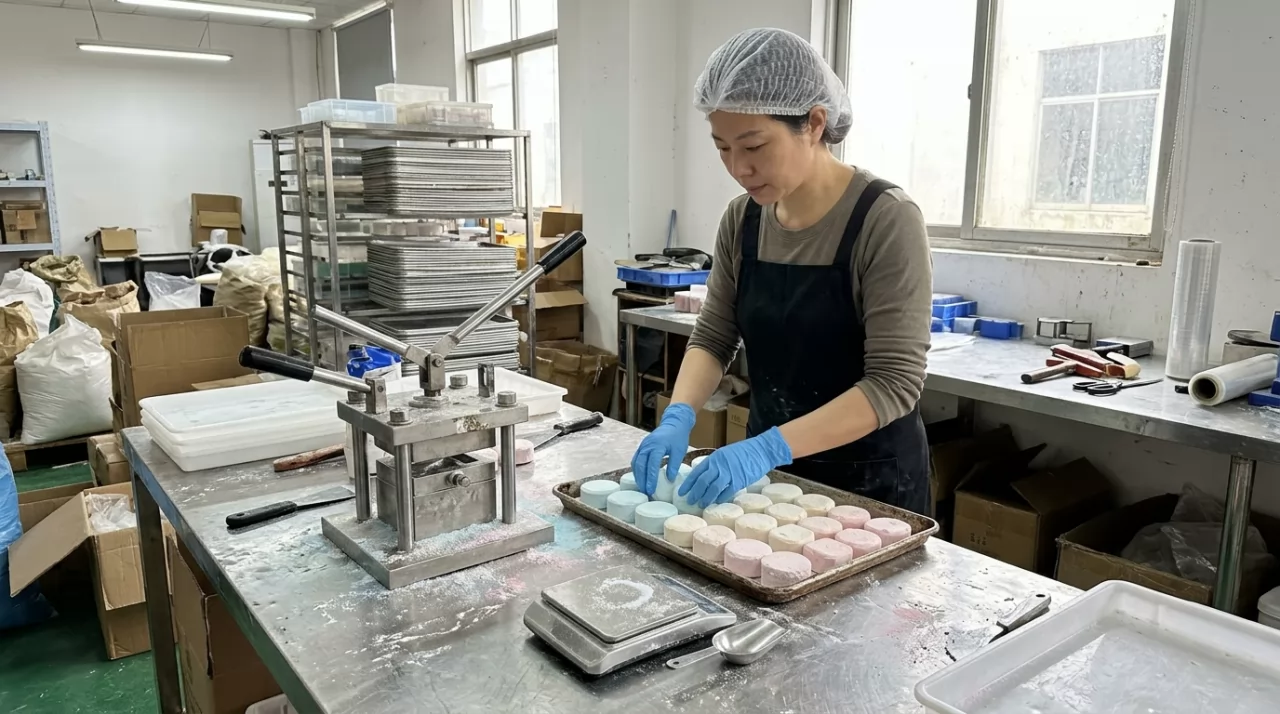
The order sequence also shapes your calendar. This is the process as the manufacturer describes it, with the times it states.
| Stage | What happens | Typical time |
|---|---|---|
| Customization talk | Formula, scent, shape, packaging agreed | Varies by project |
| Samples | Custom samples prepared and tested | 7–14 days |
| Contract and deposit | Delivery date set, 30% prepaid | On signing |
| Bulk sample, packaging design | Approval before production | Varies by artwork |
| Mass production | Starts after bulk sample approval | 25–30 days |
| Inspection and shipment | Balance paid against copy of BL | Depends on route |
Plan backward from your opening or peak season, and allow for a second sample round if the first scent misses. Boymay, for one, states free samples with the buyer paying freight, which lowers the cost of testing several scents before you commit.
Private label for spas and hotels: what you can customize and what costs extra
Custom shower steamers private label for spas usually covers the logo, colour, shape, weight, carton marks and artwork, plus formula and fragrance. Most of these are printing or colouring changes and don't disturb the production line.
Two choices push cost and minimums up. A custom mold means tooling before the first tablet is pressed, so it makes sense only for a signature shape you will reorder. Special containers or accessories, such as a rigid box, a tin or an insert, also move the minimum away from the standard figure. For a first order, a standard shape with custom colour, scent and printed wrap gives a branded result with the least commitment. Carton marks are cheap and easy to forget: put your SKU, scent name and batch field on the outer carton so housekeeping stores can sort stock without opening boxes.
Recommendation by property type
A boutique hotel should take one neutral scent in sealed single units. A hotel chain should lock a single specification, document it, and audit the supplier before volume. A day spa should begin with a short blend range in sets and expand slowly. A resort spa should run two lines, one in-room and one retail, with separate labelling. A retailer-spa hybrid should settle the retail label and shelf life first, then add hotel-style singles only if the property needs them.
Next step
Write down your property type, estimated yearly quantity, destination market and packaging idea, then check whether the scents you want fit under one minimum. Send those details and our team can help quote a sample.
FAQ
Can hotels put shower steamers in guest bathrooms with bathtub-only showers?
Usually not. A tablet needs a floor or tray where it can sit out of the direct stream, and a tub with a shower head over it often lets it dissolve too fast or slide toward the drain. Test one in a sample room first.
Do spas need different paperwork from hotels?
Often yes, if they resell. Retail sale brings consumer labelling, ingredient lists and market-specific documents, while in-room use may need less. Confirm the rules for your country with a regulatory adviser.
How many scents should a spa start with?
Three or four. Each extra scent may carry its own minimum, so a long list ties up cash in slow variants. Add blends once sales show which ones guests ask for.
How long do samples and bulk orders usually take?
Custom samples typically take 7–14 days, per the manufacturer's stated terms, and bulk production 25–30 days. Overall OEM/ODM lead time is stated as about 40 days, so confirm which figure covers your packaging.


