
Die Kurzfassung? Ja, Badesalze können trockener Haut tatsächlich helfen. Aber dieses "Ja" kommt mit einem großen Sternchen, und genau dieses Sternchen ist entscheidend.
Der Inhalt des Glases entscheidet, ob Ihr Bad mit weicher, beruhigter Haut endet oder mit einem spannenden, juckenden Desaster. Manche Salze sind reich an Mineralien, die beruhigen und reparieren. Andere sind im Grunde nur parfümiertes Natriumchlorid, das Ihnen die Feuchtigkeit direkt entzieht. Bevor Sie also noch ein weiteres hübsches rosafarbenes Glas in den Warenkorb legen, sprechen wir darüber, was tatsächlich einen Platz in Ihrer Badewanne verdient.
Kurze Antwort: Alles hängt davon ab, was im Glas ist
Mineralstoffreiche Salze wie Dead Sea Salz oder Epsom können Trockenheit lindern und Ihrer Haut helfen, Feuchtigkeit zu speichern. Stark parfümierte, farbstoffreiche oder einfache tafelartige Salze bewirken dagegen meist das Gegenteil.
Die eigentliche Frage ist also nicht 'Salz oder kein Salz', sondern welches Salz und wie Sie es anwenden. Darum geht es im weiteren Verlauf: um Inhaltsstoffe, nach denen es sich zu suchen lohnt, solche, die Sie besser meiden, und eine Baderoutine, die Ihre Ergebnisse nicht beeinträchtigt.
Warum trockene Haut so reagiert, wie sie reagiert
Ihre Hautbarriere, einfach erklärt
Stellen Sie sich die äußerste Schicht Ihrer Haut wie eine Ziegelmauer vor. Die Ziegel sind Hautzellen, und der Mörtel, der sie zusammenhält, ist eine Mischung aus natürlichen Ölen und Fetten.
Wenn dieser Mörtel dünner wird, entweicht Feuchtigkeit und Reizstoffe dringen ein. Kalte Luft, sehr heiße Duschen, niedrige Luftfeuchtigkeit und aggressive Seifen greifen ihn an. Das Ergebnis kommt Ihnen bekannt vor: Spannungsgefühl, Schuppung, ein anhaltender Juckreiz, manchmal Rötungen.
Warum manche Salze helfen und andere schaden
Mineralien wie Magnesium können Entzündungen lindern und dabei helfen, diesen 'Mörtel' wieder aufzubauen. Das ist der Vorteil.
Reines Natriumchlorid ohne begleitende Mineralien kann der Haut tatsächlich Feuchtigkeit entziehen. Deshalb ist es nie so einfach, Salz als gut oder schlecht einzuordnen. Entscheidend sind das Mineralstoffprofil und alles, was sonst noch beigemischt wurde.
Inhaltsstoffe, auf die Sie auf dem Etikett achten sollten
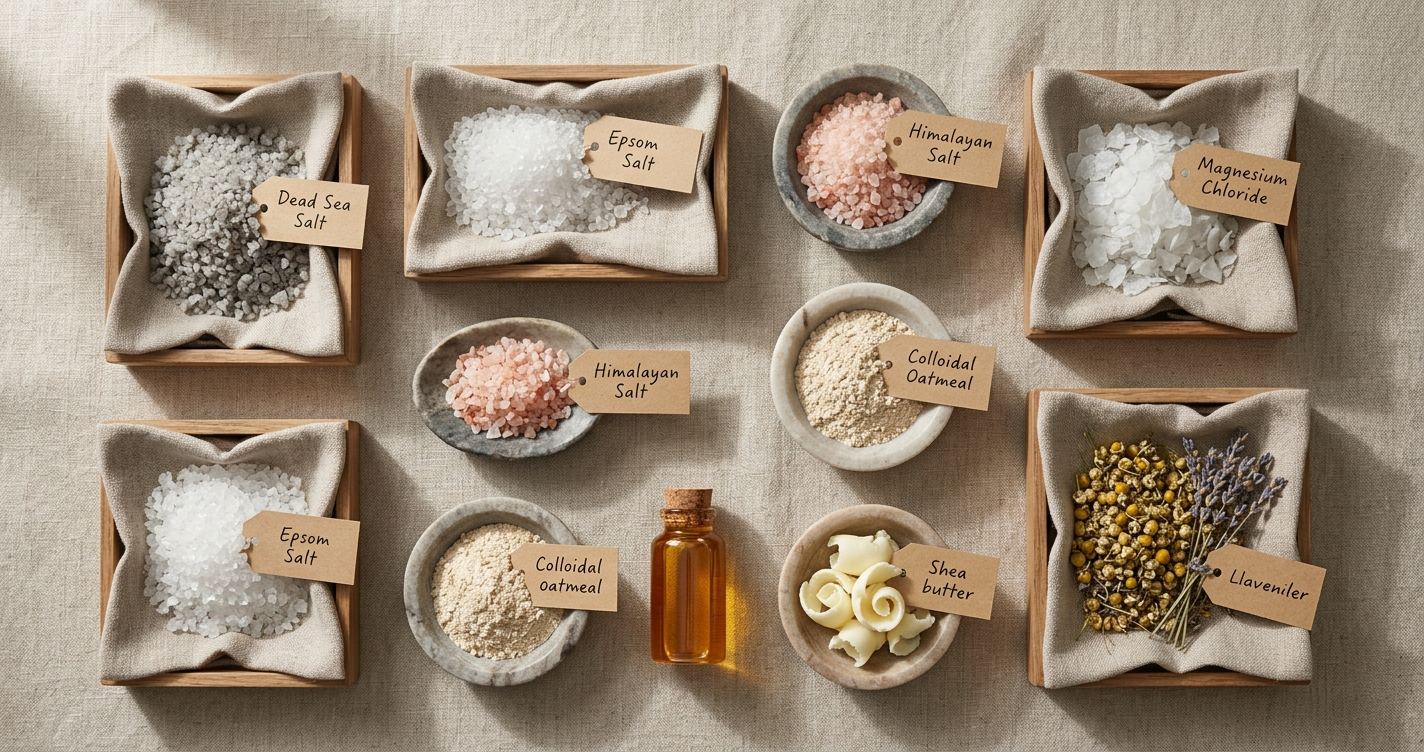
Totes-Meer-Salz
Das ist das Schwergewicht. Totes-Meer-Salz enthält ungefähr 21 Mineralien, darunter besonders hohe Mengen an Magnesium, Kalium und Bromid.
Eine kleine, aber häufig zitierte Studie aus dem Jahr 2005, veröffentlicht im International Journal of Dermatology, ergab, dass das Baden in einer magnesiumreichen Totes-Meer-Salz-Lösung die Hautfeuchtigkeit verbesserte und die Rauheit bei Menschen mit trockener Haut verringerte. Besonders geeignet bei: chronischer Trockenheit, hartnäckigen rauen Hautstellen und zu leichtem Ekzem neigender Haut.
Bittersalz (Magnesiumsulfat)
Technisch gesehen ist es überhaupt kein Meersalz, aber es wird überall als Badesalz verkauft. Die Menschen schätzen es zur Linderung schmerzender Muskeln, und das Magnesium ist der Grund dafür.
Vorteile für die Haut? Eher begrenzt im Vergleich zu Salz aus dem Toten Meer. Und hier ist der Haken, den die meisten Etiketten nicht erwähnen: Wenn Sie zu lange baden oder anschließend keine Feuchtigkeitspflege auftragen, kann Bittersalz Ihre Haut trockener hinterlassen als vor dem Bad.
Rosa Himalayasalz
Reich an Spurenelementen wie Eisen und Kalzium, auch wenn seine gesamte Mineralstoffwirkung milder ist als die von Salz aus dem Toten Meer. Der Vorteil ist die Sanftheit.
Wenn Ihre Haut schon bei der geringsten Reizung reagiert, machen dieses mildere Profil und die feinere Textur es zu einer risikoärmeren Wahl.
Magnesiumflocken (Magnesiumchlorid)
Einige dermatologische Übersichtsarbeiten deuten darauf hin, dass Magnesiumchlorid leichter aufgenommen wird als die Sulfatform in Bittersalz. Wenn sich Ihre Haut nach Bittersalz ausgetrocknet angefühlt hat, sind Flocken ein sinnvoller nächster Versuch.
Zusätze, die die Feuchtigkeitsversorgung tatsächlich verbessern
Kolloidaler Hafer — lindert Juckreiz und ist von der FDA als Hautschutzmittel anerkannt.
Kokos-, Jojoba- oder Süßmandelöl — hinterlassen einen leichten Film, der die Feuchtigkeit einschließt.
Shea- oder Kakaobutterflocken — die reichhaltigere Wahl für sehr trockene Haut.
Glycerin — ein Feuchthaltemittel, das Feuchtigkeit zu Ihrer Haut zieht.
Extrakte aus Kamille, Ringelblume oder Lavendel — beruhigend für reaktive Haut, sollten jedoch besser vermieden werden, wenn Duftstoffe bei Ihnen Reizungen auslösen.
Ein Wort zu ätherischen Ölen
Sie riechen unglaublich. Doch konzentrierte Öle wie Pfefferminze, Eukalyptus und Zitrusfrüchte können gereizte Haut zusätzlich belasten.
Wenn ein Produkt stark auf ätherische Öle setzt, achten Sie auf niedrige Konzentrationen und mildere Optionen wie Lavendel oder römische Kamille.
Inhaltsstoffe, die Sie meiden sollten, wenn Ihre Haut bereits trocken ist
Die meisten Artikel hören bei "hier ist, was Sie kaufen sollten" auf. Das ist nur die halbe Geschichte. Zu wissen, was Sie im Regal stehen lassen sollten, ist genauso wichtig.
Synthetische Duftstoffe und "Parfum"
Duftstoffe zählen in dermatologischen Umfragen durchgängig zu den häufigsten Auslösern von Hautreizungen. Wenn Sie zu Ekzemen neigen oder Ihre Haut reifer geworden ist, lohnt es sich besonders, sie zu vermeiden.
Künstliche Farbstoffe
Dieses kräftige Blau oder Bonbonrosa? Rein kosmetisch und gelegentlich reizend. Natürlich gefärbte Salze oder ungefärbte Varianten sind die sicherere Wahl.
Sulfate und aggressive Reinigungsstoffe
Einige „Badesalz mit Schaumbad“-Hybride enthalten SLS oder SLES für mehr Schaum. Diese entziehen jedoch genau die Öle, die Ihre trockene Haut so dringend zu bewahren versucht.
Alcohol Denat.
Wird manchmal zugesetzt, damit sich Duftstoffe besser lösen, kann jedoch dazu führen, dass sich die Haut nach dem Abtrocknen gespannt anfühlt. Nicht das, was man sich von einem feuchtigkeitsspendenden Bad wünscht.
Wie man Badesalze richtig anwendet, ohne alles noch schlimmer zu machen
Viele Menschen kaufen das perfekte Produkt und haben danach trotzdem noch trockenere Haut. Meist liegt es an der Anwendung, nicht am Salz.
Die Wassertemperatur ist wichtiger, als man denkt
Warm, nicht heiß. Heißes Wasser löst die ohnehin schon angegriffene Lipidschicht auf. Ideal sind etwa 92 bis 100°F (33 bis 38°C) — angenehm, nicht dampfend.
Die 15- bis 20-Minuten-Regel
Länger ist nicht besser. Überschreiten Sie 20 Minuten, kann Ihre Haut beginnen, Feuchtigkeit zu verlieren, statt sie aufzunehmen. Stellen Sie einen Timer, wenn Sie dazu neigen, länger zu bleiben.
Wie viel man verwenden sollte
Eine gute Faustregel: 1 bis 2 Tassen Totes-Meer- oder Epsomsalz pro voller Badewanne. Wenn das Produkt eigene Anwendungshinweise vorgibt, folgen Sie diesen.
Der Schritt nach dem Baden, der alles verändert
Tupfen Sie die Haut trocken, niemals reiben. Tragen Sie anschließend innerhalb von drei Minuten eine Feuchtigkeitspflege auf, solange Ihre Haut noch leicht feucht ist.
Eine Creme oder Salbe, die in diesem Moment aufgetragen wird, schließt die gesamte Feuchtigkeit ein, die das Bad Ihrer Haut gerade gegeben hat. Lassen Sie diesen Schritt aus, machen Sie einen guten Teil des Nutzens wieder zunichte.
Wie oft ist unbedenklich?
Zwei- bis dreimal pro Woche ist für die meisten Menschen eine sinnvolle Obergrenze. Tägliches Baden kann sich als kontraproduktiv erweisen, selbst bei guten Mineralsalzen.
Wer vorsichtig sein sollte
Hier werden viele Aspekte oft nicht angesprochen. Einige wichtige Überlegungen:
Offene Schnitte, verletzte Haut oder ein aktiver Ekzemschub — Salz brennt, manchmal stark.
Schwangerschaft — sprechen Sie vor einem heißen Bad mit Ihrem Arzt.
Herz-Kreislauf-Erkrankungen — warme Bäder können den Blutdruck beeinflussen.
Diabetes — eine veränderte Hautempfindlichkeit sollte vorab kurz mit Ihrem Arzt besprochen werden.
So lesen Sie ein Badesalz-Etikett in 30 Sekunden
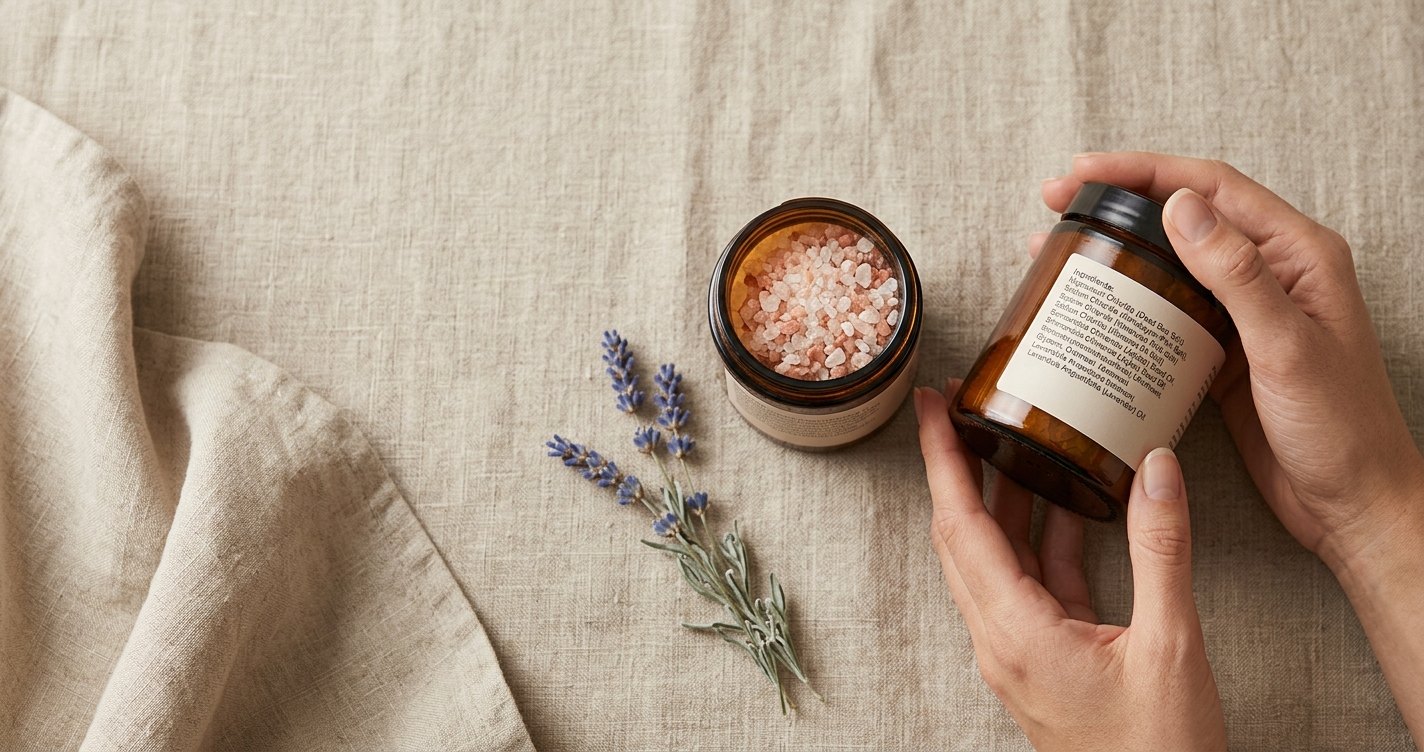
Drehen Sie das Glas um und machen Sie diesen kurzen Check. Speichern Sie es gern als Lesezeichen.
Grüne Signale
Ein Mineralsalz (Totes Meer, Himalaya, Magnesiumflocken), das an erster Stelle aufgeführt ist.
Ein Feuchthaltemittel oder Emolliens in der Mischung (Glycerin, Hafer, Pflanzenöl).
Eine kurze Zutatenliste — in der Regel ein gutes Zeichen.
Ohne Duftstoffe oder mit benannten ätherischen Ölen in kleinen Mengen parfümiert.
Warnsignale
"Fragrance" oder "parfum" steht weit oben auf der Liste.
Künstliche Farbstoffe (FD&C-Farben).
Sulfate oder Alcohol denat.
Aufgeblähtes Marketing ohne echte Inhaltsstoffe ("detox blend," "spa formula").
DIY: Eine einfache Mischung für trockene Haut
Wenn Sie lieber genau wissen möchten, was hineinkommt, dauert diese Variante nur fünf Minuten.
Was Sie benötigen
1 Tasse Dead Sea salt
½ Tasse Epsom salt oder Magnesiumflocken
2 Esslöffel kolloidales Hafermehl
1 Esslöffel Jojobaöl oder Süßmandelöl
Optional: 3 bis 5 Tropfen ätherisches Lavendelöl
Mischen und Aufbewahren
Mischen Sie zunächst die trockenen Zutaten, dann rühren Sie das Öl ein, bis alles gleichmäßig bedeckt ist. Bewahren Sie es in einem luftdicht verschlossenen Glasbehälter an einem trockenen Ort auf.
Verwenden Sie es innerhalb von etwa zwei Monaten, da das Öl ranzig werden kann und das Hafermehl nicht unbegrenzt frisch bleibt.
Fazit
Ja, Badesalze können bei trockener Haut helfen — aber nur, wenn Sie mineralstoffreiche Formeln wählen und sie richtig anwenden. Die Wirkung liegt weniger im Salz selbst als im gesamten Ritual: warmes Wasser, eine angemessene Badezeit und Feuchtigkeitspflege, solange Ihre Haut noch feucht ist.
Bevor Sie kaufen, drehen Sie das Glas um und lesen Sie das Etikett. Diese dreißig Sekunden können Ihrer Haut viel Ärger ersparen.
FAQ
F: Trocknen Badesalze die Haut aus?
A: Reines Natriumchlorid kann das. Mineralstoffreiche Salze in Kombination mit einer anschließenden Feuchtigkeitspflege in der Regel nicht. Die Pflegeroutine rund um das Bad ist genauso wichtig wie das Salz selbst.
F: Sind Epsom-Salz-Bäder gut bei Ekzemen?
A: Sie können manchen Menschen in ruhigen Phasen helfen, sollten bei einem akuten Schub jedoch vermieden werden. Bei ekzembedingter Trockenheit ist die Wirkung von Dead Sea salt besser belegt.
F: Wie oft sollte ich bei trockener Haut baden?
A: Zwei- bis dreimal pro Woche ist ein sicherer Ausgangspunkt. Danach sollte Ihre Haut zeigen, ob Sie die Häufigkeit erhöhen oder reduzieren sollten.
F: Kann ich Badesalze bei empfindlicher Haut verwenden?
A: Ja, aber wählen Sie ausschließlich parfümfreie, farbstofffreie Optionen mit einer kurzen Zutatenliste. Testen Sie im Zweifel zuerst eine kleine Hautstelle, um Ihre Reaktion zu prüfen.
F: Was ist bei trockener Haut besser: Badesalze oder Badeöle?
A: Öle spenden direkter Feuchtigkeit, während Salze Mineralstoffe liefern und die Muskulatur entspannen. Ehrlich gesagt nutzen viele Menschen beides — Salze im Wasser, Öl direkt danach auf der Haut.
F: Ist ein Bad im Meer dasselbe?
A: Nicht wirklich. Meerwasser ist kälter, die Einwirkung dauert länger, und in der Regel kommen Sonne und Wind hinzu, die Sie zusätzlich austrocknen. Ein kontrolliertes Bad zu Hause ist schonender und deutlich feuchtigkeitsspendender.