
Sie haben das Glas gekauft. Vielleicht war es ein Geschenk, vielleicht haben Sie es in einer anstrengenden Woche spontan mitgenommen. So oder so steht es jetzt am Rand Ihrer Badewanne, und Sie sind sich nicht ganz sicher, was als Nächstes passiert. Geben Sie den ganzen Inhalt hinein? Eine halbe Tasse? Muss das Wasser kochend heiß sein? So etwas erklärt einem eigentlich niemand.
Hier ist die Anleitung, die ich mir beim ersten Mal gewünscht hätte.
Was sind Badesalze eigentlich?
Bevor wir zum Wie kommen, noch ein kurzes Wort zum Was. „Badesalze“ ist ein Sammelbegriff, und das Glas in Ihrer Hand kann je nach Marke ganz unterschiedliche Inhalte haben.
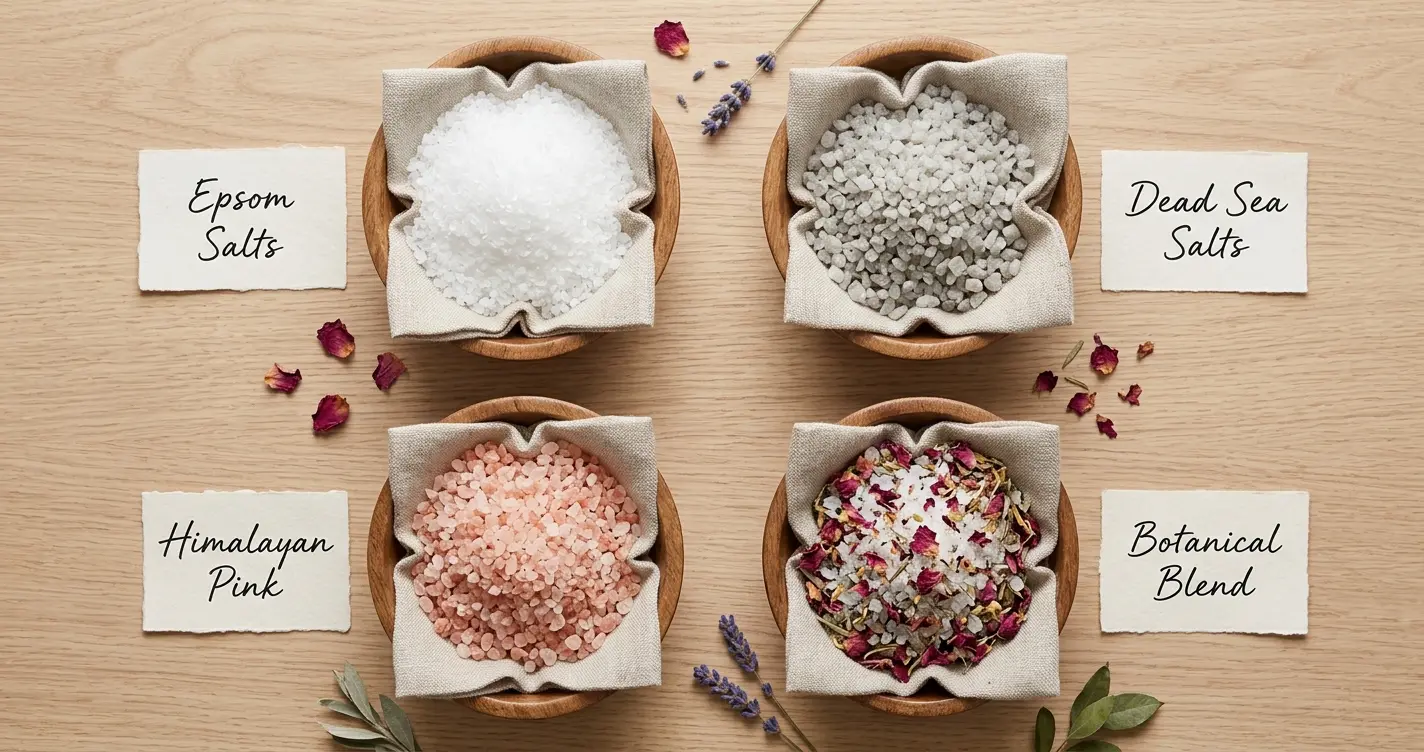
Die wichtigsten Arten, die Sie in den Regalen finden
Bittersalz — technisch gesehen Magnesiumsulfat, also nicht wirklich ein Salz im kulinarischen Sinn. Das ist der klassische Badezusatz für müde Beine und verspannte Schultern.
Totes-Meer-Salz — gewonnen aus dem Toten Meer. Höherer Gehalt an Magnesium, Kalium und Calcium. Menschen mit trockener oder gereizter Haut greifen häufig dazu.
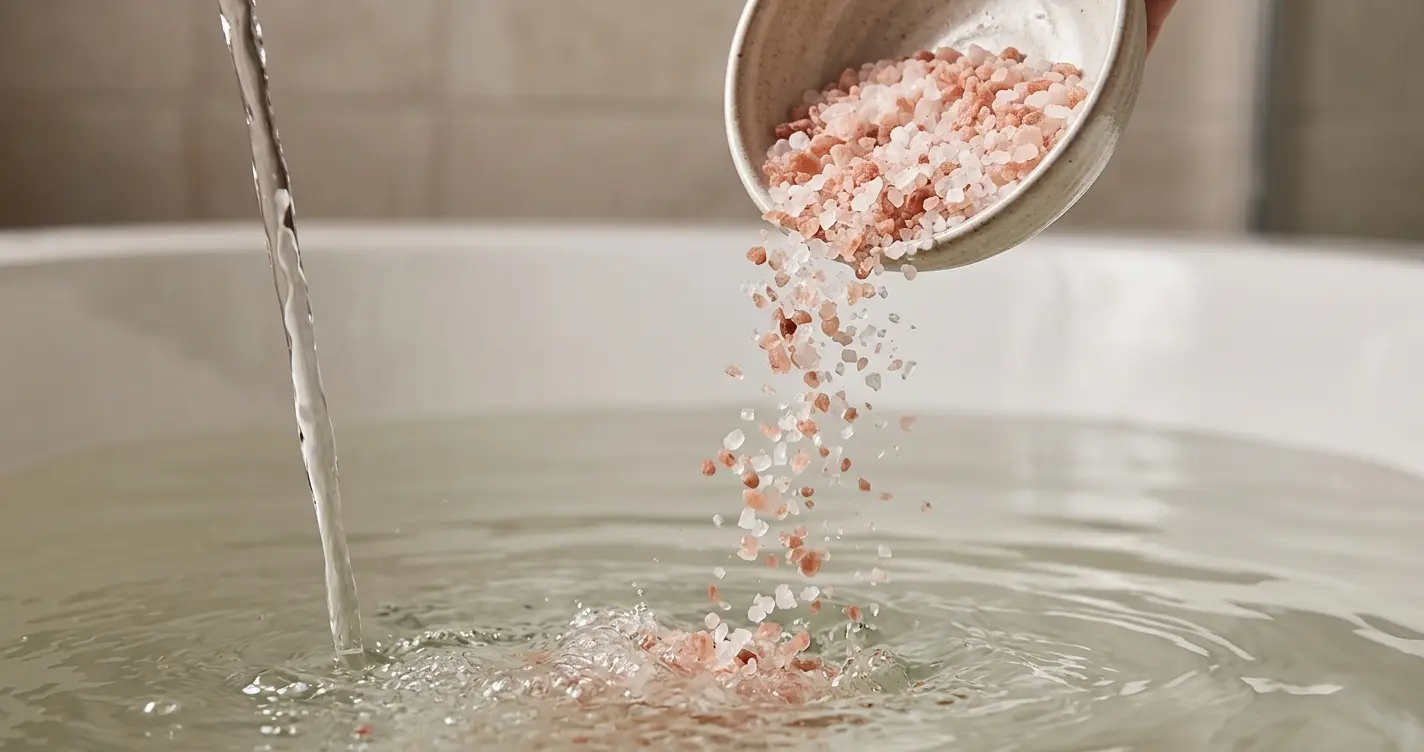
Himalayasalz rosa — die hübsche rosafarbene Variante. Spurenelemente verleihen ihm die Färbung. In seiner Wirkung milder als Totes-Meer-Salz.
Duftende und gemischte Salze — meist eine Basis aus einer der oben genannten Sorten, gemischt mit ätherischen Ölen, getrockneten Blütenblättern oder pflanzlichen Extrakten.
Was Badesalze nicht sind
Zur Klarstellung: Die „Badesalze“, in denen Sie baden, haben keinerlei Verbindung zu der synthetischen Drogenthematik, die Anfang der 2010er-Jahre Schlagzeilen machte. Gleicher Name, aber ein völlig anderer Stoff. Die Drogenvariante war ein synthetisches Stimulans, das unter irreführender Bezeichnung verkauft wurde. Was Sie in Ihre Badewanne geben, sind einfach nur Mineralkristalle.
Wie verwendet man Badesalze? Schritt für Schritt
Okay, zum eigentlichen Ablauf.
Schritt 1: Prüfen Sie Ihre Wanne und Ihr Wasser
Spülen Sie die Wanne zuerst kurz aus. Wenn Sie sie vor Kurzem gereinigt haben, können Rückstände von Badreinigersprays vorhanden sein, und einige davon vertragen sich nicht gut mit den ätherischen Ölen in Duftmischungen.
Warmes Wasser ist besser als heißes. Ich weiß, heiß fühlt sich luxuriöser an — belastet aber Ihre Hautbarriere stärker und löst, seltsamerweise, Salz ab einer bestimmten Temperatur auch nicht schneller auf als warmes Wasser.
Schritt 2: Die richtige Menge abmessen
Als allgemeine Richtlinie gelten zwischen einer halben Tasse und zwei Tassen pro Standardbadewanne. Die meisten Menschen landen bei etwa einer Tasse und bleiben dabei.
Mehr ist nicht besser. Wenn Sie es übertreiben, kann sich Ihre Haut danach gespannt oder leicht juckend anfühlen — die Mineralstoffkonzentration wird hoch genug, um der Haut Feuchtigkeit zu entziehen, anstatt zu helfen. Wenn Sie eine bestimmte Mischung zum ersten Mal verwenden, beginnen Sie mit der niedrigeren Menge.
Schritt 3: Auflösen, bevor Sie baden
Dies ist der Schritt, den die meisten Menschen auslassen. Er macht den Unterschied zwischen einem guten Bad und einem, bei dem Sie sich ständig umsetzen, weil sich ein körniger Haufen unter Ihrer Hüfte befindet.
Geben Sie das Salz während das Wasser noch läuft direkt unter den Wasserhahn.
Bewegen Sie es mit der Hand etwa 30 Sekunden lang im Wasser.
Warten Sie, bis das Wasser klar aussieht, bevor Sie hineingehen — trüb ist in Ordnung, klumpig nicht.
Schritt 4: Wie lange Sie tatsächlich baden sollten
Zwölf bis zwanzig Minuten sind ideal. Lang genug, damit sich Ihre Muskeln entspannen und Ihr Nervensystem einen Gang herunterschaltet. Kurz genug, damit Ihre Haut nicht zu reagieren beginnt.
Nach dreißig Minuten baden Sie im Grunde schon zu lange. Die äußere Hautschicht — technisch gesprochen das Stratum corneum — beginnt, ihre natürlichen Öle zu verlieren. Dieses "runzlige" Gefühl ist das sichtbare Zeichen. Darüber hinaus trocknen Sie Ihre Haut nur noch weiter aus.
Schritt 5: Abspülen oder nicht?
Das hängt von der Mischung ab. Wenn Sie ein einfaches Epsom-Salz-Bad verwendet haben, können Sie aus der Wanne steigen und sich trocken tupfen. Es bleibt nichts zurück, das abgewaschen werden müsste.
Bei duftenden oder ölhaltigen Mischungen ist ein kurzes lauwarmes Abspülen sinnvoll — andernfalls können Rückstände dazu führen, dass sich Ihre Haut beim Trocknen etwas klebrig anfühlt, besonders bei wärmerem Wetter.
Schritt 6: Nachpflege
Tupfen, nicht reiben. Das Abreiben mit einem Handtuch direkt nach einem warmen Bad ist eine dieser kleinen Gewohnheiten, die die Hälfte des Nutzens zunichtemachen.
Tragen Sie innerhalb von etwa drei Minuten nach dem Aussteigen eine Feuchtigkeitspflege auf. Feuchte Haut nimmt Lotion oder Körperöl deutlich besser auf als vollständig trockene Haut — Dermatologen sprechen seit Jahren darüber, und es macht tatsächlich einen Unterschied.
Vorteile von Badesalz, die Menschen tatsächlich bemerken
Muskelregeneration und Spannungsabbau
Die Theorie, dass Magnesium über die Haut aufgenommen wird, ist weit verbreitet. Ehrlich gesagt ist die Forschung dazu, wie viel Magnesium Ihr Körper tatsächlich über ein Bad aufnimmt, noch begrenzt — einige kleine Studien deuten auf eine geringe Aufnahme hin, andere sind skeptisch. Schwerer zu bestreiten ist, dass warmes Wasser plus Auftrieb plus Ruhezeit verspannte Muskeln tatsächlich entspannt. Ob das nun am Magnesium oder an der Physik liegt, Ihren Schultern ist das ziemlich egal.
Besser schlafen nach einem abendlichen Bad
Hier ist ein interessanter Aspekt. Ein warmes Bad etwa 90 Minuten vor dem Schlafengehen kann Ihnen helfen, schneller einzuschlafen, und der Grund dafür ist nicht die Wärme selbst — sondern der Abfall der Körpertemperatur nachdem Sie aus dem Bad steigen. Ihre Kerntemperatur sinkt, was das natürliche Signal nachahmt, mit dem Ihr Körper den Schlaf einleitet. Schlafforscher haben dies recht konsistent dokumentiert.
Hautgefühl und leichte Reizungen
Vor allem für Totes-Meer-Salz gibt es einige Hinweise darauf, dass es raue oder schuppige Hautstellen beruhigen kann. Nichts Wunderbares — aber Menschen mit leichtem Ekzem berichten nach regelmäßigen Bädern oft von weicherer Haut. Bleiben Sie realistisch in Ihren Erwartungen: Es unterstützt, heilt aber nicht.
Der mentale Reset
Zwanzig Minuten ohne Ihr Telefon, keine Benachrichtigungen, nichts, was Sie eigentlich tun sollten. Allein das könnte der am meisten unterschätzte Vorteil auf dieser Liste sein.
Ein Baderitual entwickeln, das Sie tatsächlich beibehalten
Die richtige Atmosphäre schaffen
Dimmen Sie nach Möglichkeit das Deckenlicht. Legen Sie Ihr Telefon in einen anderen Raum — nicht auf die Ablage, in einen anderen Raum. Füllen Sie ein Glas Wasser und stellen Sie es griffbereit hin. Das ist schon die ganze Vorbereitung.
Musik oder Stille ist eine persönliche Entscheidung. Ich kenne Menschen, die auf eine bestimmte Playlist schwören, und andere, die jedes Geräusch als störend empfinden, sobald sie im Wasser sind. Probieren Sie beides aus.
Badesalze mit anderen Zusätzen kombinieren
Ätherische Öle
Lavendel und Eukalyptus sind die beiden bewährten Klassiker. Fünf bis zehn Tropfen sind für eine volle Badewanne völlig ausreichend. Alles darüber hinaus kippt schnell von „angenehm“ zu „überwältigend“.
Trägeröle
Ätherische Öle mischen sich nicht mit Wasser — sie schwimmen oben und können in voller Konzentration direkt auf Ihre Haut gelangen, was nicht ideal ist. Ein Esslöffel Jojoba- oder Süßmandelöl, den Sie vor dem Hinzufügen mit Ihren ätherischen Ölen vermischen, hilft dabei, alles gleichmäßig zu verteilen.
Diese Kombinationen vermeiden
Natron zusammen mit stark parfümierten Mischungen kann den Duft abschwächen und manchmal leichte Reizungen verursachen. Alles mit aggressiven Sulfaten (einige Schaumbäder) wirkt dem Mineralgehalt entgegen — Sie profitieren dann nicht wirklich von den Vorteilen beider Komponenten.
Wie oft sollten Sie baden?
Zwei- bis dreimal pro Woche funktioniert für die meisten Menschen gut. Täglich ist in der Regel zu viel — Ihre Haut braucht Zeit zur Regeneration, und das Ritual verliert seine „besondere“ Wirkung, sobald es zur Routinehygiene wird.
Häufige Fehler, die das Erlebnis beeinträchtigen
Wasser zu heiß
Fühlt sich in den ersten sechzig Sekunden großartig an. Danach sind Sie überhitzt, Ihre Haut ist gereizt, und das Aussteigen fühlt sich fast wie eine Strafe an. Ziel ist angenehm warm bis heiß, nicht brühend heiß.
Salze erst hinzufügen, wenn Sie bereits in der Wanne sind
Sie lösen sich in ruhigem Wasser bei Körpertemperatur nicht richtig auf, und Sie spüren jedes einzelne Kristallkorn. Geben Sie sie immer vor oder während des Einlaufens hinzu.
Das falsche Salz für Ihre Haut verwenden
Stark parfümierte Mischungen auf empfindlicher Haut sind der klassische Fehlgriff. Wenn Sie wissen, dass Ihre Haut auch an anderer Stelle auf Duftstoffe reagiert, beginnen Sie mit einer unparfümierten Variante.
Ausreichende Flüssigkeitszufuhr vergessen
Ein warmes Bad entzieht Ihrem Körper über die Haut Wasser. Trinken Sie vorher ein Glas, halten Sie eines in der Nähe bereit und trinken Sie auch danach. Sie werden sich beim Aufstehen weniger benommen fühlen.
Wer bei Badesalzen vorsichtig sein sollte
Hauterkrankungen
Offene Schnitte, akute Ekzemschübe und Sonnenbrand sind alles Situationen, in denen es besser ist, abzuwarten. Salzwasser auf verletzter Haut ist bestenfalls unangenehm.
Schwangerschaft
Warm statt heiß baden, und ein kurzes Gespräch mit Ihrem Arzt über bestimmte Mischungen ätherischer Öle ist sinnvoll — einige (Muskatellersalbei, Rosmarin in höheren Dosen) gelten üblicherweise als solche, die vermieden werden sollten.
Herzerkrankungen oder niedriger Blutdruck
Lange heiße Bäder können den Blutdruck deutlich senken. Kürzere Anwendungen in kühlerem Wasser sind die sicherere Wahl.
Kinder
Kleinere Mengen — eine Vierteltasse oder weniger. Kürzere Badezeiten und für jüngere Kinder immer nur pur und ohne Duftstoffe. Ihre Haut ist durchlässiger als die von Erwachsenen.
Abschließende Gedanken
Die richtige Verwendung von Badesalzen hat eigentlich nichts damit zu tun, eine Checkliste abzuarbeiten. Es geht darum, darauf zu achten, was sich gut anfühlt, und von dort aus Anpassungen vorzunehmen. Die richtige Menge, die richtige Temperatur, die richtige Badedauer — das werden Sie im Laufe einiger Anwendungen für sich herausfinden.
Wichtiger sind die zwanzig Minuten, die Sie sich selbst schenken. Das Glas ist nur der Anlass.
FAQ
F: Kann ich statt Badesalz Speisesalz verwenden?
A: Technisch gesehen ja, aber damit würde der eigentliche Zweck verfehlt. Speisesalz besteht fast vollständig aus Natriumchlorid — ohne Magnesium oder Spurenelemente, die einem richtigen Bad seine Wirkung verleihen. Es macht das Wasser salzig. Mehr auch nicht.
F: Verfallen Badesalze?
A: Reines Epsom salt im Grunde nicht. Duftmischungen dagegen schon — die ätherischen Öle oxidieren und verlieren innerhalb von etwa ein bis zwei Jahren an Wirksamkeit. Anzeichen dafür, dass es Zeit ist, sie zu entsorgen: starke Verklumpung, ein muffiger oder "seltsamer" Geruch oder deutliche Verfärbungen.
F: Beschädigen Badesalze meine Badewanne oder den Abfluss?
A: Bei Standard-Badewannen aus Acryl oder Porzellan nein. Whirlwannen sind eine andere Sache — einige Hersteller warnen ausdrücklich vor ölhaltigen Mischungen, da sie die Düsen verstopfen können. Ältere Rohrleitungen kommen mit gelöstem Salz in der Regel gut zurecht, aber nicht aufgelöste Stücke sollten heruntergespült werden, statt liegen zu bleiben.
F: Kann ich Badesalze stattdessen für ein Fußbad verwenden?
A: Absolut — und ehrlich gesagt ist das die klügste Art, eine neue Mischung zu testen, bevor Sie sich auf ein Vollbad festlegen. Warmes Wasser in einer Schüssel, ein paar Esslöffel, fünfzehn Minuten. Gleiche Prinzipien, geringerer Aufwand.
F: Worin unterscheidet sich Epsom-Salz von Dead Sea Salz?
A: Epsom ist Magnesiumsulfat, also eine einzelne Verbindung. Dead Sea Salz ist eine Mischung — Magnesium, Kalium, Calcium, Natrium sowie eine Handvoll Spurenelemente. Epsom ist in der Regel günstiger und besser bei Muskelschmerzen. Dead Sea wird eher bei Hautproblemen gewählt.
F: Muss ich nach einem Bad mit Badesalz duschen?
A: Nicht bei reinem Epsom. Bei duftenden oder ölhaltigen Mischungen ist ein kurzes Abspülen hilfreich. Wenn sich Ihre Haut beim Abtrocknen klebrig oder übermäßig glatt anfühlt, ist das Ihr Hinweis.
F: Kann ich verschiedene Badesalze miteinander mischen?
A: Ja. Seien Sie nur vorsichtig, wenn Sie zwei stark duftende Mischungen kombinieren — am Ende kann ein Duft entstehen, der eher chaotisch als entspannend ist. Die Mischung aus reinem Epsom mit einer duftenden Dead Sea-Mischung funktioniert zum Beispiel gut.
F: Unterscheiden sich rosa Himalaya-Badesalze tatsächlich von normalem Salz?
A: Leicht. Die rosa Farbe stammt von Spureneisen und anderen Mineralien, außerdem sind etwas Kalium und Magnesium enthalten. Die Mengen sind jedoch so gering, dass der Unterschied subtiler ist, als das Marketing vermuten lässt. Es ist ein gutes Salz — nur kein Wundermittel.