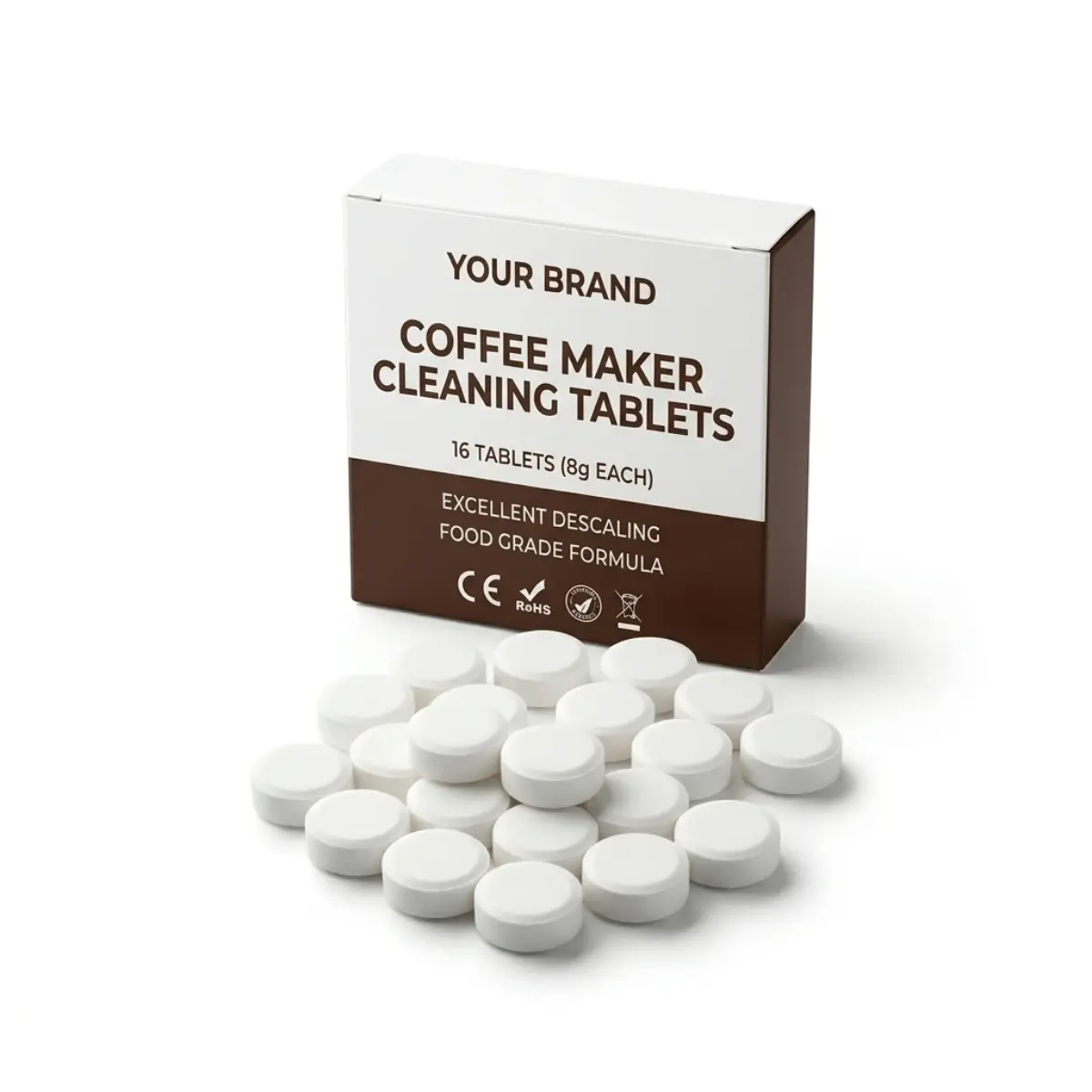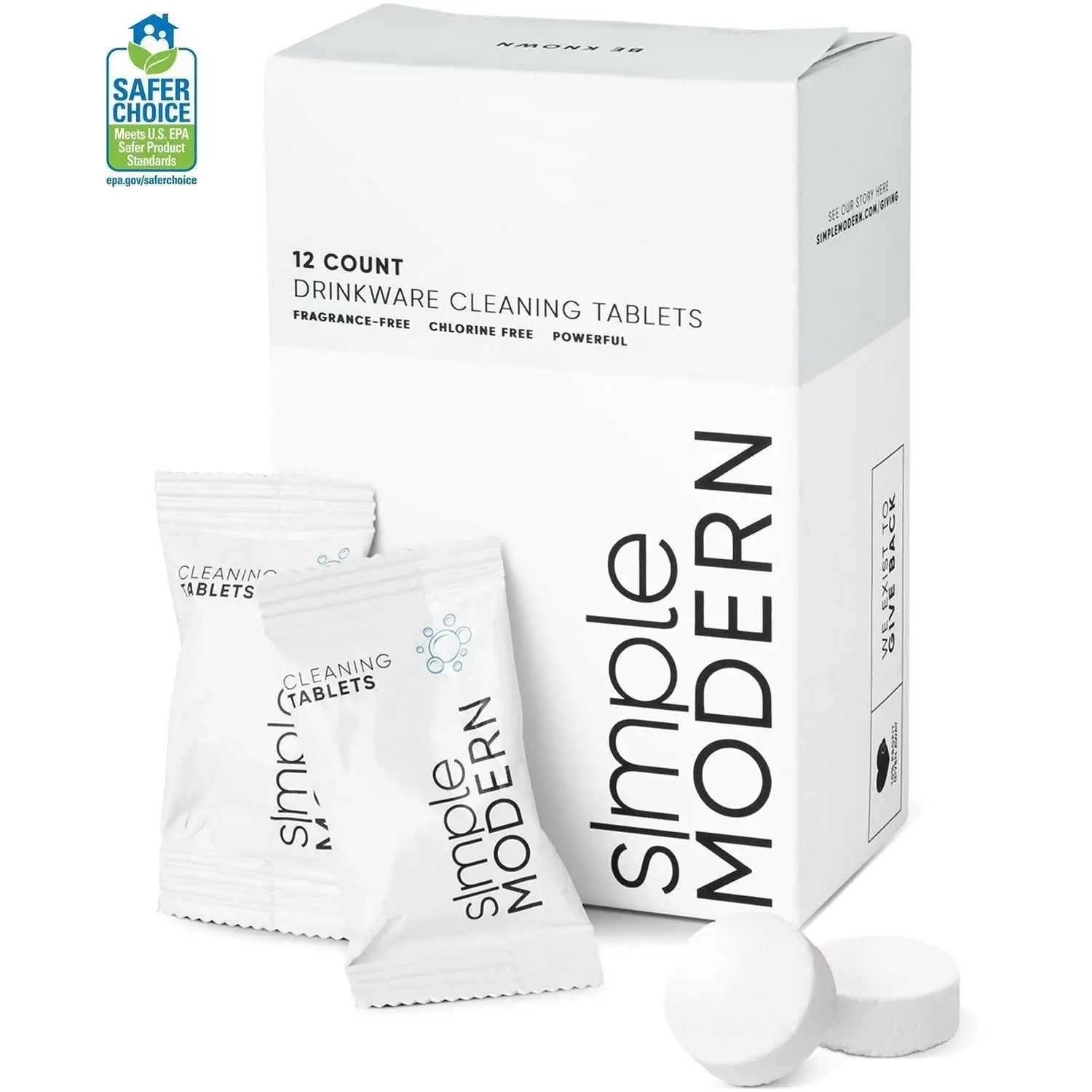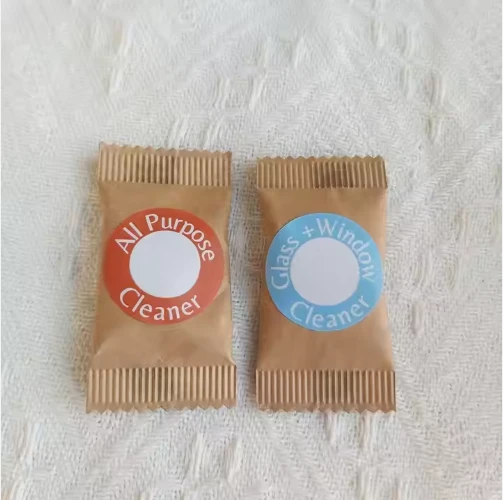

A home kitchen knife and a restaurant knife both cut. They are built for different hours of use. The same logic applies to commercial vs household cleaning tablets: the gap sits in dose, actives, dissolution and labeling, not in "stronger" against "weaker".
Short Answer: Where the Two Types Really Differ
Commercial and household cleaning tablets differ mainly in dose per tablet, the balance of surfactants and builders, dissolution speed, and the packaging and labeling that go with them. Commercial versions are tuned for heavy soil and repeated daily cycles. The difference narrows when the same base formula is sold with different dosing instructions.
Dose is the first lever. A tablet meant for a professional machine or a large bucket may carry more active matter, or simply be heavier, than one meant for a family kitchen. The second lever is the mix: how much surfactant, how much chelator, whether enzymes are present. The third is how fast the tablet breaks down in water, which matters when cycles are short. The last is paperwork. Professional packs usually carry different hazard wording and dosing guidance, and the handling rules follow from that.
Is a Commercial Tablet Just a Stronger Household Tablet?
No. A commercial tablet is usually tuned for load and consistency, not raw strength. Commercial users face heavier soil, variable water and the same cycle many times a day, so the formula has to behave the same on the fiftieth run as on the first.
What "commercial" means in use: dose, soil load, cycle frequency
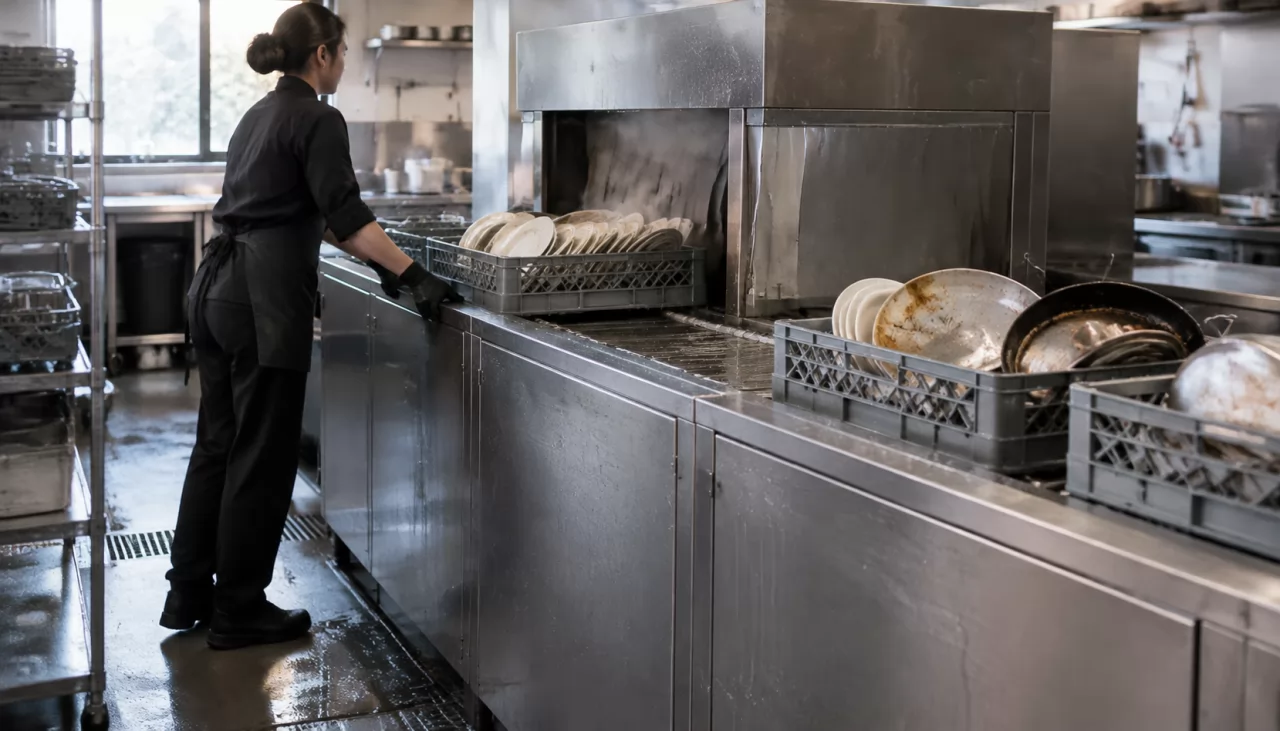
Think of a hotel kitchen. Fat, starch and protein arrive in volume, the machine runs back to back, and nobody adjusts the dose by eye. A tablet there needs a predictable dose and a predictable release. A household tablet can afford to be less exact because the load is lighter and the user can rerun a cycle.
Water adds another variable. A site on very hard water and a site on soft water may need different builder levels from the same product family. Commercial formulas often account for that range; household ones tend to assume average tap water.
Why stronger is not the same as better
More active matter can mean more residue, more foam, more skin and surface risk, and more rinse water used. Foam is the classic example: too much surfactant in a machine that does not tolerate foam causes trouble, not better cleaning. Strength that the machine, the surface or the user cannot handle is a defect. So the question to ask a supplier is not "how strong?" but "strong for which soil, which water and which equipment?"
Inside the Formula: Actives and Their Roles
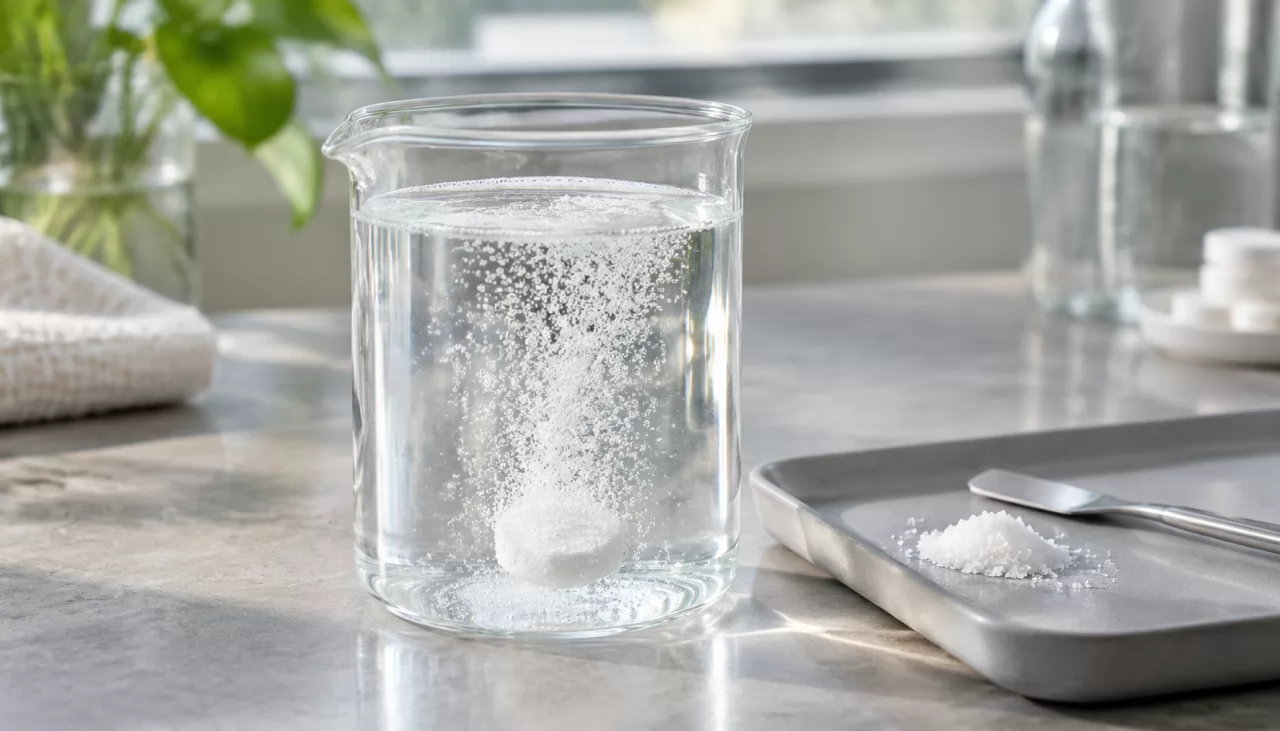
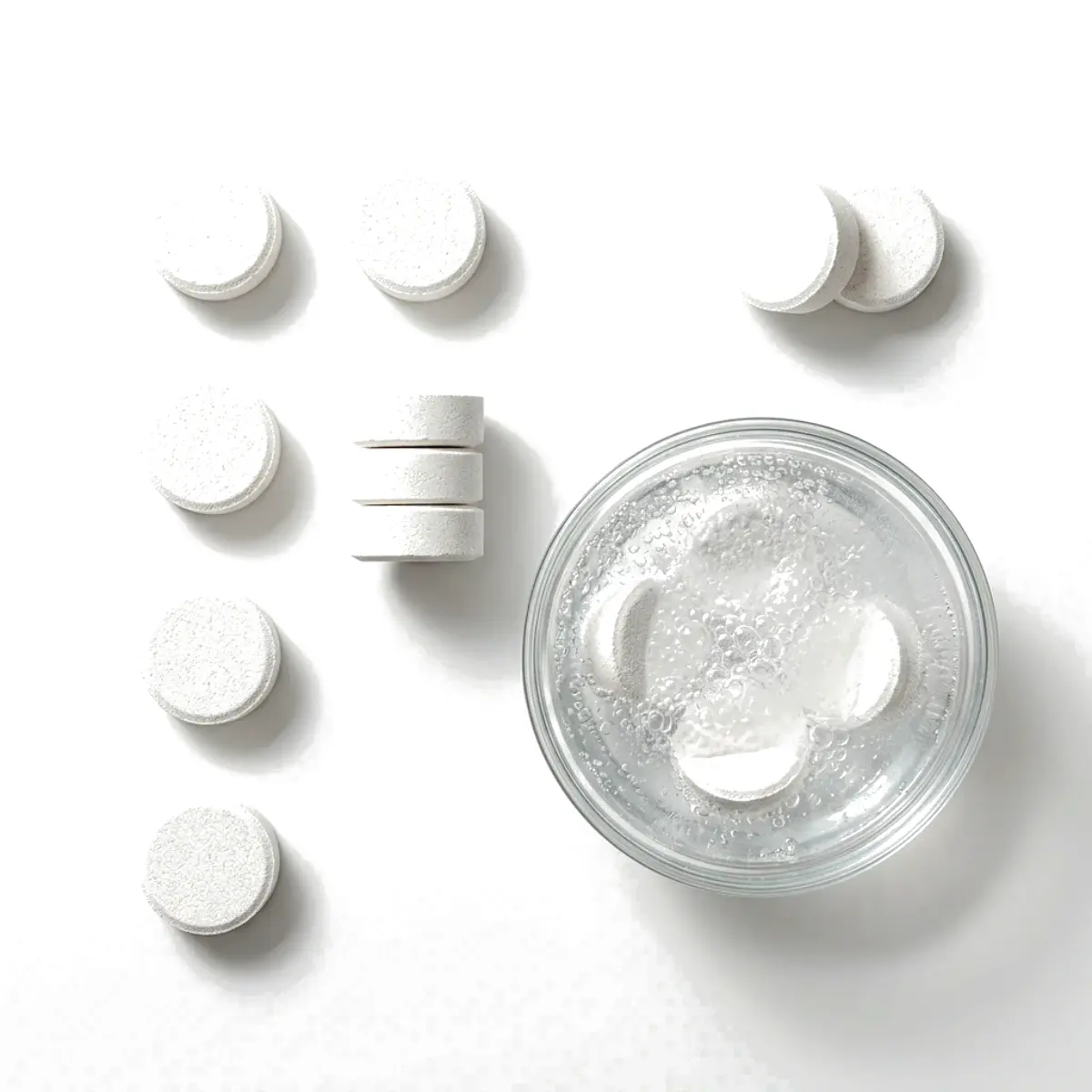
An effervescent cleaning tablet is a pressed solid that releases gas and active ingredients when it meets water. The effervescence helps the tablet break apart and agitates the solution. Most effervescent cleaning tablets formulation work comes down to six functional groups.
The effervescent base is usually an acid (citric acid is common) paired with a carbonate or bicarbonate. Surfactants lift and suspend soil. Builders and chelators handle hardness minerals. Enzymes, where used, break down specific soils. Fragrance and colorants shape the consumer experience. Binders and lubricants let the powder press into a tablet that survives transport. Commercial and household versions usually share the base chemistry. They tend to diverge in surfactant level, chelator choice and enzyme use.
| Component | Household tablet, typically | Commercial tablet, typically |
|---|---|---|
| Effervescent base | Acid plus carbonate | Same chemistry |
| Surfactant level | Moderate, foam-friendly | Tuned to machine and soil |
| Chelators and builders | Sized for average water | Sized for hard or variable water |
| Enzymes | Optional | Common where food soil dominates |
| Fragrance | Often prominent | Often light or neutral |
| Dissolution target | Relaxed | Matched to short cycles |
Most of the real difference sits in three rows: surfactants, chelators and dissolution. The rest is shared.
Surfactant concentration and foam control
A surfactant is a molecule with a water-loving end and a grease-loving end, which lets it pull oil off a surface into water. Surfactant concentration sets cleaning power and foam together. Hand-use and bucket products can tolerate foam, and some users like it. Machine products usually need low-foam systems, so the choice of surfactant type matters more than the amount.
Enzyme-based formulation: when it pays off and when it does not
Enzymes are proteins that break down particular soils: proteases for protein, amylases for starch, lipases for fat. They pay off where those soils dominate, such as food service. They are sensitive to heat, pH and storage time, so a tablet with enzymes needs a sensible shelf-life check. On mineral scale or general surface dirt they add cost without much gain.
Chelators, builders and water hardness performance
Hard water carries calcium and magnesium that bind surfactants and leave scale. Chelators grab those ions and keep them in solution. Water hardness performance is therefore one of the best tests of a tablet, and it is where a formula built for soft water can fail quietly. Some regions also restrict certain builders, so the chelator choice can be a regulatory question as well as a technical one.
Pros and Cons Side by Side
Neither type wins everywhere. The table sets out what each gives up for what it gains.
| Advantages | Limitations |
|---|---|
| Commercial: consistent results across many cycles | Commercial: stricter handling and storage rules |
| Commercial: fewer refills and less labor per task | Commercial: may be less forgiving on delicate surfaces |
| Commercial: formula tuned to hard or variable water | Commercial: dose is wrong if used by eye in a small home |
| Household: easy dosing, one tablet per task | Household: less tuned for heavy soil |
| Household: gentler routine, simpler labeling | Household: may leave residue or scale on very hard water |
If your customers run the product many times a day, the commercial column matters. If they use it weekly, the household column usually fits better.
Can You Use Commercial Cleaning Tablets at Home?
Sometimes, but not by default. It depends on the dose, the surface and the machine, and on whether the label allows consumer use. A tablet designed for a professional dishwasher or a large tank can over-dose a household appliance.
The common problems are over-dosing, residue, excess foam and irritation from contact. Ventilation matters too, since some concentrated products release fumes or dust. The safe rule is plain: follow the label and the safety data sheet (SDS), a document that lists hazards, handling and first-aid measures for a product. If the label says professional use only, treat that as a limit, not a suggestion.
Note: Never mix tablets with other cleaning products, and never assume a stronger-looking tablet is safe in a home appliance. Check the label first.
Dishwasher detergent tablets and appliance limits
Dishwasher detergent tablets are made for a specific cycle length, water temperature and rinse volume. A commercial tablet may dissolve too slowly in a short domestic cycle, or release more alkalinity than a home machine's materials are designed to face. Home appliance makers usually state which detergent types are suitable, and that guidance overrides any general advice.
Skin contact, storage and safe handling
Concentrated tablets can irritate skin and eyes, so gloves and dry hands are sensible. Store them sealed, dry and out of reach of children, because moisture triggers the effervescence early and humidity softens the tablet. A damp cupboard is the most common cause of a crumbled tablet.
Standards, Labels and Claims You Should Check Per Market
Compliance is checked case by case for each target market. No single document covers the US, the EU, the UK and the Gulf at once, and a supplier who says otherwise has skipped a step.
Ask first for the SDS and the technical data sheet. Ask whether the plant follows a recognized quality system: ISO 22716 is the cosmetics good manufacturing practice standard, and it applies where a product falls into a cosmetic or personal care category, not to every cleaning product. For household cleaning, ask what quality management system covers the line and request the audit documents, not only the logo.
In the EU and UK, chemical mixtures are classified and labeled under the CLP Regulation (Classification, Labelling and Packaging). In the US, labeling and registration rules depend on the product category and its claims; a disinfecting claim, for instance, changes the rules. Gulf markets add their own conformity and language requirements, so confirm them against the actual importing country before artwork is printed.
Labeling and hazard wording for professional vs consumer packs
A professional pack and a consumer pack of the same tablet can carry different hazard pictograms, dosing tables and warnings, because the user is assumed to be trained in one case and not in the other. Switching a commercial formula to a retail shelf is therefore a relabeling and sometimes a reclassification job, not just a new box. Ask for this review before you order.
Eco and "green" claims: what needs proof
Words like "eco-friendly", "biodegradable" or "sustainable" need a specific material or certificate behind them. A claim about the formula needs formula-level evidence. A claim about paper packaging can be backed by FSC (Forest Stewardship Council) certification, but that covers the paper only, not the tablet inside. Keep each claim attached to the thing it actually proves.
Choosing the Right Formula for Your Channel
Choose by use case first, then by spec. Hospitality and janitorial users want consistency and a clear dosing routine. Retail shelf and e-commerce customers want a clear pack, simple instructions and a tablet that survives parcel handling. Private label sits across all of these and adds the artwork and claims work.
Four criteria do most of the work:
- Soil type: grease and starch point to surfactants and enzymes; scale points to chelators and acids.
- Equipment: a machine dictates foam level and dissolution speed.
- Water: your customers' hardness decides the builder system.
- Labeling: consumer or professional, and which market.
- Pack format: it sets shelf life, cost and shipping weight.
Rule of thumb: match the formula to the dirtiest realistic job and the hardest realistic water, then set the dose on the label.
Spec checklist to send with your RFQ
A useful request names the tablet use (dishwasher, surface, toilet or multipurpose), target tablet weight, expected water hardness, foam tolerance, scent level, claims you plan to make, target market and pack format. Quantity matters too. MOQ for custom OEM/ODM work is 1000 sets per color or style when there is no special container or accessory, so say how many variants you want. A vague brief produces a vague sample.
Sample evaluation: what to test in your own water
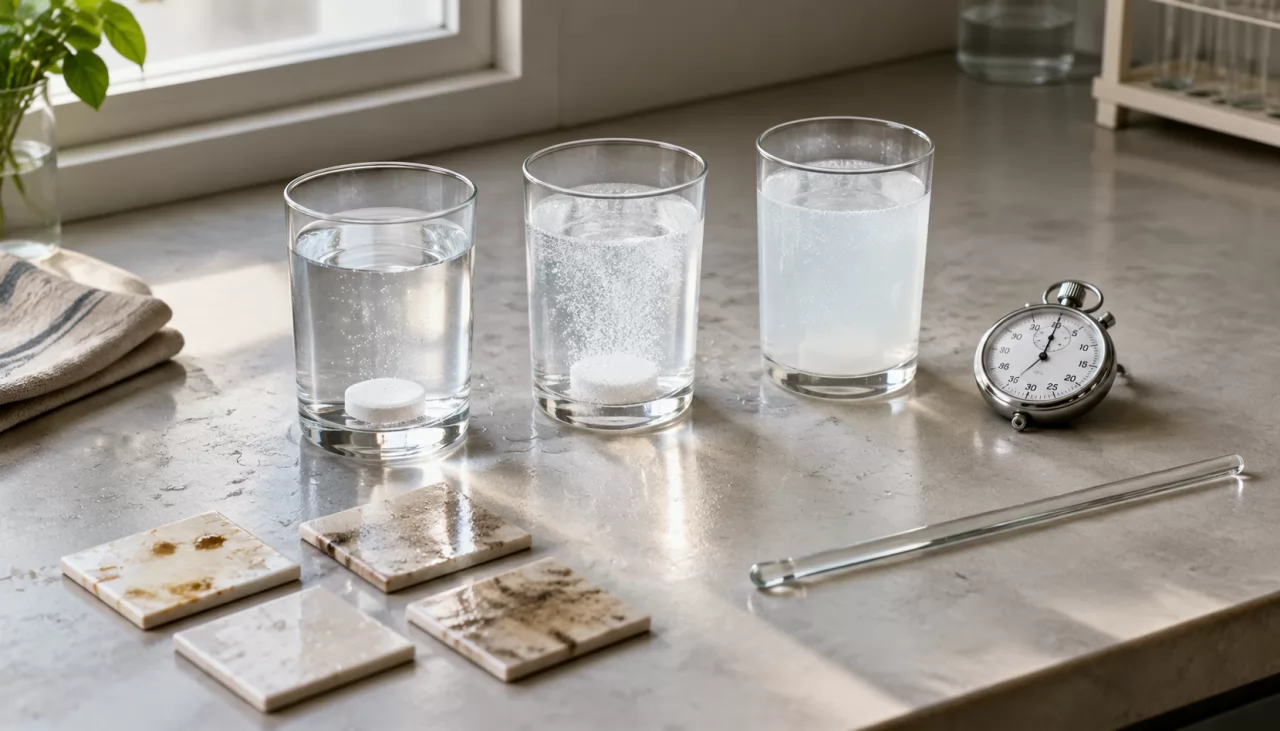
Test in the water your customers actually have, not distilled water. Check dissolution time, foam, residue after drying, scale on glass or steel, and smell. Run a few repeat cycles, because a single clean result says little about consistency. Store a spare tablet in a humid spot for a week to see how it holds up. Samples are free and the buyer pays freight, so there is little reason to skip this stage.
Packaging, dosing instructions and shipping weight
Foil wrap protects each tablet from moisture and suits retail and single-use packs. Tubs and sachets suit larger counts but expose tablets to humidity each time they are opened. Heavier tablets raise freight cost per unit, so tablet weight is a cost driver as well as a performance one. The dosing instruction printed on the pack should match what you tested, because that line is what customers will follow. Custom OEM/ODM runs take about 40 days.
Typical Development Path From Brief to Bulk
The path below is the one Boymay follows for custom tablet orders; the main variable is how many rounds of sample adjustment the formula and packaging need.
| Stage | What happens | Payment or timing |
|---|---|---|
| 1. Brief | Discuss formula, shape, weight, packaging | No charge |
| 2. Sample and contract | Sample tested, contract signed, delivery date agreed | Deposit: 30% T/T |
| 3. Bulk sample | Bulk sample made, packaging designed | Approval needed |
| 4. Production | Mass production after bulk sample approval | OEM/ODM about 40 days |
| 5. Shipment | Inspection, shipment | Balance against copy of BL |
The approval gate at stage 3 is where most disputes are avoided, so it deserves your own testing time.
Next Step
Send your target market, tablet use (dishwasher, surface, toilet or multipurpose), pack format and expected volume, and our team can draft a sample brief that you can test in your own water.
FAQ
Q: What is the difference between commercial and household cleaning tablets?
A: The difference is tuning, not simply strength. Commercial tablets are usually built for heavier soil, variable water and repeated cycles, with different dosing, dissolution and labeling.
Q: Do commercial tablets clean better in hard water?
A: Not automatically. They often carry a stronger chelator system, which helps, but only if the formula was designed for your water. Test in local water before deciding.
Q: Can one base formula serve both lines with different dosing?
A: Yes, in many cases. The base chemistry can be shared while tablet weight, dose instructions and labeling differ. Foam, dissolution and market rules still need a check for each line.
Q: Who supplies bulk commercial cleaning tablets under private label?
A: Specialist contract manufacturers of effervescent and personal care tablets do. Ask for the SDS, audit documents and a sample made to your own spec before comparing quotes.