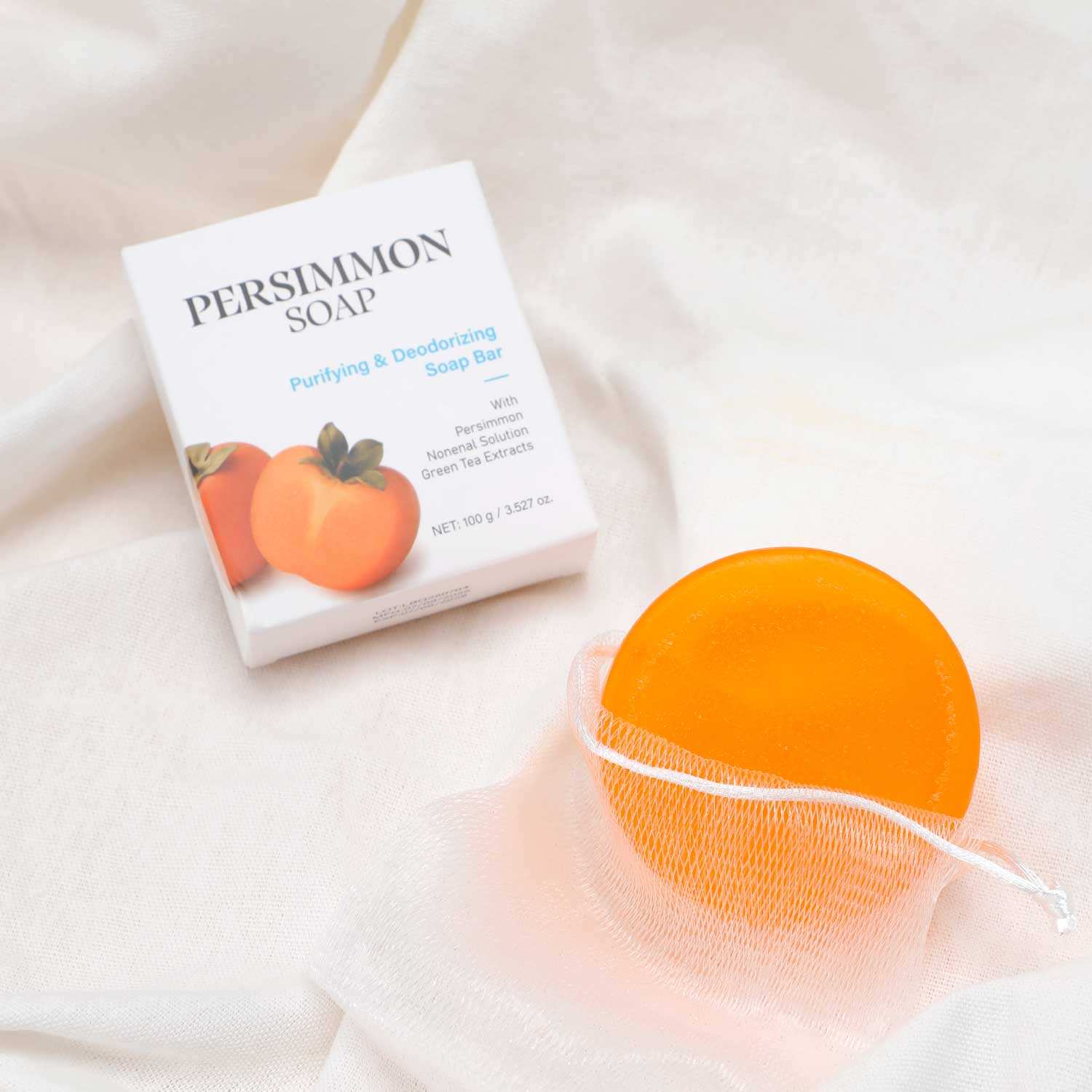

Don't approve a bulk run on the strength of a sample that smelled right. In a typical persimmon soap manufacturing project, the sample is made by hand in a small lab batch, and the first production batch can come out darker, different in odour, or softer than the bar you signed off. This worked scenario is generic and unnamed. It shows where those gaps open up, and which decisions close them.
Persimmon soap is a bar soap made with a persimmon-derived ingredient, usually a fruit extract, a leaf extract or a tannin-rich concentrate. For a buyer, the useful definition is the one on the spec sheet: the INCI name, the form and the use level. A fruit scent alone does not qualify. Three decisions decide most outcomes: the base and extract form, the formula lock before scale-up, and the colour tolerance. Ask for a raw material certificate of analysis, an in-process record and a retained reference bar before you approve bulk.
- The name is loose. Scent, extract and tannin content are three different things, so specify which one you are buying.
- Extract does not rescue a weak base. Lather, hardness and cure come mostly from the oil blend.
- Three decisions matter. Base and extract form, formula lock, colour tolerance.
- Claims stay modest. Wording depends on each market's rules and your test reports.
- Ask for evidence. Certificates of analysis, batch records, retained bars and stability results.
Persimmon Soap Is Not a Persimmon Bar: What the Name Actually Covers
On a spec sheet, "persimmon soap" should mean a soap whose formula lists a named persimmon-derived ingredient in the INCI declaration, at a stated level, in a stated form. Anything less is a fragrance or a colour story. If the supplier cannot give you the INCI name and the extract supplier's specification, you are buying a name rather than a formula.
Fruit, extract, tannin: three different claims
A fruit-scented bar gets its character from fragrance. The declaration would show Parfum and perhaps colourants, with no persimmon plant ingredient at all. Calling it a persimmon bar is a naming choice, and some markets will look hard at it.
A bar with extract carries a declared plant ingredient. Persimmon is the genus Diospyros, and the common species in cosmetic ingredient lists is Diospyros kaki. The INCI entry depends on the part of the plant and the extraction, such as fruit extract, leaf extract or fruit juice. Check the exact entry your supplier uses against the current INCI listing rather than assuming.
Persimmon tannin soap is the third case. Persimmons contain tannins (polyphenols), and some extracts are sold on that basis. A tannin-rich concentrate is darker, more astringent in smell and more reactive in a soap batch. It is not the same material as a diluted fruit extract, and the price and handling differ too.
What the extract can and cannot be marketed as
Keep it plain. You can say the bar contains persimmon extract, if it does and the INCI list shows it. You should not attach skin benefits, odour-control promises or anything that sounds medical. Those claims need substantiation, and what is acceptable differs between the EU, the US, the UK and Gulf markets. Your regulatory adviser or responsible person decides the final wording for each market.
Decision One: Choosing the Base and Extract Form
In this scenario the brand wanted a firm 100 g-class bar with a light amber tone and a mild, slightly fruity odour. The first decision was not the extract. It was how the soap would be made, because that sets what the extract has to survive.
Cold process or melt-and-pour
Cold process soap formulation means mixing oils with a sodium hydroxide solution, letting the bar saponify, then curing it for several weeks. You control the oil blend, the superfat and the additives. The trade-off is time: a cure is needed before the bar is hard and mild enough to ship.
Melt-and-pour starts from a pre-made soap base that is melted, coloured, scented and poured. It is quick and forgiving. But you inherit the base. You can't change the oil profile, and an extract mixed into it is limited by what the base tolerates.
For a brand wanting its own formula and a clear INCI story, cold process usually gives more room. For a quick test of a concept or a small gift line, melt-and-pour can be enough. Machine-pressed (milled) bars are a third route, used for mass-market bars, with their own equipment needs.
Extract format: liquid, powder or tannin concentrate
A liquid extract is easy to disperse but often carries a solvent such as glycerin or water, and that affects the water balance and shelf behaviour. Its odour can be faint or can go sour if the preservation is weak.
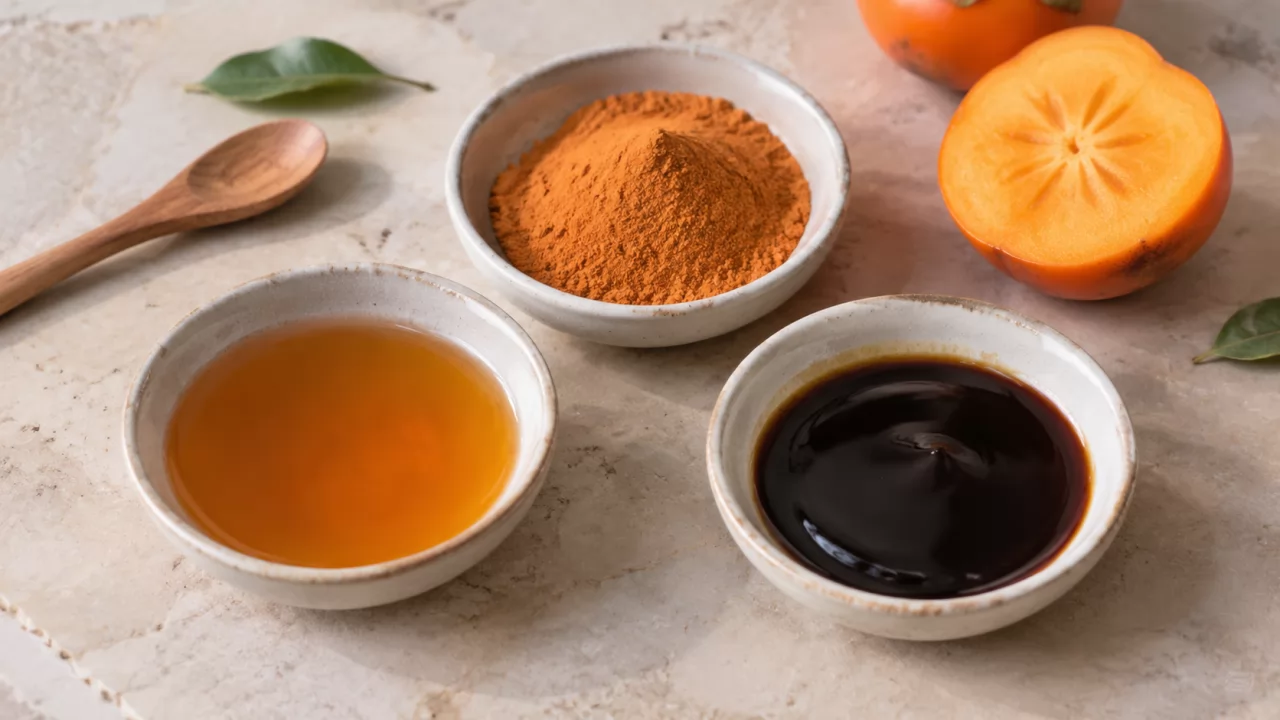
A powder is concentrated and stable in storage, but it can speck, clump or settle if it is not pre-dispersed. Specks may look like a feature or like a defect, depending on your brief.
A tannin concentrate gives the strongest effect on colour and smell. It is also the one most likely to change trace and darken over cure. Ask the supplier for the extraction solvent, the carrier, the appearance and odour description, and the typical lot-to-lot variation. If they cannot answer, the lot-to-lot risk is yours.
Matching the oil blend to the bar you want
Coconut oil raises hardness and gives quick, bubbly lather, but too much can make a bar feel drying. Olive oil gives a mild, creamy, slower-lathering bar that takes longer to harden. Shea butter adds hardness and a cushioned feel. Palm oil is traditionally used for hardness, and brands avoiding it often use a blend of coconut, shea and a hard butter or other stearic-rich fat instead. Costs move with the market, so ask for a range of two or three blends rather than one.
None of this makes a skin claim. These are physical properties of the bar: hardness, lather, cure, price.
How to Choose Ingredients for Persimmon Soap: A Comparison
The table puts the common choices side by side. Read the right-hand column as your spec request.
| Choice | Typical effect | Main risk | Ask for on the spec |
|---|---|---|---|
| Liquid fruit extract | Light tone, mild odour | Preservation, water balance | INCI name, carrier, appearance |
| Powdered extract | Stable, concentrated | Specks, clumping | Particle size, dispersion method |
| Tannin concentrate | Deeper tone, stronger odour | Trace changes, darkening | Lot specification, retained sample |
| Coconut-rich oil blend | Hard bar, fast lather | Can feel drying | Oil percentages, superfat |
| Olive-rich oil blend | Creamy, mild lather | Slow cure, softer bar | Cure time, hardness check |
| Natural-origin colourant | Soft, earthy tone | Fades or shifts with light | Colour reference, light test |
| Synthetic fragrance | Stable, repeatable scent | Discolouration with some notes | IFRA certificate, vanillin content |
Most brands do well with an extract in liquid or powder form, a balanced oil blend and a fragrance that has been tested in the actual base. Save the tannin concentrate for a bar where deep colour is the point, and accept the extra control it needs.
Decision Two: Fixing the Formula Before Scale-Up
Lock it at sample stage. Changing the formula after bulk sampling means starting the approval again.
Saponification value control is the core. Each oil has a saponification value, the amount of alkali needed to turn it into soap. The formulator calculates the hydroxide needed for the blend and then sets the superfat, the share of oil deliberately left unsaponified. A higher superfat gives a softer, milder-feeling bar but a greater chance of rancidity over time. A lower one gives a harder bar but a harsher feel. The superfat figure belongs on your spec, not in the supplier's head.
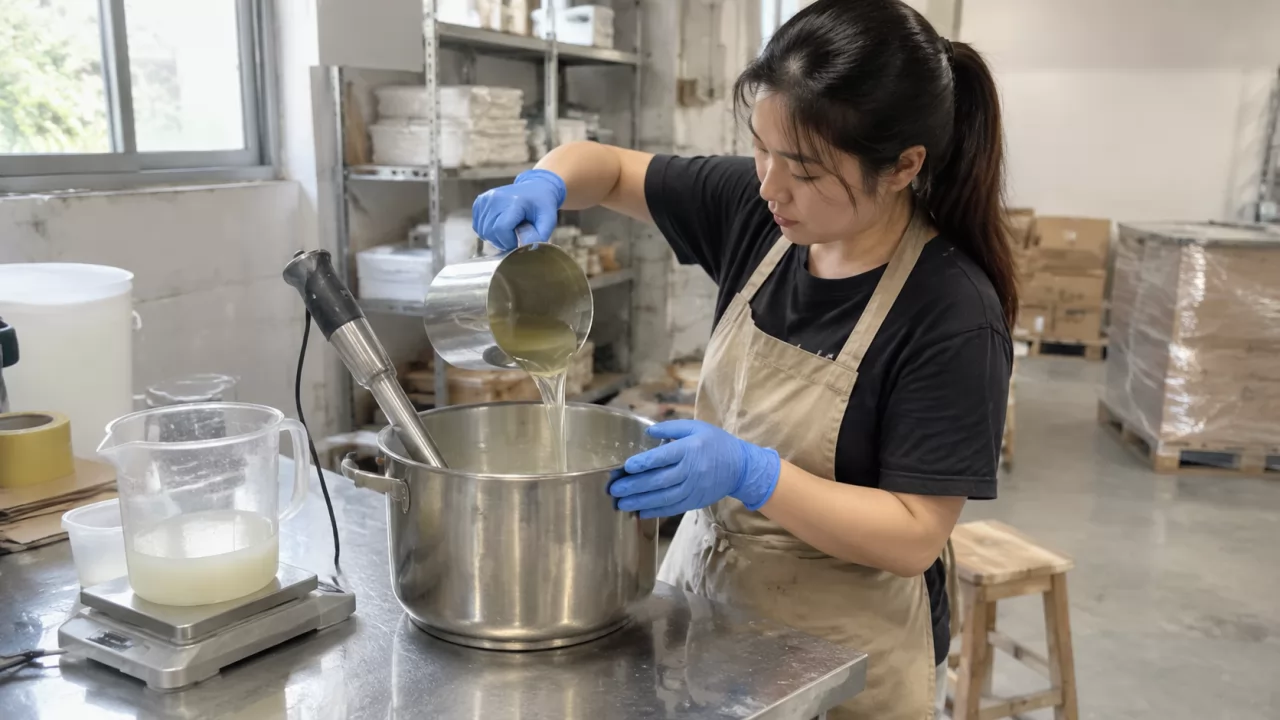
Then comes the extract's effect. Plant extracts can shift the pH of the mix, and tannins can react with the alkali and darken the paste. Some extracts speed up trace, which is the point where the batter thickens enough to hold a pattern, and that leaves less time to pour or cut. A bar that behaved perfectly at 500 g in the lab may behave differently in a production-size mixer, which is why the formula is checked again at scale.
Fix the order of addition, the temperature window and the extract's point of addition. These details sound minor, and they decide whether batch twelve matches batch one.
Persimmon Soap Quality Control from Raw Material to Cured Bar
Quality control here is a chain. A weak link early, such as an unchecked extract lot, shows up late, as a bar that fails after weeks of cure.
Raw material quality inspection
Raw material quality inspection starts at the dock. For each oil and butter, expect a certificate of analysis with values such as acid value or peroxide value, which indicate freshness and oxidation. Check the batch identity on the container against the paperwork. A smell test catches the obvious cases, such as old, rancid oil.
The extract needs the most attention. Request its specification, the lot number, appearance, odour and any solvent or preservative. Then compare lots. If two lots of "the same" extract differ in colour or smell, you will see that difference in the soap. Many producers keep a retained sample of each extract lot for exactly this reason.
In-process and finished-bar checks
Checks differ by plant, but the logic is common. The table shows typical stages and what a failure looks like. No numeric limits are given because they belong in your own specification.
| Stage | Check | Typical method | Failure looks like |
|---|---|---|---|
| Incoming oils | Freshness, identity | Certificate of analysis, odour | Rancid smell, wrong lot |
| Mixing | Trace behaviour | Visual, timed record | Seizing, separation |
| Cutting and moulding | Weight, shape | Scale, gauge | Uneven weight, cracks |
| Curing | Moisture, hardness | Weight loss, hand test | Soft bar, sweating |
| Finished bar | pH, appearance | pH meter on a dilution | Spots, discolouration |
| Storage | Odour, colour change | Retained-bar comparison | Orange spots, off smell |
Persimmon soap quality control works best when each of these results is recorded against a batch number, so a complaint can be traced.
Stability and patch-test planning
Stability and compatibility testing is done on the final formula, in the final packaging, because a change in extract, fragrance or wrapper can change the result. Typical tests include storage at raised temperature, light exposure and a check for discolouration and odour change over time. A patch test, which checks how skin reacts to the finished product, is carried out by a lab the brand chooses. The manufacturer should not be the one claiming a result. Ask for the report for your exact formula, and do not reuse one from a similar bar.
Decision Three: Colour Drift, Batch Variation and How to Control Them
Colour is where tannin-rich extracts bite. The same extract can give a pale tan in one oil blend and a brown in another, and light can shift it again on the shelf. So set the tolerance before production, not after complaints.
Agree a master reference bar, cured and photographed under a defined light. Give the factory a visible range, such as a lighter limit sample and a darker limit sample, rather than the single word "amber". Keep a retained bar from every batch, stored in the dark, so you can compare shipments months later.
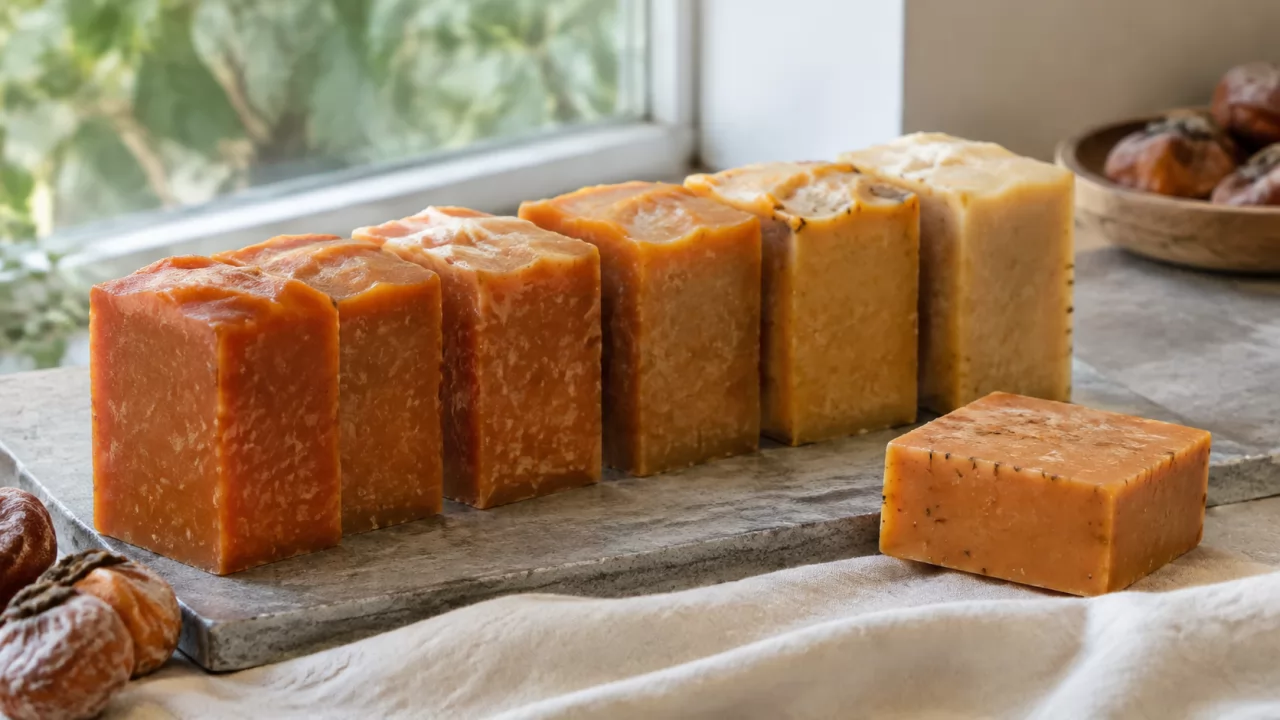
And decide what happens at the edge. A bar slightly out of range can be accepted, held or rejected, and that rule is easier to agree on paper before the first dispute.
Compliance Paperwork Before Shipping
Requirements depend on where the bar is sold, and you confirm the final list for each market. These are the frameworks that generally apply.
In the EU, Regulation (EC) No 1223/2009 sets the rules for cosmetics. It requires a responsible person in the EU, a product safety assessment and report, a product information file, and notification through the Cosmetic Products Notification Portal (CPNP). In the UK, similar rules apply with a separate notification system.
In the US, cosmetics fall under the FDA and the Modernization of Cosmetics Regulation Act (MoCRA), which adds requirements around facility registration, product listing, safety substantiation and adverse event reporting. Note that a true soap, made from alkali and fats and sold only as cleanser, may fall outside the cosmetic definition, while a bar with cosmetic claims may not. Check which side your product sits on.
For manufacturing practice, ISO 22716 is the guideline for cosmetic good manufacturing practice. Ask the supplier which certificates they hold and request copies. Labels need a correct INCI ingredient list in descending order of weight, plus batch code, weight and the other mandatory marks of the destination market.
Working With a Private Label Persimmon Soap Manufacturer: Order Steps
The order sequence is simple, and most delays come from skipping a step. Boymay, a Huizhou-based OEM/ODM maker, works with custom formulas, shapes, colours and packaging, which matters here because each of those feeds back into the sample stage.
| Stage | What happens |
|---|---|
| 1. Brief | Discuss formula, shape, weight, packaging |
| 2. Sample | Sample made and tested, contract and deposit |
| 3. Bulk sample | Bulk sample made, packaging designed |
| 4. Production | Starts after bulk sample approval |
| 5. Shipment | Inspection, shipment, balance payment |
Treat the bulk sample approval as the real gate, since production follows it.
Pre-Order Checklist for Persimmon Extract Soap OEM
Run through this before paying a deposit.
- Confirm the full INCI list, including the exact persimmon ingredient name.
- Request the extract specification and the supplier's certificate of analysis.
- Record the saponification and superfat figures in the formula sheet.
- Agree the QC plan, with named checks at each stage.
- Require retained samples of the extract lot and each finished batch.
- Set a colour range with light and dark limit bars.
- Check label text against the rules of the destination market.
- List the paperwork needed, such as safety assessment and GMP documents.
- Approve packaging and carton marks on a physical sample.
- Sign off the lab sample and the bulk sample in writing.
Next Step
Send your target market, bar weight, packaging idea, preferred extract form and estimated quantity, and our team can scope a sample against the checks above.
FAQ
Q: Can I call the bar "natural" if it contains persimmon extract?
A: Not without proof. The word needs support for the exact formula, and the soap base, fragrance and colourant count too. Say "contains persimmon extract" instead, if the INCI list confirms it.
Q: Does the extract change the cure time?
A: Sometimes. Extracts add water or solids and can shift pH, which may speed trace or slow hardening. The effect is confirmed in sampling, on your formula.
Q: What should I ask for in a persimmon extract soap OEM quote?
A: Ask for the extract form and level, oil blend, bar weight, packaging, quantity and the test documents you need. Each one moves the price, so list them in the request.
Q: How many samples should I approve before bulk?
A: Two. First a lab sample to confirm the formula, then a bulk sample from production equipment. The second shows what the process will really deliver.