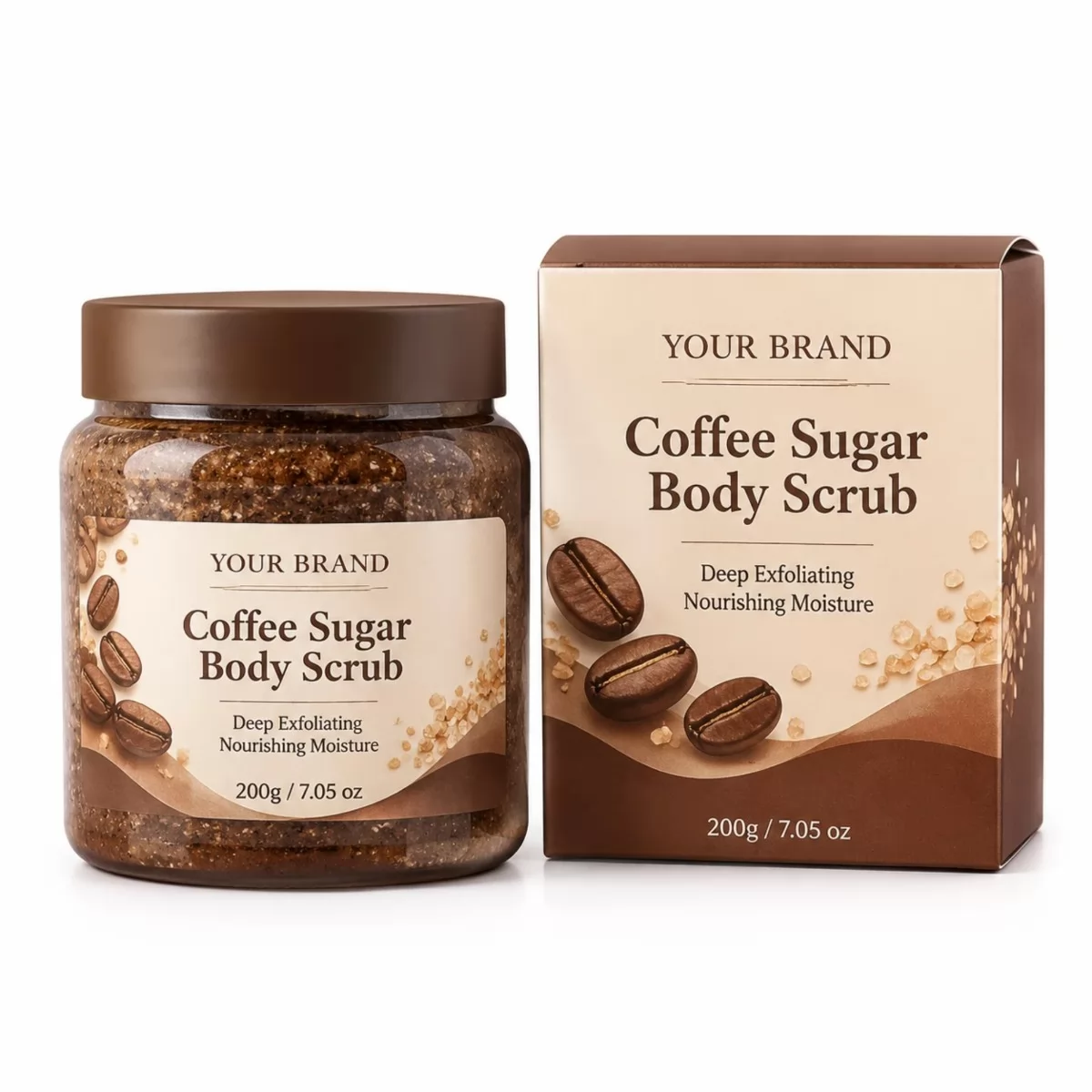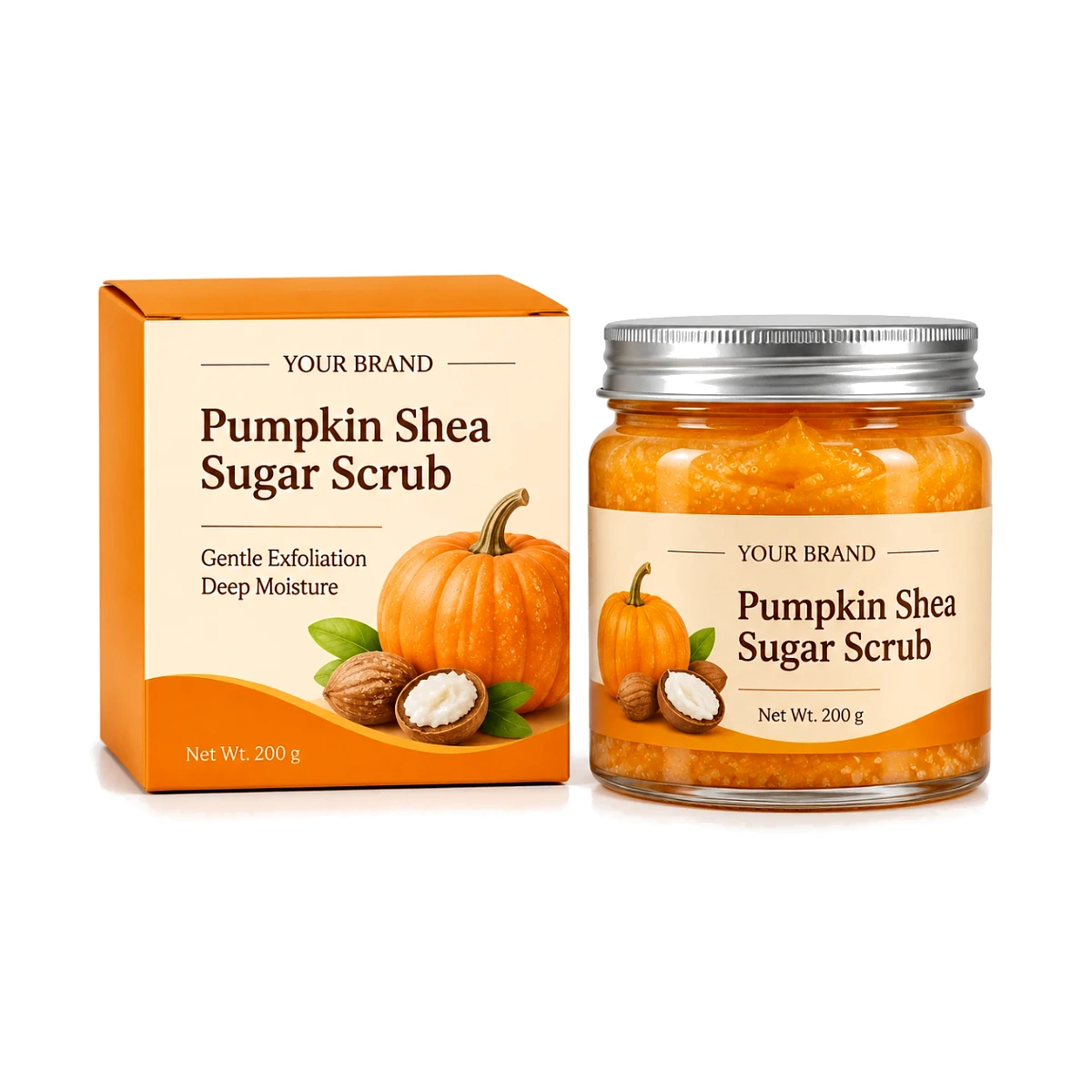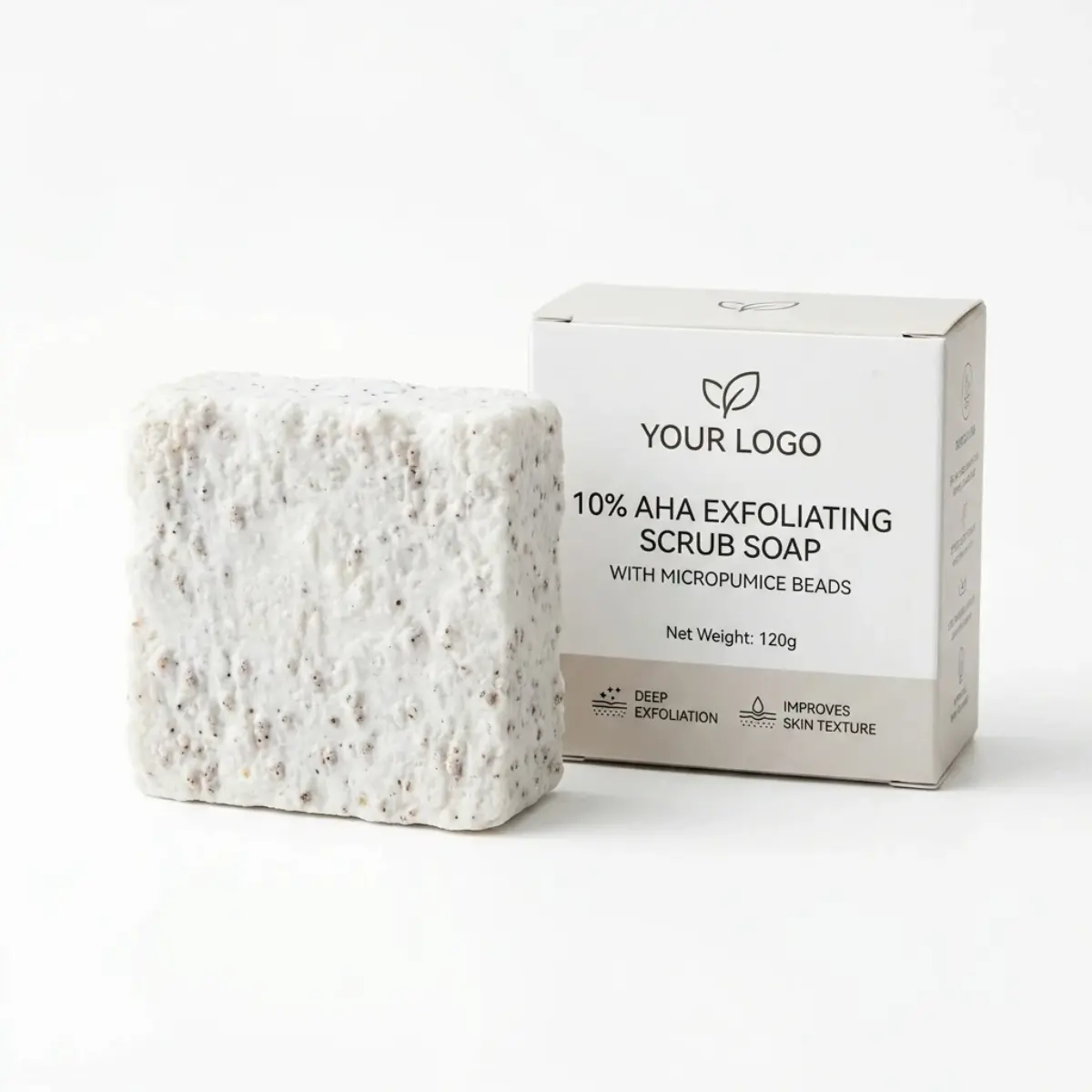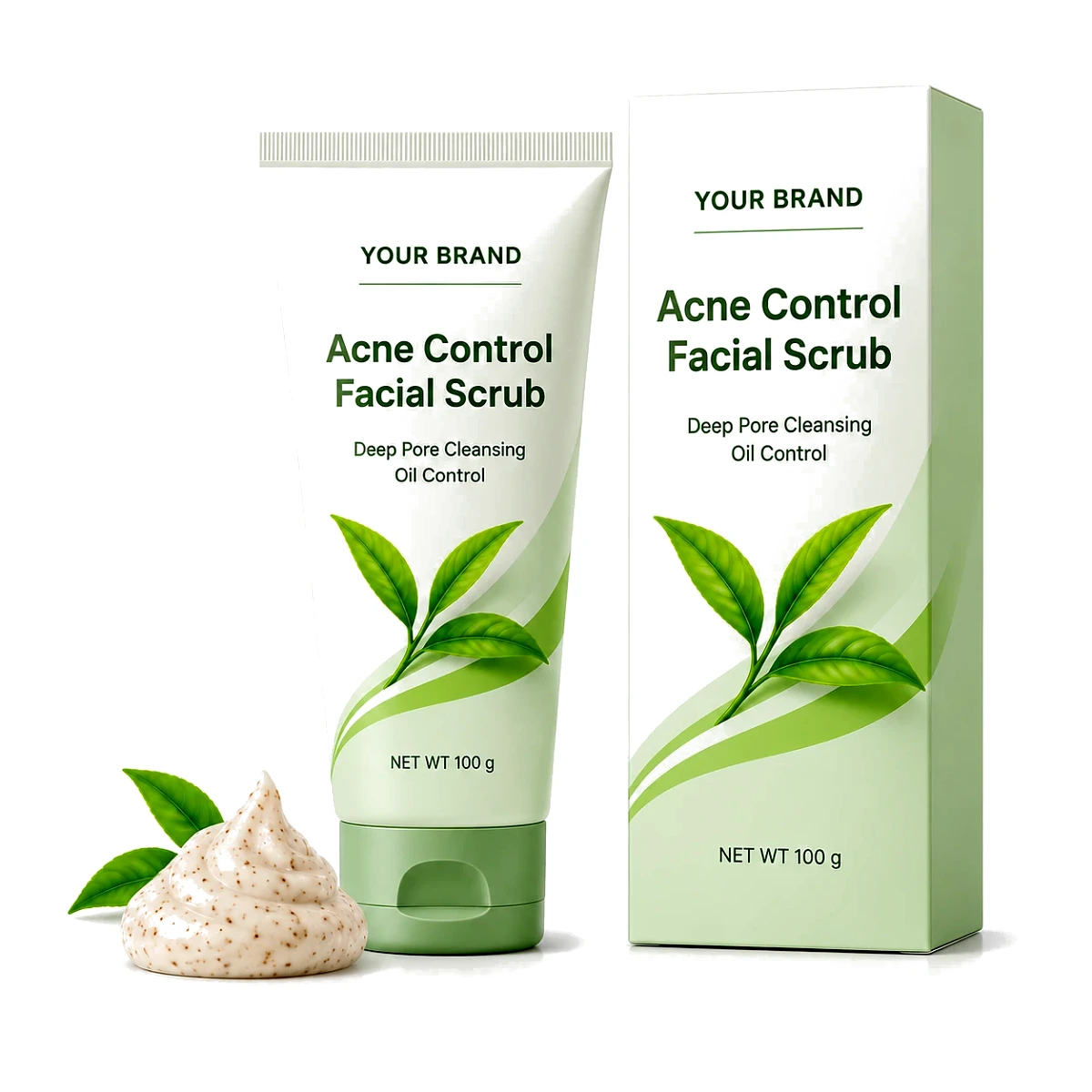

"Just use coarser sugar if you want a stronger scrub." It sounds sensible, and it skips most of the story. Sugar scrub texture comes from three things working together: the grain, the paste it sits in, and what is left on your skin once the water runs. This article shows you how to read a jar, spot a bad texture, and fix a homemade batch that has gone wrong.
Grain size is only one third of how a scrub feels
A sugar scrub feels the way it does because of grain size, paste consistency and rinse feel combined. Grain alone does not decide it. A coarse sugar in a rich, buttery paste can feel softer than a fine sugar in a thin, watery one. Judge all three, not just the crystals.
Take two jars with identical sugar. One is loose and oily, the other thick and spoonable. In the thick one the grains stay put and press evenly against the skin. In the oily one they slide around in a film of liquid. Same sugar, different scrub.
What the three parts of texture actually mean
Grain size is how big the sugar crystals are. Paste consistency is how thick or loose the mixture is: runny, spoonable or stiff. Rinse feel is what your skin and the shower floor feel like after you wash off, clean, silky or slippery.
A few ingredient terms come up again and again. Granulated sugar is ordinary white table sugar, medium in grain. Caster sugar is a finer white sugar, often sold for baking. Brown sugar is sugar that still carries molasses, so it is moister and clumps more easily. A carrier oil is a plant oil, such as sunflower or sweet almond, that holds the sugar together. An emulsifier is an ingredient that helps oil and water mix and rinse away together. A humectant is a moisture-attracting ingredient, glycerin being the common one.
Why fine and coarse sugar behave so differently on skin
Small grains have more points of contact and spread pressure across a wider area. You feel a soft, sandy rub. Big grains concentrate pressure at fewer points, so each one is noticeable. Shape matters too. Crushed or irregular crystals feel sharper than rounded ones.
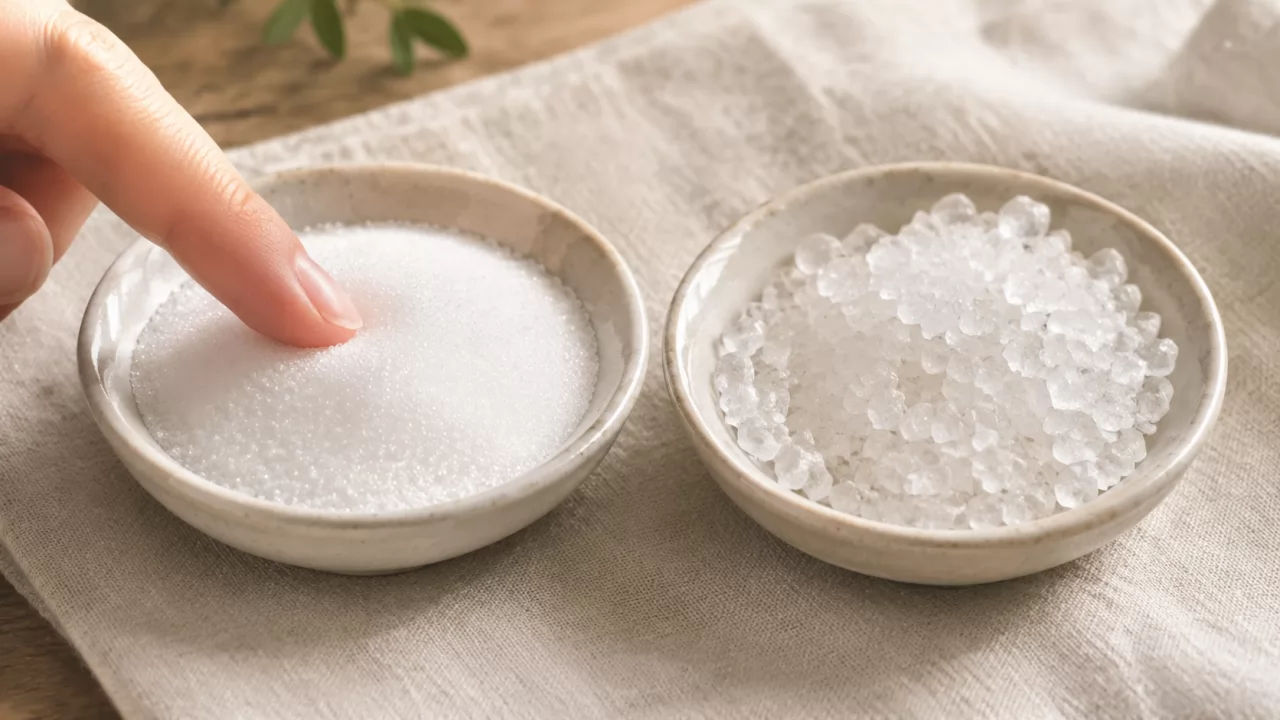
Sugar has one trait that salt scrubs and seed scrubs lack in the same way: it dissolves in water. As you rub and rinse, the crystals shrink and vanish. That is why a sugar scrub often feels harshest at the start and mellows as it goes. Salt dissolves too, but more slowly and with a different sting. Ground seeds and shells never dissolve, so they stay gritty until rinsed off.
Common mix-ups: "gentle" and "strong" are feelings, not measurements
There is no single industry scale for scrub grain. One brand's "fine" can be another's "medium". Words like gentle, polishing or intensive describe a mood, not a number. So if two jars both say "fine", don't assume they match. Rub a little between your fingers if you can, or buy a small size first.
Paste consistency: how oil, sugar and binders set the body of the scrub
The paste is what makes a scrub easy or annoying to use. Too runny and it pours off your hand. Too stiff and you scrape it out with a nail. If you're wondering how to get sugar scrub paste consistency right, it comes down to the ratio of sugar to carrier and the type of fat you choose.
The ratio logic: why more oil is not always better
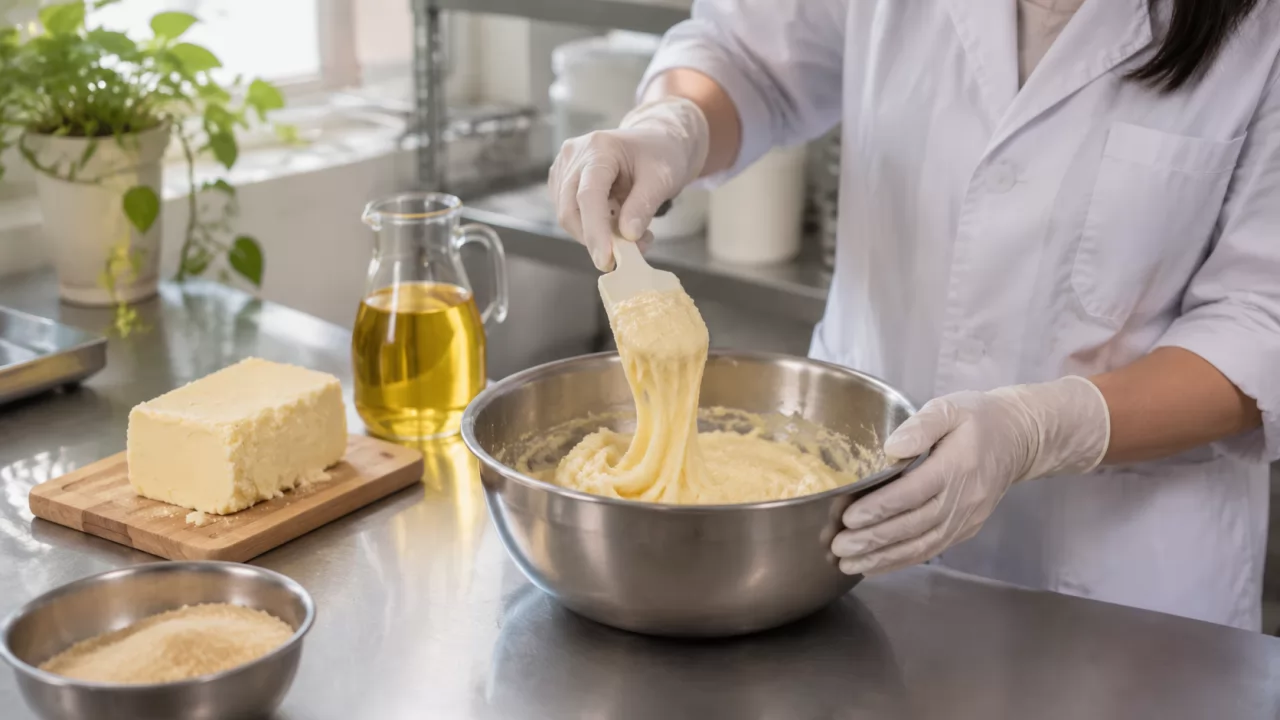
Home recipes often land around two parts sugar to one part oil by volume, and then people adjust by eye. That is a loose starting point, not a rule. Add oil, and the mix gets softer and glossier. Keep adding and it stops holding together: the sugar sinks and a layer of oil floats on top.
Too little oil gives the opposite problem. The scrub turns dry, crumbly and a bit like wet sand. It feels rough and uses up faster because the grains fall away from the hand. The sweet spot is the point where the mixture clings to a spoon and holds a peak for a moment. Add oil a little at a time. It is easy to pour more in and impossible to take it out.
Butters, waxes and emulsifiers: what each does to the paste
Solid fats do the heavy lifting here. Shea or cocoa butter thickens the paste and gives it a cushioned feel, though both soften with warmth. Waxes and similar thickeners add firmness and slow separation. Emulsifiers change the way the scrub rinses and can make the base creamier. Each one buys you something and costs you something else.
| Ingredient type | Effect on paste | Typical trade-off |
|---|---|---|
| Liquid carrier oil | Loosens the mix | Can pool and leave residue |
| Solid butter | Thickens, adds cushion | Softens in heat, may grain |
| Wax or thickener | Firms and steadies | Can feel waxy if overused |
| Emulsifier | Creamier, rinses cleaner | Needs careful formulation |
| Humectant (glycerin) | Adds slip and moisture pull | Tacky feel in excess |
If you only change one thing in a runny batch, add a little solid butter before reaching for anything else.
Why a jar can look different after a hot week
Butters melt and reset at different temperatures. A jar left in a hot car or a warm bathroom may soften, let the oil rise, then harden into a different shape. A thin oil layer on top is common and normally harmless: stir it back in. Warning signs are different. A sour or paint-like smell, visible mold, or water droplets in a scrub that should be water-free all mean it is time to throw it out. Water getting into the jar is the usual cause, so keep hands and wet scoops out of it.
Sugar scrub rinse feel: the part nobody sees in the product photo
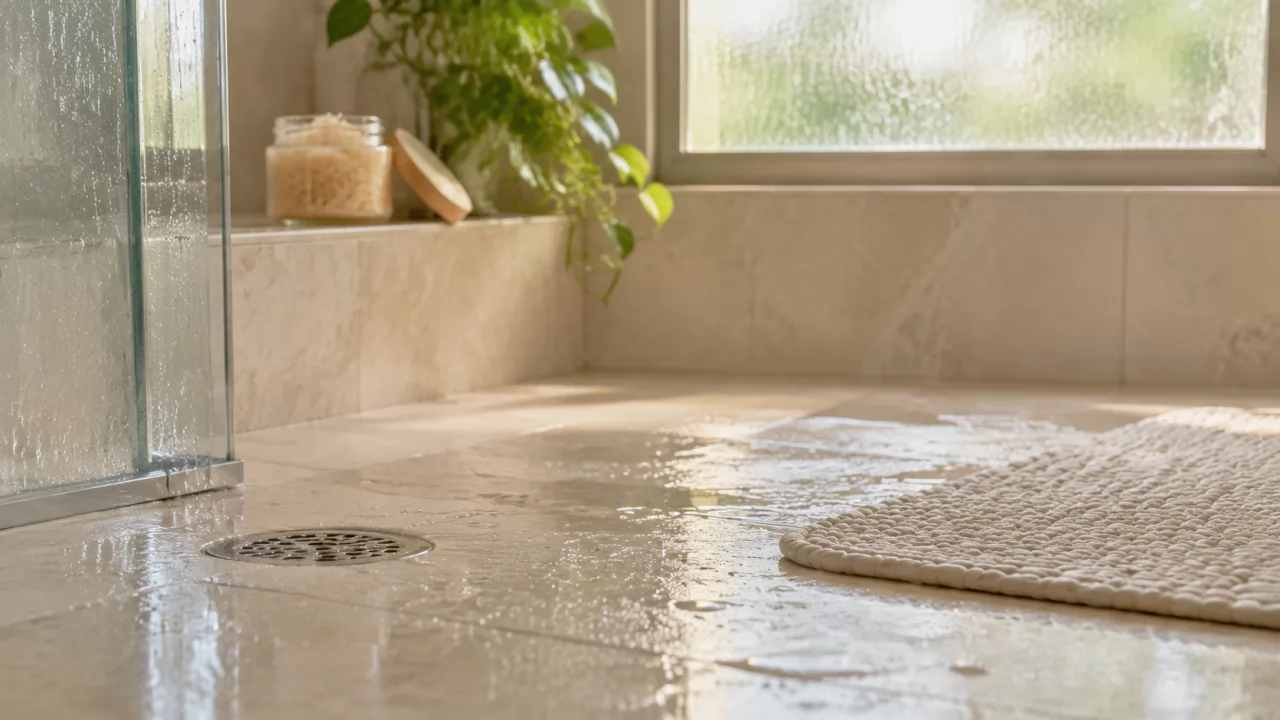
Photos show the grain and the glossy paste. They never show the shower floor afterward. Rinse feel decides whether you reach for the same jar again, because it is the last thing you notice.
Oil-based, emulsified and foaming scrubs rinse differently
A pure oil-based scrub leaves a light film, which some people like as a built-in moisturizer and others find greasy. An emulsified scrub, one with an emulsifier, turns milky with water and rinses much cleaner. A foaming scrub adds a cleansing agent, so it lathers and leaves little residue, though it can feel more stripping.
| Type | Typical rinse feel | Best suited to | Watch for |
|---|---|---|---|
| Oil-based | Light, slick film | Dry rough patches, winter use | Slippery tub |
| Emulsified | Milky, mostly clean | Everyday body use | Needs good preservation |
| Foaming | Lathers, rinses clear | Shower-only routines | Can feel drying |
Most people who dislike "greasy" scrubs are happier with an emulsified one.
The slippery-floor problem and simple ways to manage it
Oil on tile is slick. Use an oily scrub, then step carefully, because a shower floor or tub can become a real slip hazard. Rinse your feet last, use a non-slip mat, and wipe the surface down afterward with a little dish soap. Never leave the jar open near the water.
Reading a label to predict texture before you open the jar
What the first five ingredients usually tell you
Ingredient lists in many markets follow INCI naming, the International Nomenclature of Cosmetic Ingredients. In general, ingredients appear in descending order of concentration, down to roughly one percent, after which order can be loose. So if you see Sucrose first and an oil like Helianthus Annuus Seed Oil second, expect a sugar-heavy, fairly firm scrub. If an oil comes first, expect a looser paste.
Look for the sugar type, too. Sucrose alone is plain sugar. A mention of molasses or brown sugar hints at a moister, stickier mix. A butter in the top five suggests body and cushion. You can't know exact amounts, only the order, and that is enough for a decent guess.
Words on the front of the jar that mean little
"Ultra smooth", "deep clean" and "spa-grade" carry no measurable meaning. They are not tied to a grain size or a test. Turn the jar over instead. Check the ingredient order, the stated format and the directions for use. Those tell you more than any adjective on the lid.
How to choose a sugar scrub texture for your skin and routine
Start with where you will use it. Feet, elbows and knees tolerate a coarser, firmer scrub. Arms, legs and the torso usually do better with something finer. Then think about how often you will use it. A scrub you reach for every week should feel lighter than one kept for occasional treats.
- Grain feel: rub a little between your fingers first and see whether it feels sandy or sharp.
- Paste body: choose spoonable if you hate mess, stiffer if you like control.
- Rinse feel: pick an emulsified or foaming type if you dislike any film.
- Fragrance load: a strong scent can bother some people, so check how perfumed it is.
- Format: a tube keeps wet hands out of the product, while a wide jar is easier to scoop.
Rule of thumb: pick the finest grain you will still feel working, and the lightest rinse you can live with.
Patch testing and when to go gentler
Test a small patch first, such as the inner forearm, and wait a day. Skip scrubbing on broken, sunburned or irritated skin. If you feel stinging or redness that lingers, stop using it. If something persists, ask a doctor or pharmacist rather than trying another scrub.
When a brand develops its own scrub, texture is the first decision
Brands that make their own scrub, sometimes called private label, usually settle texture at the sample stage, before packaging or price. The grain, paste and rinse are all adjusted in rounds. A body scrub manufacturer then tests the sample across temperatures and storage time, since a jar that looks perfect on the day can separate a month later. Boymay, for instance, works with custom formulas, fragrances and packaging, so texture can be tuned alongside the rest of the design.
| Step | What is adjusted | What is checked |
|---|---|---|
| First sample | Grain type and sugar-to-carrier ratio | Spreadability, grain feel |
| Second sample | Butters, thickeners, emulsifier | Body and rinse feel |
| Stability trial | Little, unless problems appear | Separation in heat and cold |
| Final sample | Fragrance and packaging fit | Scent, dispensing, leaks |
Most surprises show up in the stability stage, which is why skipping it tends to be a false saving.
Next step
Before you pick a jar, or a formula of your own, can you say which of the three you care about most: how it feels in the hand, how thick it is, or how it rinses?
FAQ
Can I use brown sugar instead of white sugar?
Yes. Brown sugar is softer, moister and clumps faster, so the scrub feels gentler but stickier. It tends to go off sooner in a wet bathroom, so keep batches small.
Why does my homemade scrub turn hard or separate?
Usually the ratio or the butter. Too much liquid oil lets the sugar sink, while a butter that melted and reset can set solid. Warm storage makes both worse. Stir it, and add a little oil if it is stiff.
How often should I use a sugar scrub?
It depends on your skin. Many people use one about once or twice a week, but follow the product's own directions and stop if your skin feels sore.
Is a sugar scrub safe for the face?
Usually no. Body scrubs are not made for facial skin, which is thinner and more delicate. Only use one on the face if the label says it is meant for that.