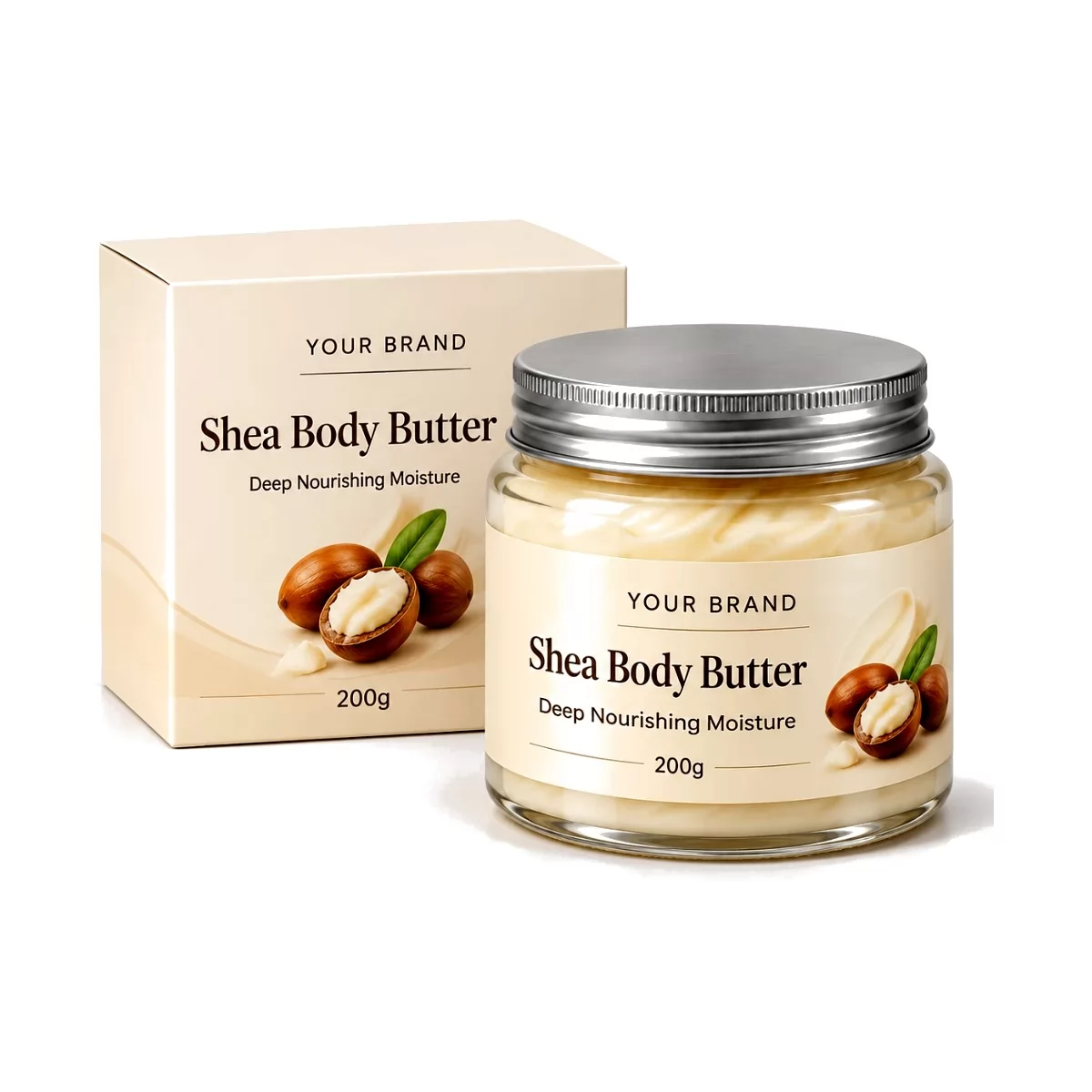

A developer opens a new brief: "body butter, but light like lotion." Both words are used as if they mean one thing. They don't, and the gap shows up in the formula, the jar and the return rate. So, is body butter the same as lotion? No. The rest of this guide shows why it matters when you write the spec.
Is Body Butter the Same as Lotion? The Short Answer
No. Body butter is a thicker, richer moisturizer with a higher share of butters and oils and less water. Lotion is more water-based and pours or pumps easily. The line between them is not legally fixed, so the answer changes if a brand deliberately builds a whipped or hybrid texture and names it either way.
Where the two overlap
Most body butters and lotions are emulsions. An emulsion is a mixture of an oil phase and a water phase held together by an emulsifier system. Both products also carry emollients, humectants and a preservative system. That shared architecture is why the names blur.
Where they split
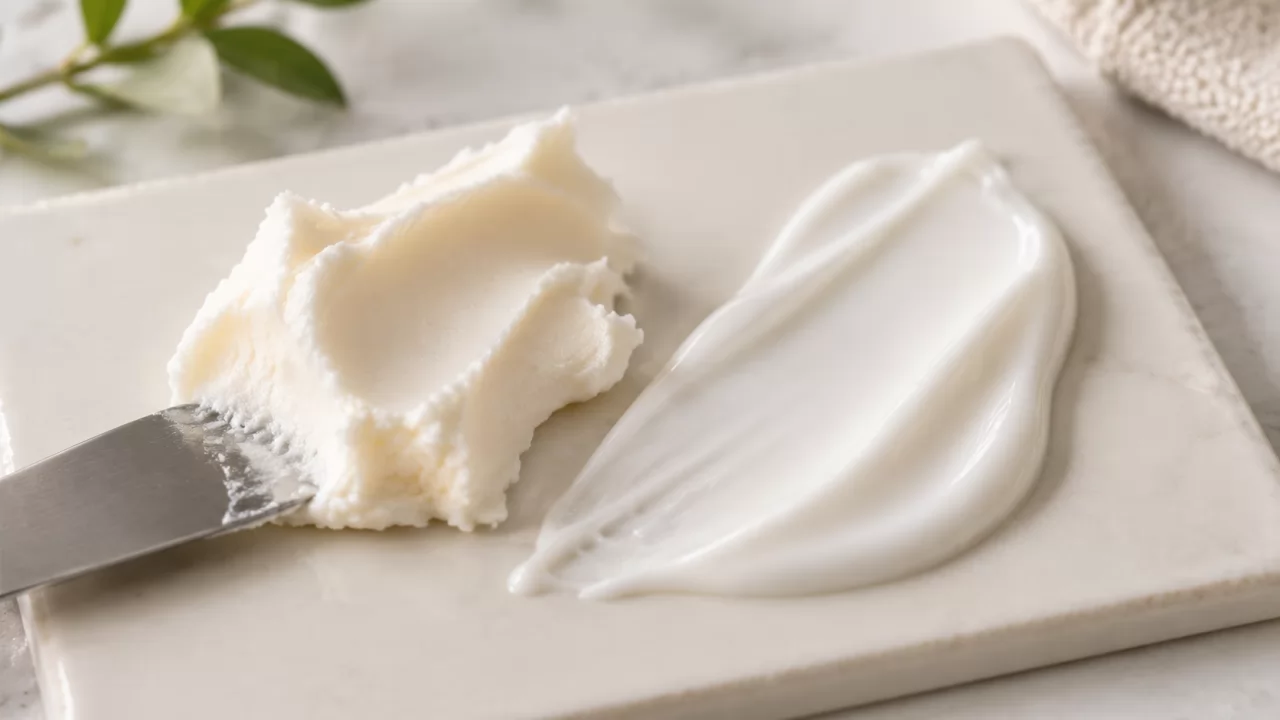
The split is the balance of phases and the type of fat. Body butter leans on solid or semi-solid butters, so it holds its shape in a jar and feels dense on the hand. Lotion leans on water and lighter oils, so it spreads fast and flows. There is no agreed percentage that separates them, and any figure you see quoted is a house rule, not a standard.
Side-by-side comparison
The table below sets out the differences buyers usually spec first. Treat the values as typical tendencies, not limits.
| Criterion | Body butter | Body lotion |
|---|---|---|
| Texture | Thick, scoopable or whipped | Fluid, pourable |
| Oil-to-water balance | Higher oil and butter share | Higher water share |
| Skin feel | Rich, cushiony | Light, fresh |
| Absorption | Slower, leaves a film | Faster, little residue |
| Usual packaging | Jar, wide-mouth tub | Pump bottle, tube |
| Typical use | Evening, cooler months | Daily, after showering |
If your range only has one of the two, the missing texture is usually the gap a customer notices first.
Body Butter Ingredients and Formula Structure
Body butter gets its density from solid fats and its glide from oils. The mix decides how the product behaves in the jar, on the skin and in a warm truck. Cost follows the same choices, because butters and specialty oils usually cost more per kilo than water.
Butters, oils and waxes
Shea butter and cocoa butter are the common structural fats. They are solid at room temperature and melt close to skin temperature, which gives the "melts as you rub" feel. Cocoa butter tends to be firmer and more brittle; shea tends to be softer and creamier. Both can recrystallize if a batch is heated and cooled unevenly, which shows up as a grainy texture. Small amounts of wax can add firmness, though too much makes the product drag.
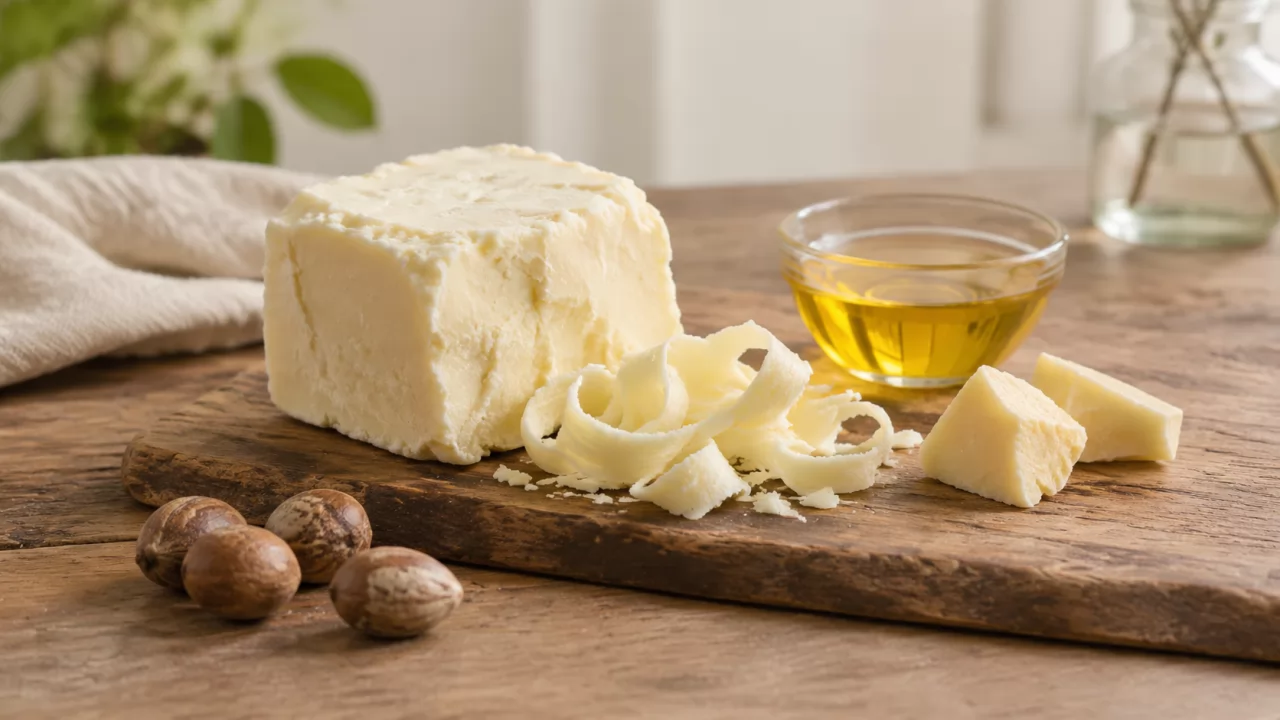
Temperature is the practical issue. A butter-rich product that is perfect at 20°C can soften in a hot container or stiffen in a cold warehouse. Stability testing at several temperatures is how a lab checks this.
Emollients and humectants
They do different jobs. Emollients, such as plant oils, esters and butters, soften the surface feel and slow water loss by sitting on the skin. Humectants, such as glycerin, attract water. On an INCI list (the International Nomenclature of Cosmetic Ingredients, the standard ingredient naming system), ingredients appear in descending order of concentration above 1%. So if glycerin sits first after water, the formula leans lighter. If Butyrospermum Parkii (shea) butter sits near the top, it leans rich.
Water-based vs oil-based formula
Most body butters are emulsions with water in them. Some are anhydrous, meaning they contain no water at all, just butters and oils blended and whipped. Anhydrous butters feel purer and heavier, but they melt more easily and show less of the cool, fresh sensation of an emulsion.
The preservative question depends on this. A product containing water generally needs a preservative system. An anhydrous product has different microbial risks, though water can still get in through wet fingers in a jar. Confirm the approach for each formula with the lab, along with a challenge test where applicable.
Skin Feel, Absorption and How Customers Use Each One
Customers do not read INCI lists first. They rub a product into their forearm and decide in seconds. Lotion disappears quickly, so people reach for it in the morning or before dressing. Body butter stays on the surface longer, so it tends to be used in the evening, on hands, elbows and legs, or in colder months.
Feel descriptions are fair to use: rich, light, cushiony, fast-absorbing. Keep the wording to texture and sensation. Avoid anything that implies treating a skin condition, because that moves the product out of normal cosmetic claims.
One more detail. A film on the skin is not a flaw for people who want it, and a fast finish is not a flaw for people who don't. Match the finish to the use occasion, not to a quality ranking.
Four Mix-ups That Cost Brands Money
- Thicker means better moisturizing. Thickness is texture, not performance. A claim of results needs test support, so describe the feel and leave efficacy out unless you hold reports.
- Naming a whipped lotion "body butter", or the reverse. Customers who expect a dense jar and get a runny cream leave reviews about it. Name the product after the texture it actually has.
- Assuming a butter formula ships like a lotion. Butter-rich products can soften or separate in summer freight. Ask for a stability check at elevated temperature before you plan sea shipments.
- Writing skin-benefit wording without reports. Copy borrowed from a competitor's listing can create claims you cannot support. Draft claims from what the formula and your documents allow.
How to Choose Between Body Butter and Lotion for Your Brand
Start with the gap in your range. If you sell only light products, a butter adds a winter or gifting item. If you sell mostly rich creams, a lotion gives you a daily-use entry point. Then check five things:
- Season and sales climate. Hot, humid markets often favor lighter textures; cold ones tolerate richer ones.
- Price position. Butter-rich formulas tend to cost more in raw materials, so check that the shelf price carries it.
- Packaging format. The container shapes the formula as much as the other way round.
- Shipping route. Long hot transit favors lotion or a stabilized butter.
- Use occasion. Decide whether the product is a daily habit or a treat.
A rule of thumb: pick lotion for volume and frequency, pick body butter for gifting and a premium feel, and only then adjust the other variables.
Jar vs tube packaging
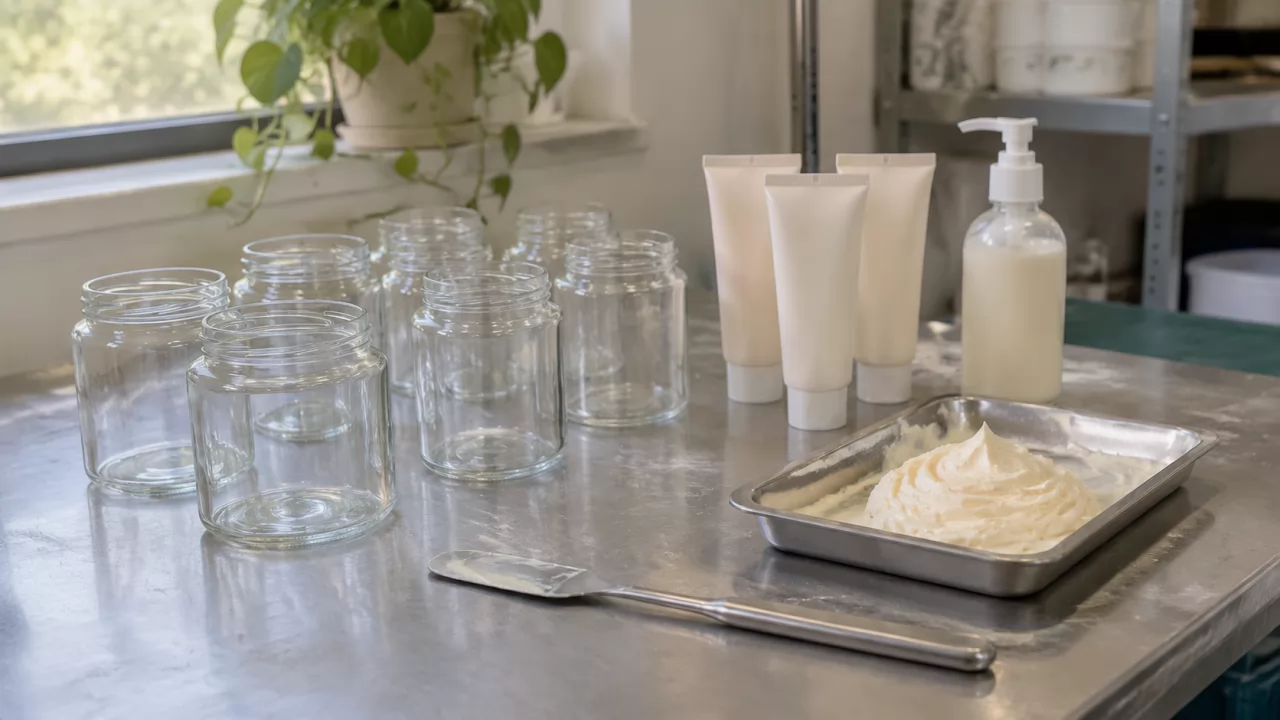
Body butter usually suits jars and wide-mouth tubs because it is too stiff for most pumps. Jars are easy to fill but expose the product to fingers, so hygiene and preservative design matter. Lotion suits pumps and tubes, which dose cleanly and protect the formula. Glass jars add noticeable shipping weight and breakage risk compared with plastic tubes.
Compliance and labeling checks
Rules differ by market, so check them case by case for each target, such as the US, the EU, the UK and Gulf countries. In general terms that covers the INCI listing, permitted claims, labeling content and the safety documentation each market expects. Patch testing and stability testing are discussed with the lab for your specific formula.
Development steps and timing
The usual path runs from brief to sample to approval to shipment. Times below are about 40 days for OEM/ODM production as confirmed in our process; sample timing depends on the formula and packaging.
| Stage | What happens | Typical time |
|---|---|---|
| Brief | Texture, fragrance, packaging agreed | Days, by discussion |
| Sample | Formula and look tested; contract, deposit | About 7–14 days |
| Bulk sample | Packaging designed, bulk sample approved | Before production starts |
| Production | Mass production after approval | About 40 days OEM/ODM |
| Shipment | Inspection, shipping, balance payment | Depends on route |
Payment is typically 30% prepaid by T/T, with the balance against a copy of the bill of lading.
Private Label Body Butter: What to Put in the Brief
A manufacturer needs five things: a texture reference (a product you like, described in words or sent as a sample), a fragrance direction, a fill weight, a container choice and your target market. The market matters most, since it drives claims and labeling. Boymay can adjust formula, fragrance, shape and packaging, with a 1000 MOQ per style or color when no special container or accessories are involved. The tighter the brief, the fewer sample rounds it takes.
Next Step: Send Your Texture Reference
Send your target market, a product whose texture you want to match and your packaging idea. We will check that spec against the points above and quote a first sample.
FAQ
Q: What is the difference between body butter and body lotion?
A: Body butter is thicker, with more butters and oils and less water. Lotion is lighter and more water-based. Both are emulsions.
Q: Can I use the same base for both products?
A: Sometimes. A lab can sometimes adjust the oil and water balance and thickeners from one base to make two textures. But the emulsifier system and stability usually need to be retested for each, so do not assume a straight swap.
Q: Does body butter need a different preservative approach from lotion?
A: It can. Water-containing butters need a preservative system like lotions do, while anhydrous butters carry different risks. Confirm per formula with the lab.
Q: Which is easier to launch first as a private label product?
A: Lotion is usually simpler to ship and fill. Body butter has more temperature and jar-hygiene questions. That said, if your customers want a rich product, the harder launch may still be the right one.