
Sie stehen in der Badeabteilung und halten in der einen Hand ein Glas mit rosa Kristallen und in der anderen einen Behälter mit körniger Zuckerpaste. Beide versprechen weichere, gepflegtere Haut. Beide kosten ungefähr gleich viel. Doch welches brauchen Sie tatsächlich?
Ich habe beides öfter gekauft, als ich zugeben möchte – manchmal aus den falschen Gründen. Hier ist die ehrliche Aufschlüsselung, ganz ohne die Sprache aus Spa-Broschüren.
Kurze Antwort: Der Unterschied in einem Satz
Badesalze lösen sich in warmem Wasser auf, damit Sie darin baden können. Körperpeelings bleiben körnig und werden auf die Haut aufgetragen, um abgestorbene Hautzellen zu entfernen.
Das eine steht für Baden und Entspannung. Das andere für das physische Peelen. Das ist der ganze Unterschied in einem Satz. Alles unten erklärt die Details dahinter.
Was sind Badesalze eigentlich?
Badesalze sind Kristalle auf Mineralbasis, die Sie in eine warme Badewanne geben. Sie lösen sich auf, färben das Wasser und haben oft einen Duft. Man peelt sich nicht mit ihnen. Man steigt hinein und bleibt eine Weile.
Viele greifen am Ende eines langen Tages oder nach einem intensiven Training dazu. Der Reiz liegt weniger im Peelen der Haut als vielmehr im Ritual, sich in Wasser zurückzulehnen, das sich etwas luxuriöser anfühlt als normales Leitungswasser.
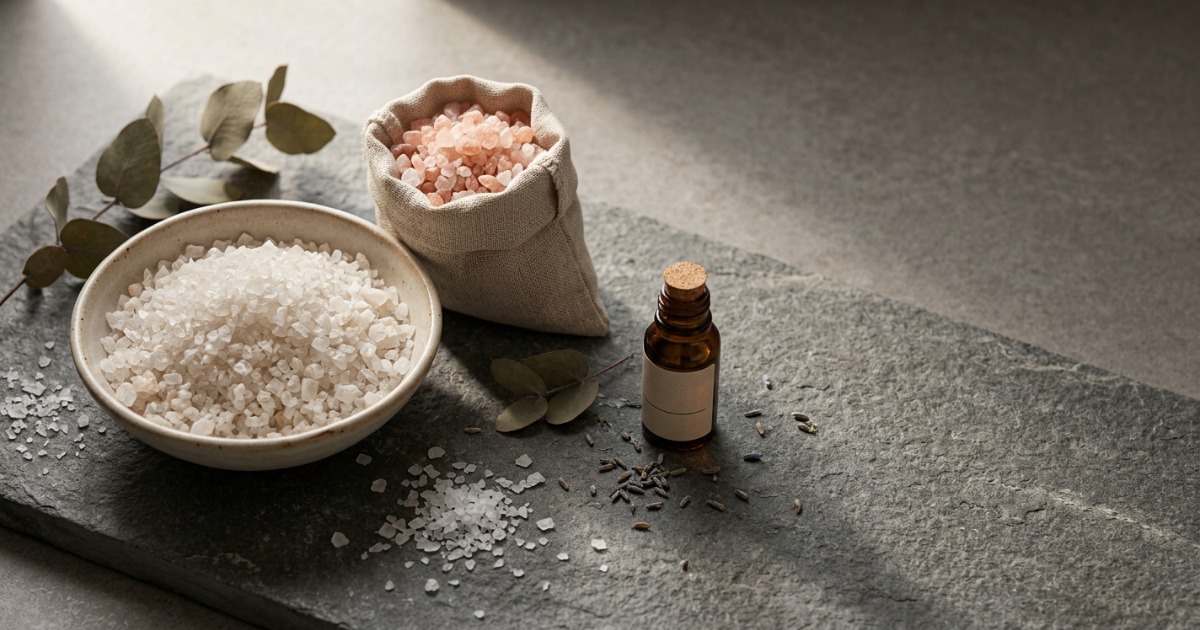
Die Hauptbestandteile (Epsom, Sea Salt, Himalayan)
Nicht alle Badesalze sind gleich, und die Unterschiede sollte man kennen, bevor man Geld ausgibt.
Epsom-Salz ist eigentlich gar kein Salz. Es ist Magnesiumsulfat. Dazu greifen viele Menschen bei Muskelkater und müden Beinen.
Meersalz entsteht aus verdunstetem Meerwasser und enthält Spurenelemente. Es ist eine gängige Basis für duftende Mischungen im Spa-Stil.
Himalayan pink salt ist abgebautes Steinsalz mit Eisen und anderen Mineralien, die ihm seine rosige Farbe verleihen. Meist geht es dabei um die Optik und ein etwas weicheres Gefühl im Wasser.
Mineralische Badesalze zum Baden kombinieren in der Regel einige davon mit ätherischen Ölen. Der Mineralgehalt ist das Verkaufsargument, auch wenn es berechtigt ist zu fragen, wie viel Ihre Haut tatsächlich aufnimmt.
Was sie tatsächlich für Sie tun
Hier spreche ich ganz offen mit Ihnen. Die Entspannung ist real. Warmes Wasser allein lockert verspannte Muskeln, und die ruhige Auszeit hilft dabei, den Kopf zu entspannen. Dazu kommt magnesiumreiches Epsom-Salz, und viele Menschen schwören darauf, dass sich ihre Beschwerden danach leichter anfühlen.
Die wissenschaftliche Grundlage dafür, dass Magnesium über die Haut in Ihren Blutkreislauf aufgenommen wird, ist dünn. Die Studien sind klein und nicht schlüssig. Und die Versprechen zu Muskelentspannung und Detox-Bädern, die Sie auf Etiketten sehen? Den "Detox"-Teil sollten Sie mit einer gesunden Prise Salz betrachten – Wortspiel beabsichtigt.
Ihre Leber und Ihre Nieren übernehmen die Entgiftung. Ein Bad spült keine Giftstoffe aus. Was es tatsächlich bewirkt: Es wärmt Ihren Körper, regt die Durchblutung ein wenig an und schenkt Ihnen zwanzig Minuten, in denen Sie einfach nichts tun – und das ist wirklich wohltuend. Das ist für sich genommen schon ein Gewinn.
So wenden Sie sie an
Es ist einfach, aber kleine Details machen einen Unterschied.
Füllen Sie die Wanne mit warmem, nicht mit kochend heißem Wasser. Ideal ist eine angenehme Temperatur, etwa auf Körpertemperatur oder leicht darüber.
Geben Sie ungefähr ein bis zwei Tassen Salz hinzu, während das Wasser einläuft. Bewegen Sie das Wasser, damit es sich auflöst.
Baden Sie 15 bis 20 Minuten darin. Danach beginnt sich Ihre Haut eher trocken als gepflegt anzufühlen.
Kurz abspülen, trocken tupfen und eine Feuchtigkeitspflege auftragen, solange Ihre Haut noch leicht feucht ist.
Was ist eigentlich ein Körperpeeling?
Ein Körperpeeling ist eine Paste mit körnigen Partikeln in einem Öl oder einer cremigen Basis. Sie massieren es in die feuchte Haut ein, und durch die Reibung werden schuppige, fahle Hautzellen an der Oberfläche entfernt.
Das ist praktische Arbeit. Sie übernehmen das Schrubben. Beim Abspülen fließt die abgestorbene Haut den Abfluss hinunter, und was zurückbleibt, fühlt sich sofort glatter an.
Zucker, Salz oder etwas anderes?
Die Basis bestimmt, wie grob sich das Peeling anfühlt und für wen es geeignet ist.
Zuckerpeelings haben rundere, kleinere Körnchen, die sich beim Einmassieren auflösen. Sanfter und eine gute Wahl für empfindliche oder trockenere Haut.
Salzpeelings sind gröber und abrasiver. Sie gehen raue Stellen wie Fersen und Ellbogen an, können aber auf frisch rasierter oder verletzter Haut brennen.
Kaffee, gemahlene Samen oder zerkleinerte Schalen kommen ebenfalls in manchen Peelings vor. Kaffee ist beliebt. Scharfkantige Schalensplitter können härter sein, als sie aussehen, daher sollten Sie die Textur beurteilen, nicht nur das Etikett lesen.
Was sie tatsächlich für Sie tun
Die Vorteile eines exfolierenden Körperpeelings sind ziemlich direkt. Die regelmäßige Entfernung abgestorbener Hautzellen macht die Oberfläche glatter und hilft Lotionen und Ölen, besser einzuziehen, anstatt auf Hautschüppchen liegen zu bleiben.
Wenn Sie regelmäßig peelen, werden Sie insgesamt weniger raue Stellen, strahlender aussehende Haut und eine weichere Hautstruktur bemerken. Es kann auch gegen eingewachsene Haare helfen, indem Ablagerungen entfernt werden, die sie festhalten.
Was es nicht tut: tiefenwirksam Feuchtigkeit spenden oder Schäden unter der Oberfläche beheben. Peeling ist ein Reset-Knopf für die oberste Schicht, nicht mehr. Kombinieren Sie es mit einer guten Feuchtigkeitspflege, und genau dann zeigt sich der eigentliche Effekt.
So verwenden Sie sie
Befeuchten Sie zuerst Ihre Haut, nehmen Sie dann eine Portion und massieren Sie sie in sanften, kreisenden Bewegungen ein. Konzentrieren Sie sich auf rauere Bereiche und gehen Sie bei dünner Haut, wie an der Innenseite Ihrer Arme, behutsam vor.
Ein- bis zweimal pro Woche ist für die meisten Menschen völlig ausreichend. Jeden Tag ist zu viel und führt meist zum gegenteiligen Effekt. Gründlich abspülen, und eine anschließende Feuchtigkeitspflege ist unverzichtbar, da Sie gerade die äußere Hautschicht entfernt haben.
Der häufigste Fehler besteht darin, ein Peeling wie Schleifpapier zu behandeln. Stärkeres Drücken reinigt nicht besser. Es reizt nur die Haut. Lassen Sie die Körnchen die Arbeit erledigen.
Badesalz vs. Körperpeeling: Direktvergleich
Nun zum direkten Vergleich, auf den Sie gewartet haben.
Zweck: Baden vs. Peelen
Das ist die eigentliche Trennlinie. Badesalze sind zum Baden und Entspannen gedacht. Körperpeelings dienen der Hauterneuerung und Glättung. Das eine hilft Ihnen beim Abschalten. Das andere verleiht Ihrer Haut neue Geschmeidigkeit.
Wenn Ihr Ziel Stressabbau und die Linderung schmerzender Muskeln ist, greifen Sie zu Salzen. Wenn Ihr Ziel weichere, strahlendere Haut ist, wählen Sie ein Peeling.
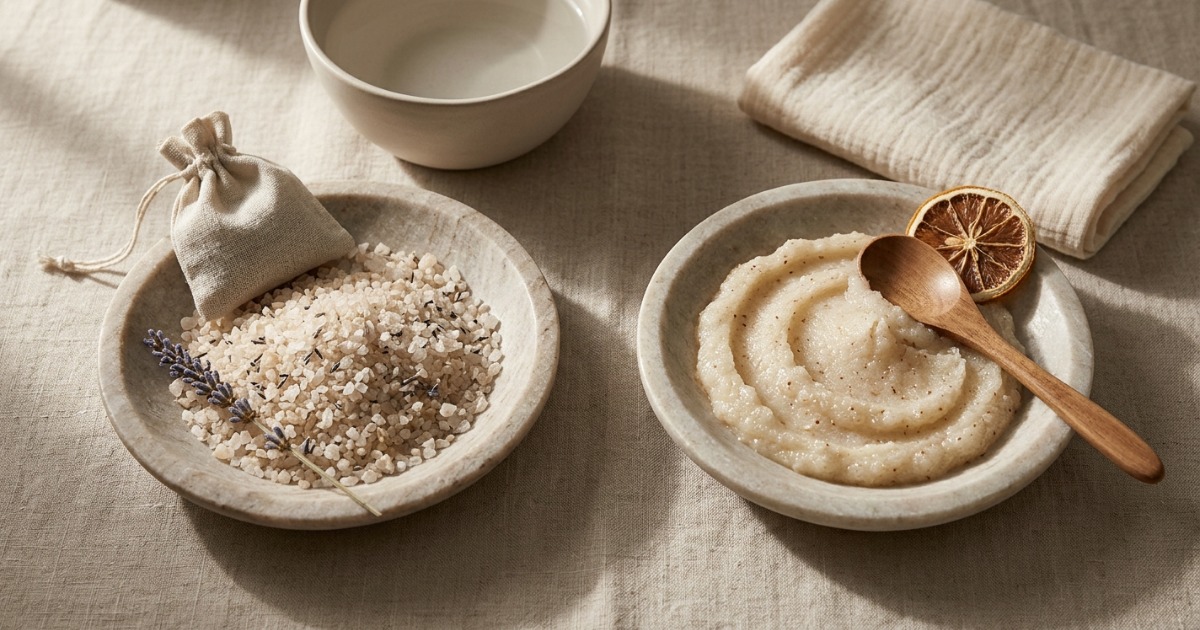
Textur und Anwendungserlebnis
Salze lösen sich im Wasser auf, und Sie kommen mit den Kristallen kaum direkt in Berührung. Es ist ein passives, schwebendes Erlebnis. Sie liegen einfach da und lassen die Wärme ihre Wirkung entfalten.
Ein Peeling ist haptisch und fast schon ein kleines Workout. Sie spüren die Körnigkeit, Ihre Hände sind aktiv in Bewegung, und beim Abspülen gibt es sofort diesen „Wow, das ist glatt“-Moment.
Welche Ergebnisse Sie für die Haut erwarten können
Nach einem Salzbad fühlt sich Ihre Haut warm und entspannt an, kann aber leicht trocken werden, wenn Sie es zeitlich übertreiben – deshalb ist Feuchtigkeitspflege wichtig.
Nach einem Peeling ist die glatte Haut sofort und deutlich spürbar. Für alle, die die beste Hautpflege für ein glattes Hautbild suchen, sorgt das Peeling für die sichtbarere Veränderung. Salze unterstützen das Erlebnis. Peelings verbessern die Hautstruktur spürbar.
Kosten und Nutzen
Beide liegen in einer ähnlichen Preisspanne, ungefähr beim Preis von ein paar Kaffees für einen mittelgroßen Tiegel. Badesalze sind pro Anwendung oft günstiger, weil ein großer Beutel für viele Bäder reicht.
Peelings werden schneller aufgebraucht, da Sie jedes Mal Produkt entnehmen, aber Sie benötigen sie nur ein- oder zweimal pro Woche, sodass ein Tiegel dennoch eine ganze Weile reicht.
Kurze Vergleichstabelle
| Badesalze | Körperpeeling | |
|---|---|---|
| Hauptzweck | Baden und entspannen | Peelen und glätten |
| Anwendung | Im Badewasser auflösen | Auf die feuchte Haut auftragen |
| Häufigkeit | So oft Sie möchten | 1–2 Mal pro Woche |
| Am besten geeignet für | Muskelschmerzen, Stress | Stumpfe, raue, schuppige Haut |
| Sofortiges Ergebnis | Wärme, Ruhe | Sichtbar glattere Haut |
Welche Variante sollten Sie wählen?
Ehrlich gesagt, es kommt darauf an, was Sie heute stört. So würde ich es einordnen.
Wählen Sie Badesalze, wenn ...
Ihre Muskeln nach dem Training oder einem langen Tag auf den Beinen schmerzen. Sie gestresst sind und sich ein Ritual wünschen, um die Welt auszublenden. Oder es kalt ist und Sie vor dem Schlafengehen einfach in etwas Warmes eintauchen möchten. Hier sind Salze Ihr bester Begleiter.
Wählen Sie ein Körperpeeling, wenn ...
Ihre Haut fahl aussieht oder sich rau anfühlt, besonders an Knien, Ellenbogen und Fersen. Sie zu eingewachsenen Haaren neigen. Oder Sie sich auf Selbstbräuner oder eine gründliche Rasur vorbereiten und eine saubere, ebenmäßige Oberfläche wünschen. Ein Peeling erfüllt genau diesen Zweck.
Warum nicht beides?
Tatsächlich funktionieren sie gut zusammen, und Sie müssen sich nicht für eine Seite entscheiden. Der Schlüssel liegt in der Reihenfolge und dem richtigen Abstand.
Peelen Sie zuerst, idealerweise zu Beginn einer Dusche oder eines Bads, und spülen Sie dann die Körnchen ab. Wenn Sie in Salzen baden, tun Sie das danach, damit Sie in sauberem Wasser entspannen, anstatt zwischen abgestorbenen Hautschüppchen zu treiben. Verwenden Sie jedoch nicht beides jeden einzelnen Tag. Geben Sie Ihrer Haut zwischen den Peelings Zeit zur Regeneration.
Häufige Fehler, die Menschen machen
Einige Gewohnheiten sabotieren gute Produkte ganz unbemerkt.
Zu häufiges Peelen. Mehr Reibung und häufigere Anwendung bedeuten nicht automatisch mehr Sauberkeit. Die Haut wird dadurch rot, gespannt und gereizt.
Zu langes Baden. Nach mehr als 20 minutes beginnt ein entspannendes Bad, die Haut auszutrocknen.
Peeling bei verletzter oder sonnenverbrannter Haut. Körnige Partikel auf Schnitten, Ausschlägen oder Verbrennungen führen leicht zu Problemen. Warten Sie, bis die Haut wieder intakt ist.
Feuchtigkeitspflege auslassen. Beide Produkte machen die Haut anfälliger. Die Feuchtigkeit danach einzuschließen sorgt erst dafür, dass die Ergebnisse tatsächlich anhalten.
Häufig gestellte Fragen
F: Kann ich Badesalz und Körperpeeling am selben Tag verwenden?
A: Ja, und das kann sich sehr angenehm anfühlen. Peelen und zuerst abspülen, dann anschließend im Badesalz baden. Machen Sie daraus nur keine tägliche Doppelanwendung und cremen Sie Ihre Haut danach immer ein, damit sie nicht ausgetrocknet zurückbleibt.
F: Sind Badesalze für empfindliche Haut sicher?
A: In der Regel ja, wenn sie schlicht und unparfümiert sind. Duftstoffe und ätherische Öle sind die häufigeren Reizstoffe, nicht das Salz selbst. Beginnen Sie mit einer kleineren Menge, halten Sie die Bäder kurz und testen Sie jede neue Mischung an einer kleinen Hautstelle, wenn Ihre Haut leicht reagiert.
F: Wie oft sollte ich ein Körperpeeling verwenden?
A: Ein- bis zweimal pro Woche ist für die meisten Menschen passend. Bei empfindlicher oder trockener Haut reicht möglicherweise einmal. Wenn sich Ihre Haut danach gespannt oder gereizt anfühlt oder gerötet aussieht, ist das ein Zeichen, die Anwendung zu reduzieren.
F: Helfen Badesalze wirklich bei der Entgiftung?
A: Nicht im wörtlichen Sinne. Ihre Leber und Nieren übernehmen die Entgiftung, nicht die Badewanne. Was Salze tatsächlich bieten, sind Wärme, eine bessere Durchblutung und echte Entspannung. Das ist wertvoll. Erwarten Sie nur nicht, dass sie etwas aus Ihrem Körper ausspülen.
Was ist besser für trockene Haut?
A: Beides kann helfen, wenn Sie es richtig anwenden. Ein sanftes Zuckerpeeling entfernt Schüppchen, sodass die Feuchtigkeitscreme besser einziehen kann, und ein kurzes Salzbad kann beruhigend wirken. Der Schlüssel bei trockener Haut ist, die Anwendungen kurz zu halten und die Feuchtigkeit direkt danach immer zu versiegeln. Wenn Sie diesen Schritt auslassen, kann beides Ihre Haut stärker austrocknen als zuvor.