
Ich arbeite seit über einem Jahrzehnt im Bereich Wellness und Körperarbeit. Wenn ich für jedes Mal, dass mich jemand gefragt hat, ob Bittersalz und „Sodasalz“ dasselbe sind, einen Dollar bekommen hätte, könnte ich mich wahrscheinlich selbst in den Ruhestand in eine Badewanne zurückziehen. Es ist nicht dasselbe — nicht einmal annähernd. Aber die Verwechslung kommt so häufig vor, dass eine ordentliche, leicht verständliche Erklärung längst überfällig ist. So, wie ich sie Klienten am Tisch gebe, nicht so, wie sie von jemandem geschrieben wird, der versucht, Ihnen eine 40 $ Tüte „Premium“-Badekristalle zu verkaufen.
Kurze Antwort: Der zentrale Unterschied in einfachen Worten
Wenn Sie nur dreißig Sekunden Zeit haben: Bittersalz ist Magnesiumsulfat, und „Sodasalz“ ist Natriumhydrogencarbonat — das Natron, das bereits in Ihrer Küche steht. Im Glas sehen sie ähnlich aus. Sobald sie mit Wasser oder Haut in Kontakt kommen, wirken sie sehr unterschiedlich.
Bittersalz ist eigentlich kein „Salz“
Das ist das Missverständnis, das ich am häufigsten richtigstelle. Bittersalz enthält kein Natrium. Es ist eine mineralische Verbindung — Magnesium und Sulfat —, die die Bezeichnung „Salz“ wegen ihrer Kristallstruktur erhalten hat, nicht wegen ihrer Chemie. Wenn mir also jemand sagt, dass er Bittersalz wegen Bluthochdruck meidet, erkläre ich freundlich, dass es nicht das Salz ist, an das die Person denkt.
Sodasalz = Natriumhydrogencarbonat (Natron)
„Sodasalz“ ist einfach ein anderer Name für Natriumhydrogencarbonat. Ja — dieselbe Packung, die Sie zum Backen von Keksen verwenden, dasselbe Pulver hinten im Kühlschrank, das Gerüche absorbiert, dieselbe Substanz, die Großmutter auf Bienenstiche gestreut hat. Daran ist nichts Exotisches, auch wenn manche Marken für Badeprodukte Sie das gern glauben lassen würden.
Spickzettel im direkten Vergleich
| Merkmal | Bittersalz | Sodasalz (Natron) |
|---|---|---|
| Chemische Bezeichnung | Magnesiumsulfat | Natriumhydrogencarbonat |
| pH-Wert in Wasser | Annähernd neutral (6–7) | Alkalisch (etwa 8.3) |
| Geschmack | Bitter, unangenehm | Salzig, leicht seifig |
| Textur | Größer, kristallin | Feines Pulver |
| Hauptanwendung | Muskelbad, Entspannung | Beruhigend für die Haut, desodorierend |
Was Epsom-Salz tatsächlich mit Ihrem Körper macht
Ich habe Epsom-Bäder Tausenden von Kundinnen und Kunden empfohlen – Athleten, Büroangestellten mit verspannten Schultern und Menschen, die einfach zwanzig Minuten Ruhe wollten. Hier ist, was sich meiner Erfahrung nach bewährt hat, und was ich für Marketing-Gerede halte.
Die Vorteile eines Magnesiumsulfat-Bads, über die Menschen sprechen
Das beständigste Feedback, das ich erhalte, betrifft die Muskelentspannung. Menschen fühlen sich nach einem Bad lockerer. Ob das am warmen Wasser, am Magnesium oder einfach daran liegt, zwanzig Minuten ruhig zu liegen, lässt sich tatsächlich nur schwer auseinanderhalten. Darüber bin ich gegenüber meinen Kundinnen und Kunden ehrlich.
Die Frage der transdermalen Aufnahme – also ob Magnesium tatsächlich durch Ihre Haut in den Blutkreislauf gelangt – ist weiterhin umstritten. Einige kleine Studien deuten auf einen geringen Effekt hin; größere dermatologische Übersichtsarbeiten bleiben zurückhaltend. Meine Einschätzung: Selbst wenn die Aufnahme minimal ist, ist der wahrgenommene Nutzen real, und warmes, magnesiumreiches Wasser schadet nicht.
Was aktuelle Forschung tatsächlich sagt
Die neueste dermatologische Fachliteratur kommt in etwa zu folgendem Ergebnis: „Möglicherweise findet eine gewisse Aufnahme statt, aber nicht genug, um einen klinischen Magnesiummangel zu behandeln.“ Wenn Sie tatsächlich mehr Magnesium benötigen, bleiben orale Nahrungsergänzungsmittel der besser untersuchte Weg. Badezusätze werden am besten als Ritual zur Regeneration und Entspannung verstanden – nicht als Ersatz für Ernährung.
Anwendungen für Haut- und Fußbäder
Ich persönlich greife nach Epsom-Bädern nach langen Wanderungen, Tagen, an denen ich bei Workshops viel stehen musste, oder immer dann, wenn meine Waden schmerzen. Ein warmes Fußbad mit etwa einer halben Tasse Epsom-Salz reduziert leichte Schwellungen und fühlt sich einfach gut an. Ich rate Kundinnen und Kunden davon ab, wenn die Haut verletzt ist oder bereits trocken ist – Magnesiumsulfat kann bereits feuchtigkeitsarmer Haut zusätzlich Feuchtigkeit entziehen.
Wer sollte Bittersalz vermeiden
Dies ist das Gespräch, das ich mir in mehr Wellness-Blogs wünschen würde. Epsom-Salz-Bäder sind nicht grundsätzlich für alle sicher. Menschen mit Nierenerkrankungen sollten sie nicht regelmäßig verwenden — beeinträchtigte Nieren haben Schwierigkeiten, überschüssiges Magnesium auszuscheiden. Personen mit bestimmten Herzerkrankungen, offenen Wunden oder schweren diabetesbedingten Durchblutungsstörungen sollten zuerst einen Arzt konsultieren. Gesunder Menschenverstand, aber selten erwähnt.
Was Soda-Salz (Natron) anders macht
Hier trennen sich die beiden Produkte vollständig. Andere Chemie, andere Aufgaben.
Wirkungen eines Hautbads mit Natriumbicarbonat
Natron ist alkalisch. Genau diese Alkalität ist der Grund, warum es juckende, entzündete oder sonnengeschädigte Haut beruhigt — sie hilft, die sauren Nebenprodukte von Reizungen zu neutralisieren. Wenn ein Kunde nach einem Wochenende mit zu viel Sonne zu mir kommt, ist Natron fast immer meine erste Empfehlung. Nicht Epsom.
Häufige Anwendungen im Haushalt und für den Körper
Insektenstiche und -bisse — eine Paste aus Natron und Wasser lindert den Juckreiz innerhalb weniger Minuten
Fußbäder gegen Geruch (das alkalische Milieu stört geruchsverursachende Bakterien)
Beruhigung leichter hefebedingter Reizungen (bitte nur in Absprache mit Ihrem Arzt)
Sanfte Exfoliation bei sparsamer Anwendung
Wo Natron an seine Grenzen stößt
Es entspannt verspannte Muskeln nicht so wie Magnesium. Und bei übermäßiger Anwendung kann es empfindliche Haut austrocknen oder die natürliche saure Schutzschicht Ihrer Haut (den Säureschutzmantel) stören. Ich rate dazu, Bäder mit Natron auf ein- bis zweimal pro Woche zu beschränken, sofern Ihr Dermatologe nichts anderes empfiehlt.
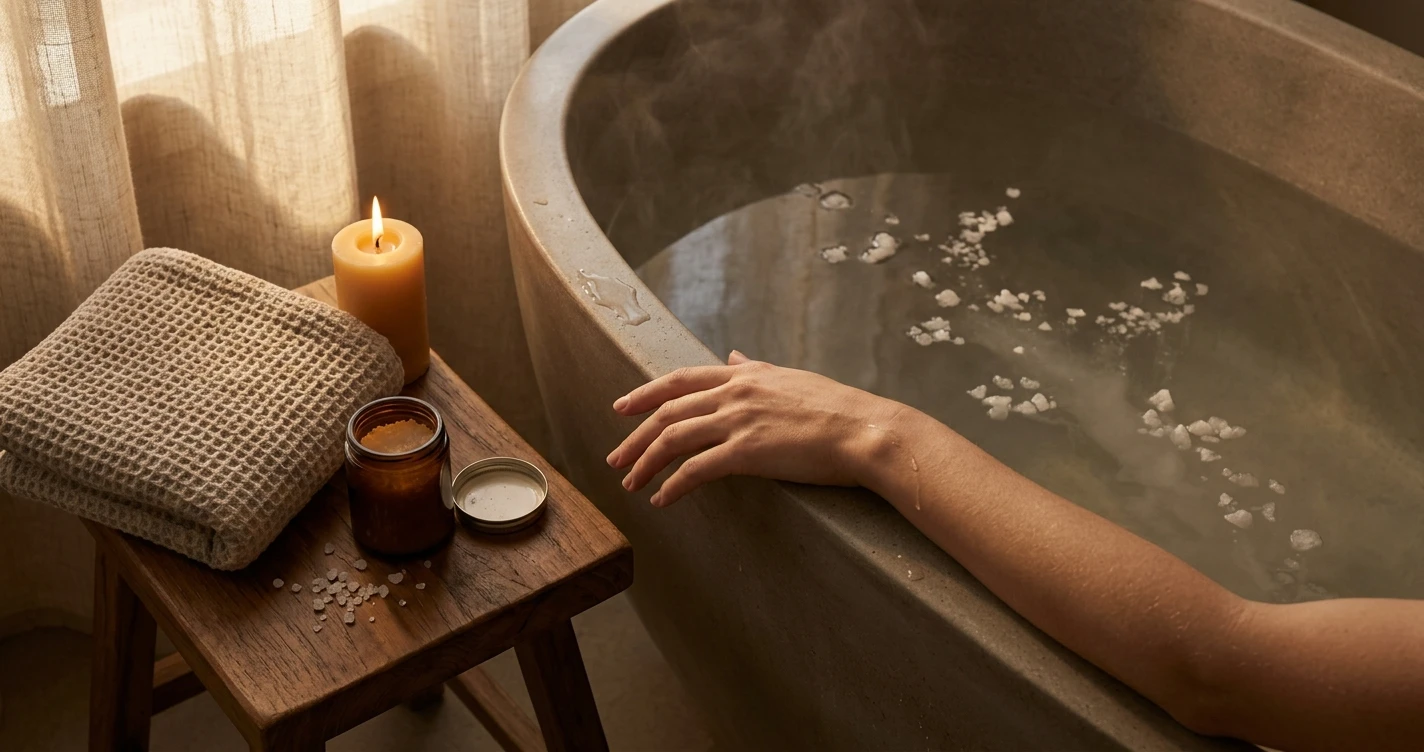
Bittersalz vs. Natron: Wann Sie was verwenden sollten
Hier ist der Leitfaden, den ich Freunden gebe, die mir um 21 Uhr schreiben und fragen, zu welcher Packung sie in der Drogerie greifen sollen.
Bei Muskelkater und Verspannungen
Immer Bittersalz. Mein Standardverhältnis ist ein bis zwei Tassen in einer vollständig gefüllten Standardbadewanne; baden Sie 15–20 Minuten in angenehm warmem Wasser – nicht zu heiß. Der Rat „vier Tassen pro Bad“, den man online manchmal sieht, ist übertrieben und eine Verschwendung des Produkts.
Bei juckender, gereizter oder sonnenverbrannter Haut
Hier gewinnt Natron ganz klar. Eine halbe Tasse in lauwarmem (nicht heißem) Wasser für 15 Minuten ist in der Regel ausreichend. Dermatologen empfehlen es nicht ohne Grund oft eher als Bittersalz – das alkalische Milieu beruhigt entzündete Haut tatsächlich.
Für ein „Detox-Bad“
Ich sage es ganz offen: Ihre Leber und Nieren übernehmen die Entgiftung. Ein Bad „zieht“ nicht in irgendeinem sinnvollen Maß „Giftstoffe“ durch Ihre Poren heraus – so funktioniert die Physiologie der Haut nicht. Was ein warmes Bad tatsächlich bewirkt, ist eine bessere Durchblutung, niedrigere Stresshormonwerte und besserer Schlaf. Das sind echte Vorteile. Sie sind nur keine „Entgiftung“.
Kann man beides kombinieren?
Ja, und ich mache das selbst in den meisten Wochen. Meine persönliche Mischung: eine Tasse Bittersalz plus eine halbe Tasse Natron in einer warmen Badewanne. Das Magnesium kümmert sich um die Muskeln, das Bicarbonat macht das Wasser weicher und ist sanft zu meiner Haut. Es ist eine unkomplizierte Kombination, die funktioniert.
Kauf, Aufbewahrung und sichere Anwendung
Worauf Sie auf dem Etikett achten sollten
Achten Sie bei Epsom-Salz auf USP-Qualität — das bedeutet, dass es pharmazeutische Reinheitsstandards erfüllt. Vermeiden Sie Epsom-Salz in landwirtschaftlicher Qualität (für Pflanzen verkauft), da es Verunreinigungen enthalten kann, die Sie nicht auf Ihrer Haut haben möchten. Bei Natron ist die Standardpackung aus dem Supermarkt völlig ausreichend. Food-grade bleibt food-grade; es gibt keine sinnvolle höhere Qualitätsstufe.
Haltbarkeit und Lagerung
Beide sind bemerkenswert stabil — bei richtiger Lagerung sprechen wir von Jahren. Der Feind ist Feuchtigkeit. Ich bewahre beide in luftdichten Behältern in einem trockenen Schrank auf, nicht im Badezimmer (Dampf lässt sie schnell verklumpen). Wenn Ihr Epsom-Salz zu einem harten Block geworden ist, ist es trotzdem noch verwendbar; brechen Sie es einfach auseinander.
Dosierungsrichtlinien, denen ich tatsächlich folge
Epsom-Bad: 1–2 Tassen pro Standardbadewanne, 15–20 Minuten, Wassertemperatur etwa 37–39°C
Natronbad: ½ Tasse pro Wanne, 15 Minuten, lauwarmes Wasser
Kombinationsbad: 1 Tasse Epsom + ½ Tasse Natron
Fußbad: ¼ bis ½ Tasse von beiden in einer Schüssel mit warmem Wasser, 10–15 Minuten
Spülen Sie sich danach immer mit frischem Wasser ab und tragen Sie anschließend eine Feuchtigkeitspflege auf. Dieser letzte Schritt ist wichtiger, als den meisten Menschen bewusst ist.
Abschließende Gedanken von jemandem, der beides wöchentlich verwendet
Ich habe beides im Regal stehen, und ich nutze sie aus wirklich unterschiedlichen Gründen. Epsom ist mein Salz für "mein Körper ist vom Training völlig fertig". Natron ist mein Salz für "meine Haut reagiert auf irgendetwas gereizt". Sie sind keine Konkurrenten — sie sind Teamkollegen mit unterschiedlichen Aufgaben.
Wenn ich nur eins behalten dürfte? Ehrlich gesagt würde ich zum Epsom greifen. Den muskelentspannenden Nutzen spüre ich persönlich am zuverlässigsten, und ein warmes Magnesiumsulfatbad nach einer anstrengenden Woche gehört zu den kleinen, günstigen Ritualen, die meine Lebensqualität wirklich verbessern. Aber Natron ist so preiswert und im Haushalt so nützlich, dass es eigentlich keinen Grund gibt, sich zu entscheiden. Kaufen Sie beides. Verwenden Sie es richtig. Und ignorieren Sie jeden, der versucht, Ihnen eine $40-Version von einem von beiden zu verkaufen.
FAQ
F: Ist Epsom-Salz dasselbe wie Speisesalz?
A: Nein. Speisesalz ist Natriumchlorid. Epsom-Salz ist Magnesiumsulfat. Sie teilen das Wort „Salz“ nur deshalb, weil beide Kristalle bilden — chemisch haben sie nichts gemeinsam, und Epsom enthält kein Natrium.
F: Kann ich Epsom-Salz oder Natronwasser trinken?
A: Nur in ganz bestimmten Situationen. Epsom-Salz wird unter medizinischer Anleitung manchmal kurzfristig als Abführmittel verwendet, und Natronwasser wird gelegentlich bei säurebedingten Verdauungsbeschwerden empfohlen — aber keines von beiden sollte eine alltägliche Gewohnheit sein. Beide können den Elektrolythaushalt stören und mit Medikamenten wechselwirken. Sprechen Sie mit einem Apotheker oder Arzt, bevor Sie eines davon trinken.
F: Was ist besser gegen Fußgeruch?
A: Ganz klar Natron. Das alkalische Milieu ist für die Bakterien, die Fußgeruch verursachen, ungünstig. Eine halbe Tasse in warmem Wasser, fünfzehn Minuten, einige Male pro Woche — die meisten Menschen bemerken innerhalb von ein bis zwei Wochen Ergebnisse.
F: Ziehen diese tatsächlich „Giftstoffe“ aus dem Körper?
A: Nein. Ich sage es weiterhin: Ihre Leber und Ihre Nieren sind das System, das Giftstoffe verarbeitet. Was Bäder tatsächlich bieten, sind Muskelentspannung, Stressabbau, bessere Durchblutung und verbesserter Schlaf. Das ist wertvoll. Es ist nur keine Entgiftung, und jedes Produkt, das etwas anderes behauptet, verkauft Ihnen Marketing.
F: Wie oft kann ich diese Bäder nehmen?
A: Für die meisten gesunden Erwachsenen sind 2–3 Mal pro Woche angenehm. Menschen mit empfindlicher oder trockener Haut sollten es auf ein- bis zweimal begrenzen. Wenn sich Ihre Haut danach gespannt, gereizt oder ungewöhnlich trocken anfühlt, reduzieren Sie die Häufigkeit.
F: Können Kinder oder schwangere Frauen sie verwenden?
A: Im Allgemeinen ja, für kurze, milde Bäder — jedoch immer mit kleineren Mengen und niedrigeren Wassertemperaturen. Insbesondere schwangere Frauen sollten unabhängig davon, was sich im Wasser befindet, heiße Bäder vermeiden und jede neue Badegewohnheit mit ihrem Gynäkologen abklären. Bei kleinen Kindern würde ich auf Epsom verzichten, es sei denn, ein Kinderarzt empfiehlt es, und Natron nur bei bestimmten Problemen wie Juckreiz bei Windpocken verwenden, ebenfalls unter ärztlicher Anleitung.
F: Warum fühlt sich meine Haut nach einem Bad trocken an?
A: Meist gibt es dafür zwei Gründe. Epsom kann die Haut leicht austrocknen, da die Magnesiumionen mit der Feuchtigkeit interagieren, und der alkalische pH-Wert von Natron beeinträchtigt vorübergehend den Säureschutzmantel Ihrer Haut. Die Lösung ist einfach: Spülen Sie sich nach dem Bad mit klarem Wasser ab und tragen Sie anschließend eine Feuchtigkeitscreme auf, solange Ihre Haut noch feucht ist. Das Problem ist damit in der Regel gelöst.