
Wenn Sie in letzter Zeit durch die Badeabteilung gegangen sind, ist Ihnen wahrscheinlich etwas aufgefallen. Die grobkörnigen weißen Schachteln mit Epsom-Salz teilen sich jetzt den Regalplatz mit Beuteln voller hübscher rosafarbener Kristalle, oft zum doppelten Preis. Viele Menschen steigen darauf um, und wenn Sie sich gefragt haben, ob es das wert ist, sind Sie damit nicht allein.
Die Sache ist nur die: Die meisten Artikel darüber behandeln rosa Salz entweder wie ein Wundermittel oder tun es komplett ab. Beides ist nicht ehrlich. Versuchen wir es also anders: Klären wir, was ein Bad mit Himalayasalz tatsächlich bewirkt, was es nicht leisten kann, ganz gleich, was auf der Verpackung steht, und wie man es richtig anwendet, ohne Geld oder den Abend zu verschwenden.
Was ist ein Bad mit Himalayasalz eigentlich?
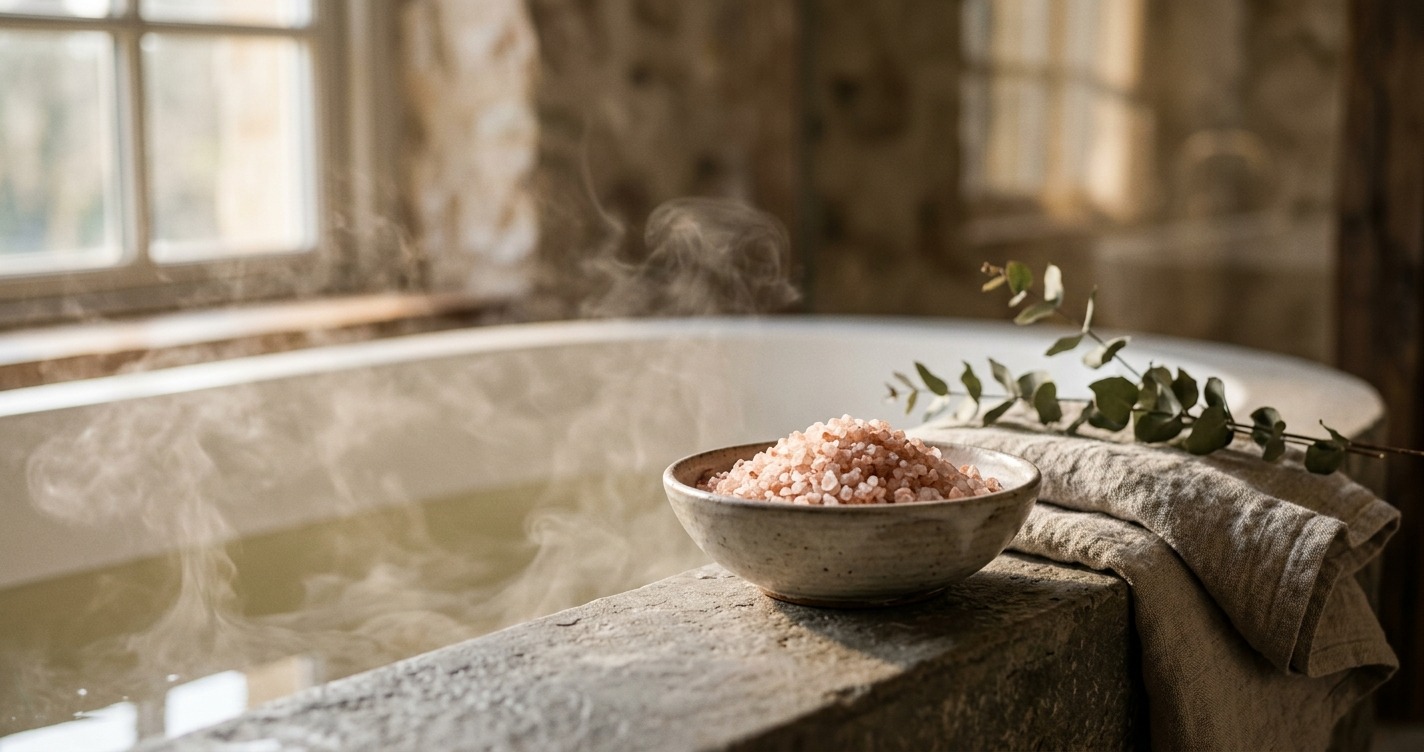
Ganz einfach gesagt ist es ein warmes Bad, in dem sich rosa Himalayasalz aufgelöst hat. Dieses Salz stammt aus der Khewra-Mine in der Punjab-Region Pakistans, viele hundert Meilen vom eigentlichen Himalaya entfernt, aber nah genug, dass der Name geblieben ist. Es handelt sich um Steinsalz, das aus uralten Meeresböden gewonnen wird, die vor langer Zeit ausgetrocknet sind.
Die rosa Farbe stammt von Spurenelementen, hauptsächlich Eisenoxid. Im Grunde ein Hauch von Rost, was weniger glamourös klingt, als das Marketing vermuten lässt.
Wie unterscheidet sich das also von einem einfachen heißen Bad? Salz verändert die Dichte des Wassers und fügt ihm Mineralien hinzu. Ob diese Veränderungen für Ihren Körper tatsächlich etwas Bedeutendes bewirken, ist die interessante Frage, und die Antwort ist differenzierter als ein schlichtes Ja oder Nein.
Rosa Salz vs. Epsom-Salz vs. Meersalz
Menschen verwechseln diese ständig, und die Verwirrung ist tatsächlich wichtig. Sie unterscheiden sich chemisch.
| Typ | Hauptbestandteil | Häufige Verwendung |
|---|---|---|
| Epsom-Salz | Magnesiumsulfat | Angebliche Anwendung zum Einweichen der Muskeln, Gartenbau |
| Himalaya-Salz | Natriumchlorid + Spurenelemente | Baden, Kochen, Dekor |
| Meersalz | Natriumchlorid (verdunstetes Meerwasser) | Kochen, Badezusätze |
Beachten Sie, dass Epsom-Salz im Sinne von Tafelsalz eigentlich gar kein "Salz" ist. Es ist Magnesiumsulfat. Rosa Himalayasalz hingegen besteht größtenteils aus einfachem Natriumchlorid, also demselben Stoff wie auf Ihren Pommes, nur mit einigen Spurenelementen im Schlepptau.
Behalten Sie das im Hinterkopf, denn es ist wichtig, wenn von Magnesium und Entgiftung die Rede ist. Rosa Salz enthält sehr wenig Magnesium. Im Epsom-Salz steckt das Magnesium.
Woher die Behauptung "84 Mineralien" stammt
Sie haben es wahrscheinlich schon gesehen: "enthält 84 essenzielle Mineralien." Technisch gesehen keine Lüge. Eine Spurenelementanalyse von Himalayasalz bringt tatsächlich eine lange Liste von Elementen zum Vorschein.
Aber "enthält" trägt in diesem Satz eine Menge Bedeutung. Die meisten dieser Mineralien kommen in so geringen Mengen vor, dass sie in Teilen pro Million gemessen werden. Um eine nennenswerte Dosis beispielsweise von Kalium oder Calcium aus Ihrem Badewasser zu erhalten, müssten Sie eine absurde Menge Salz auflösen und diese irgendwie über Ihre Haut aufnehmen, was in diesem Ausmaß meist nicht passiert.
Ich erwähne das nicht, um die Freude zu verderben, sondern weil es hier vor allem um Vertrauen geht. Wenn eine Behauptung zu glatt klingt, ist sie es meistens auch.
Die Vorteile eines Himalayasalzbads
Nun zu dem Teil, wegen dem Sie hier sind. Ich habe die Vorteile eines Himalayasalzbads in solche mit plausibler Grundlage und solche, die sich noch im Bereich von Anekdoten bewegen, unterteilt. Beides kann Ihre Zeit wert sein. Es hilft nur, zu wissen, was was ist.
Beruhigung schmerzender Muskeln und Linderung von Verspannungen
Ein warmes Salzbad fühlt sich bei müden Muskeln tatsächlich gut an, und viele Menschen schwören nach einem langen Lauf oder einer intensiven Trainingseinheit darauf. Es lohnt sich jedoch, ehrlich zu sein, woran das liegt.
Der Großteil der Linderung kommt vom warmen Wasser selbst. Wärme erhöht die Durchblutung, lockert verspannte Gewebestrukturen und beruhigt das Nervensystem. Das ist gut belegt. Das Salz kann dem Erlebnis möglicherweise noch etwas hinzufügen, aber wenn es um Muskelentspannung geht, leistet die Temperatur die eigentliche Arbeit.
Unterstützung von Hautfeuchtigkeit und Beruhigung
Hier verdient sich ein Bad mit Himalayasalz tatsächlich Anerkennung. Aufgelöstes Salz verleiht dem Wasser ein weiches, seidiges Gefühl und sorgt während des Badens für eine sanfte Exfoliation. Nicht aufgelöste feine Körner können zudem für ein leichtes Peeling verwendet werden.
Menschen mit trockener, juckender Haut empfinden Salzbäder manchmal als wohltuend, und auch Personen mit Ekzemen oder Psoriasis berichten gelegentlich Ähnliches. Das Baden in verdünntem Salzwasser hat in der Dermatologie bei bestimmten Beschwerden eine lange Tradition.
Ein wichtiger Hinweis: Salz kann auf verletzter oder gereizter Haut brennen, und jede Haut reagiert anders. Testen Sie es zuerst an einer kleinen Stelle. Probieren Sie zunächst ein kurzes Bad aus, beobachten Sie, wie sich Ihre Haut am nächsten Tag anfühlt, und entscheiden Sie dann.
Zur Ruhe kommen und besser schlafen
Hier ist ein oft unterschätzter Aspekt. Ein warmes Bad ein oder zwei Stunden vor dem Schlafengehen kann Ihnen tatsächlich helfen einzuschlafen, und das hat nichts mit Mineralstoffen zu tun.
Wenn Sie in warmem Wasser baden und anschließend heraussteigen, sinkt danach Ihre Körperkerntemperatur. Dieser Abfall ist eines der Signale, mit denen Ihr Körper auf den Schlaf vorbereitet wird. Das Bad selbst, mit rosa Salz oder ohne, funktioniert also als Ritual für eine gute Schlafhygiene. Das Salz verleiht dem Ritual lediglich etwas mehr Bewusstheit.
Eine realistische Einordnung von "Detox"-Behauptungen
Sprechen wir die Behauptung über das Magnesium-Detox-Bad direkt an, denn sie ist allgegenwärtig und meist nichts weiter als Wunschdenken.
Ihr Körper verfügt bereits über ein ausgeklügeltes Entgiftungssystem: Ihre Leber und Ihre Nieren. Sie filtern und beseitigen Abfallstoffe rund um die Uhr, und keine Menge Badewasser beschleunigt diesen Prozess oder übernimmt diese Aufgabe. Es gibt keine belastbaren Belege dafür, dass beim Baden Giftstoffe über die Haut ausgeschwemmt werden.
Was ein Bad leisten kann, ist, Ihnen beim Entspannen zu helfen, Muskelverspannungen zu lindern und einen besseren Schlaf zu unterstützen. Das sind reale und wertvolle Vorteile. Sie sind nur kein „Detox“ in der Weise, wie der Begriff oft verwendet wird. Wenn ein Produkt verspricht, Giftstoffe über Ihre Poren auszuspülen, sollten Sie das als Warnsignal und nicht als Verkaufsargument betrachten.
So nehmen Sie ein Himalaya-Salzbad
Die Grundlagen sind einfach, doch einige Details machen den Unterschied zwischen einem richtigen Bad und einer lauwarmen, übersalzenen Enttäuschung. So nehmen Sie ein Himalaya-Salzbad richtig.
Was Sie benötigen
Feines oder grobes rosa Himalayasalz (Badequalität oder Lebensmittelqualität)
Eine saubere Badewanne
Ein Glas Wasser zum Trinken während des Badens
Optional: ein paar Tropfen ätherisches Öl wie Lavendel
Optional: Natron, wenn Sie ein weicheres Wassergefühl möchten
Feines Salz löst sich schneller auf, was praktisch ist. Grobes Salz braucht länger, funktioniert aber genauso gut, wenn Sie ihm Zeit geben und umrühren.
Schritt-für-Schritt-Anleitung für das Bad
Spülen oder wischen Sie die Wanne aus, damit Sie in sauberem Wasser baden.
Füllen Sie sie mit angenehm warmem Wasser, etwa 98 bis 102°F (37 bis 39°C). Warm, nicht heiß.
Geben Sie Ihr Salz hinzu und bewegen Sie das Wasser mit der Hand, bis sich das meiste davon aufgelöst hat.
Steigen Sie hinein und baden Sie 15 bis 20 Minuten. Länger ist hier nicht besser.
Spülen Sie sich anschließend mit frischem Wasser ab, tupfen Sie sich dann trocken und tragen Sie eine Feuchtigkeitspflege auf, solange Ihre Haut noch leicht feucht ist.
Dieser letzte Schritt mit der Feuchtigkeitspflege ist wichtiger, als viele denken. Salzwasser kann ein Spannungsgefühl auf der Haut hinterlassen, daher sorgt das anschließende Einschließen von Feuchtigkeit für ein angenehmes Hautgefühl.
Rezept für ein Bad mit rosa Salz
Hier ist ein einfaches Rezept für ein Bad mit rosa Salz, das Sie speichern und wiederverwenden können. Es ist für eine Badewanne in Standardgröße ausgelegt.
Einfaches Bad
- ½ bis 1 Tasse feines rosa Himalayasalz pro Standardbadewanne (etwa 25–35 gallons Wasser)
- Optional: ¼ Tasse Natron für ein weicheres Hautgefühl
- Optional: 4–6 Tropfen ätherisches Lavendelöl, zuvor in einem Trägeröl verdünnt
- Warmes Wasser, 98–102°F
- 15–20 Minuten baden, abspülen, Feuchtigkeitspflege auftragen
Beginnen Sie mit der geringeren Salzmenge. Beim nächsten Mal können Sie immer mehr hinzufügen. Zu viel Salz lässt es nicht „besser wirken“. Es trocknet Ihre Haut nur schneller aus.
Varianten zum Ausprobieren
Keine Badewanne? Machen Sie ein Fußbad. Lösen Sie 2–3 Esslöffel Salz in einer Schüssel mit warmem Wasser auf und baden Sie Ihre Füße 15 Minuten darin. Ideal nach einem langen Tag auf den Beinen.
Entspannend oder belebend. Lavendel- oder Kamillenöl wirkt eher beruhigend und ist ideal vor dem Schlafengehen. Pfefferminz- oder Eukalyptusöl fühlt sich frisch und anregend an und eignet sich besser für einen Neustart am Morgen. Ätherische Öle immer richtig verdünnen.
Wie oft sollte man das tun?
Ein- bis dreimal pro Woche ist für die meisten Menschen völlig ausreichend. Das ist eine Lücke, die viele Ratgeber auslassen, und sie ist wichtig.
Salzwasser kann bei wiederholter Anwendung austrocknend wirken, und tägliche heiße Bäder können die Haut schuppig machen und insgesamt zu Dehydrierung führen. Wenn sich Ihre Haut gespannt anfühlt oder juckt, reduzieren Sie die Häufigkeit. Hören Sie auf die Signale Ihres Körpers, anstatt einem starren Zeitplan zu folgen.
Sicherheit, Nebenwirkungen und wer darauf verzichten sollte
Ein warmes Salzbad ist für die meisten gesunden Erwachsenen risikoarm, aber "risikoarm" ist nicht dasselbe wie "risikofrei." Ein paar Punkte sollten beachtet werden.
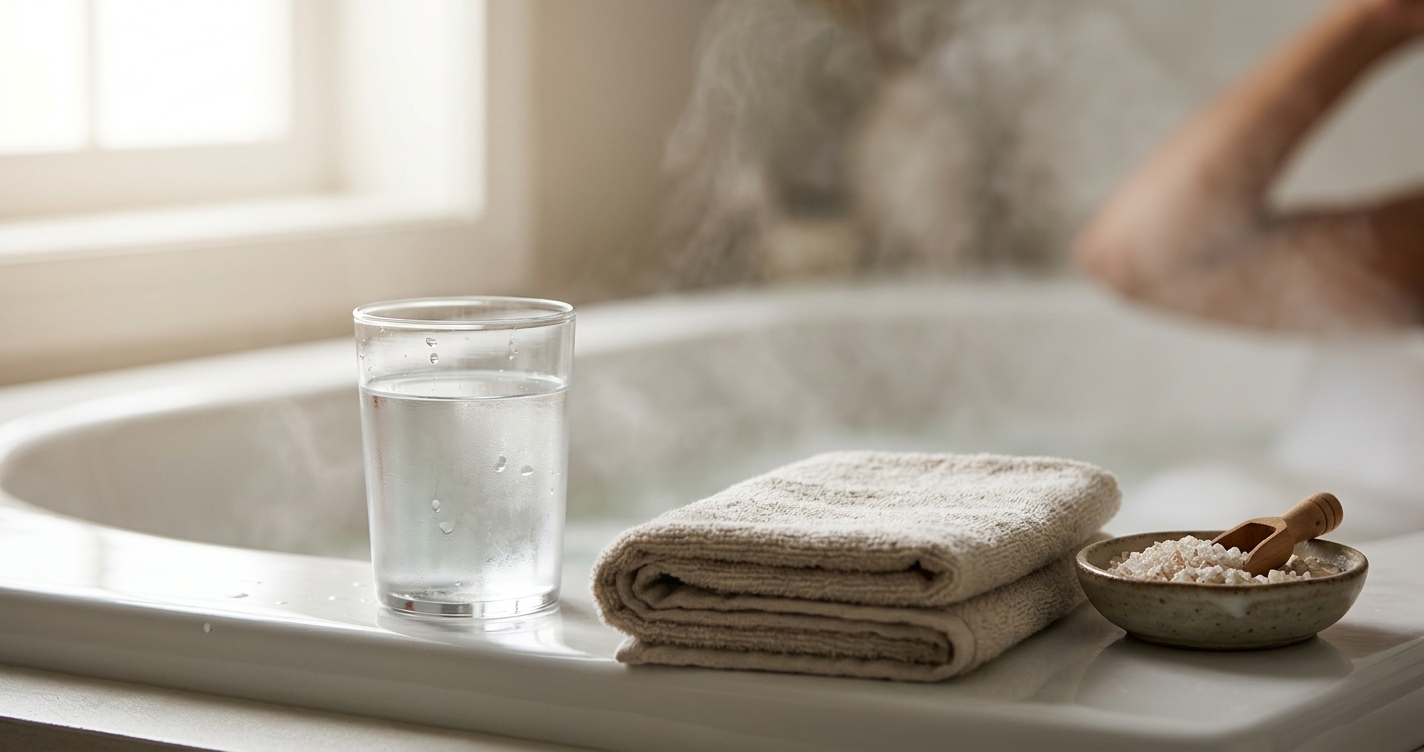
Heißes Wasser kann Schwindel, Benommenheit und Dehydrierung verursachen, besonders wenn Sie lange baden oder das Wasser zu warm ist. Deshalb ist das Glas Wasser am Wannenrand nicht nur Dekoration.
Einige Menschen sollten vor dem Baden ärztlichen Rat einholen, insbesondere bei heißem Wasser:
Schwangere Frauen (heiße Bäder erhöhen die Körperkerntemperatur)
Personen mit Herzerkrankungen oder niedrigem Blutdruck
Menschen mit Diabetes, insbesondere bei verminderter Empfindung in den Füßen
Personen mit offenen Wunden, frischen Schnitten oder infizierter Haut
Anzeichen, dass Sie aus der Wanne steigen sollten
Wenn Ihnen schwindelig wird, Sie sich benommen fühlen oder Ihnen ungewöhnlich heiß ist
Ein rasender oder pochender Herzschlag
Übelkeit
Haut, die sticht, brennt oder sich rötet und gereizt anfühlt
Wenn eines dieser Anzeichen auftritt, steigen Sie langsam aus, setzen Sie sich hin und trinken Sie etwas Wasser. Es gibt keinen Preis dafür, es um jeden Preis durchzustehen.
So holen Sie das Beste aus Ihrem Bad heraus
Kleine Details machen aus einem Bad ein echtes Ritual zum Abschalten. Trinken Sie vor und nach dem Bad ausreichend, nicht nur währenddessen. Dimmen Sie das Licht oder verwenden Sie eine Kerze, denn helles Deckenlicht wirkt der Entspannung entgegen, die Sie erreichen möchten.
Auch das Timing hilft. Ein abendliches Bad etwa 60 bis 90 Minuten vor dem Schlafengehen passt gut zur natürlichen Abkühlungsphase Ihres Körpers. Und ein paar sanfte Dehnübungen danach, während Ihre Muskeln warm und locker sind, fühlen sich wirklich gut an.
Das Fazit
Ein Bad mit Himalayasalz ist ein kostengünstiges und wirklich angenehmes Entspannungsritual. Es kann Ihre Haut etwas weicher machen, verspannte Muskeln lockern und zu besserem Schlaf beitragen. Was es jedoch nicht kann: Ihren Körper entgiften, Fett schmelzen oder über Ihre Poren eine nennenswerte Mineralstoffzufuhr bewirken.
Genießen Sie es für das, was es ehrlich bietet, und nicht wegen der Wunderversprechen auf der Verpackung. Probieren Sie das Rezept aus, halten Sie das Wasser warm statt heiß, trinken Sie ausreichend Wasser und achten Sie darauf, wie Ihre Haut und Ihr Körper reagieren. Mehr ist eigentlich nicht nötig.
Häufig gestellte Fragen
F: Kann man Salz aus einer Himalaya-Salzlampe für ein Bad verwenden?
A: Besser nicht. Lampensalzbrocken sind nicht für Hautkontakt verarbeitet oder gereinigt und können Staub oder Rückstände von Beschichtungen enthalten. Verwenden Sie stattdessen Salz mit der Kennzeichnung Badequalität oder Lebensmittelqualität, das genau dafür hergestellt wurde.
F: Wie viel Himalaya-Salz sollte ich einem Bad hinzufügen?
A: Etwa ½ bis 1 Tasse pro Standardbadewanne, wie im obigen Rezept. Beginnen Sie bei den ersten paar Anwendungen mit einer kleinen Menge und passen Sie sie danach daran an, wie sich Ihre Haut anschließend anfühlt.
F: Ist ein Himalaya-Salzbad gut zum Abnehmen?
A: Nicht auf dauerhafte Weise. Unmittelbar danach wiegen Sie aufgrund von Schweiß und Flüssigkeitsverlust möglicherweise etwas weniger, aber das ist nur Wassergewicht und kommt in dem Moment zurück, in dem Sie wieder Flüssigkeit zu sich nehmen. Das hat nichts mit Fettverbrennung zu tun. Begegnen Sie jeglichen Behauptungen zur Gewichtsabnahme mit großer Skepsis.
F: Können Kinder oder schwangere Frauen Himalaya-Salzbäder nehmen?
A: Bei Kindern sollte das Wasser kühler sein, das Bad kürzer dauern und nur wenig Salz enthalten. In der Schwangerschaft ist eher die Wassertemperatur als das Salz selbst das größere Thema, da heißes Wasser die Körperkerntemperatur erhöht. In beiden Fällen ist es die sichere Entscheidung, zuerst einen Arzt oder eine andere medizinische Fachkraft zu konsultieren.
F: Entgiftet ein Himalaya-Salzbad den Körper tatsächlich?
A: Nein, nicht im wörtlichen Sinne. Leber und Nieren übernehmen die Entgiftung, und ein Bad zieht keine Giftstoffe über die Haut aus dem Körper. Was es jedoch bietet, sind Entspannung, Muskelwohlbefinden und ein besseres Abschalten. Das sind für sich genommen echte Vorteile.